Category Archives: Faith

Don’t Give Up!

Why Joseph refused to act like a victim

Medical staff at Mae La Refugee Camp Hospital, Zone C (now volunteering)

One of my favorite biblical characters is Joseph, whose story is told in Genesis 37-50. His father, Israel, loved him more than any of his other 11 brothers, but throughout much of his life he suffered unjustly. His brothers threw him into a pit and then sold him into slavery. He was forcibly taken from the land of Canaan to Egypt, where his new master’s wife falsely accused him. He was thrown into prison and could have been executed, but God protected him through all his trials. Eventually, he was able to use his gift of dream interpretation to gain the favor of the Pharaoh. From this one unexpected, miraculous moment in his life, he rose to second in command in all of Egypt, and God used him to save many people from starvation during a seven-year famine.

When Joseph’s brothers came from Canaan to Egypt searching for food, they were terrified that he would get revenge on them. However, instead of being bitter, hateful, or vindictive, Joseph chose to interpret his unjust, cruel treatment through the eyes of faith. His now famous statement has inspired believers ever since: “You intended to harm me,” he explained to his brothers, “but God intended it for good to accomplish what is now being done, the saving of many lives” (Genesis 50:20, NIV).

Wow. What an amazing perspective. Joseph had every right to nurse old wounds, play the victim, or demand retribution against his cruel brothers. But he didn’t do any of that. He chose another path.

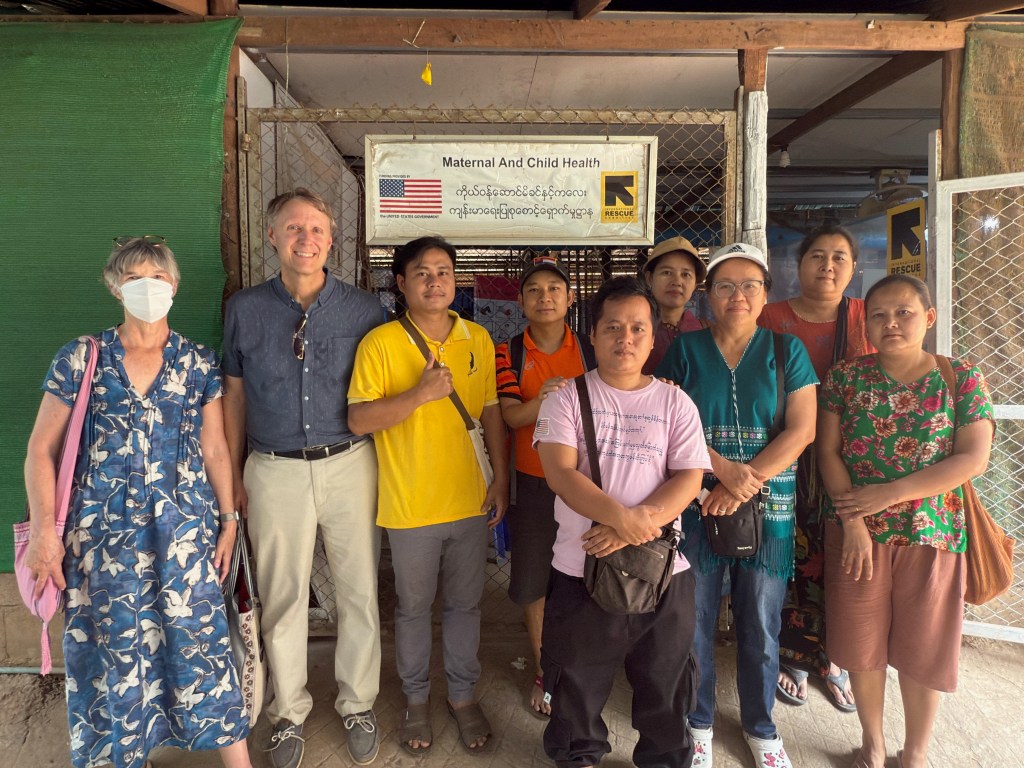
In my work teaching, preaching, and ministering among the Karen and Karenni refugees in western Thailand, the Christians there have taught me much about what it means to live by faith, hope, and love, despite their awful circumstances and bleak futures. Along the border, most are stateless, not able to return (safely) to Myanmar nor free to travel (legally) around Thailand or to other countries. Nevertheless, they are choosing to focus on the future, not the past. They are thinking about the good they can do, despite or because of their circumstances, not about all the unjust, horrible things that happened to put them in their current situation.

Volunteers distributing rice to needy people within Tham Hin Refugee Camp, Thailand

They are going to school, providing emergency care for those who have been forced to flee their homes or villages due to the war, sharing the Gospel, providing medical care for free in the camps (due to cuts in foreign aid from USA), sharing food, and teaching children, sometimes in the middle of the jungle, after villages and schools were demolished by the military. Despite repeated bombings, destruction of their homes, and displacement, these victims of over 75 years of oppression and civil war are refusing to live as if their lives are over. They believe that God has not abandoned them, and they’re putting their faith into action, accordingly.

Joseph and others like him who have had to cope with an enormous amount of injustice, hardships, and suffering, have so much to teach us. The lesson is clear: If you want to keep from being defeated by your circumstances, keep putting your trust in God. Never stop believing that God can create an opportunity for you in the least likely of places and worst of situations.

You may not always be able to make sense of your experience or see how God is at work, but never give up hope. Never stop believing that God is going to do something good in your life—for your sake and for the sake of all those God wants to help, encourage, and bless through you. You have been chosen by God to serve his good purposes. Your life matters. Believe it and live it.

With the love of Jesus Christ,

Dr. Tim

“Let us not become weary in doing good, for at the proper time we will reap a harvest if we do not give up.” (Galatians 6:9, NIV)

Leave a comment

Filed under Faith

Deep Calls to Deep

A Reflection on God’s Comforting and Inspiring Presence in Nature

“Why are you cast down, O my soul, and why are you disquieted within me? Hope in God; for I shall again praise him, my help and my God. …Deep calls to deep at the thunder of your cataracts; all your waves and your billows have gone over me. By day the LORD commands his steadfast love, and at night his song is with me, a prayer to the God of my life” (Psalm 42:5, 7-8, NRSV).

Some of my most treasured experiences have come from sitting by the lake in northern Wisconsin, watching yet another beautiful sunset and sharing the moment with the love of my life. With so many troubles and concerns always on my mind—especially for my students, colleagues, and friends who have been suffering for years in Myanmar, Thailand, and Eastern Congo—taking time in nature is so therapeutic.

When I contemplate the wonders and beauty of God’s creation, listen to the cry of the gulls soaring overhead, and almost feel the velvet-like softness of the rippling waves gently rolling to the shore, I feel peaceful once again.

What is it about being in nature that draws me to God and transforms me? How is it that I can start out weary and drained and leave renewed and reinvigorated?

“Deep calls to deep,” the Psalmist wrote. I get it. Somehow in the presence of God’s handiwork, it becomes easier for me to perceive God’s presence. I can believe again that I am not alone in this world and that there is something good and hopeful that is worth believing in and working for.

In this vision of goodness, beauty, kindness, and love, my desire to participate in God’s sacred love flow is rekindled. And while I cannot say what hope there may be for those I care and feel so much compassion for, I know that I cannot turn away from their pain or mine. I cannot carry all the burdens that so easily overwhelm me. It’s too much. But I can continue to care and to love to the best of my ability. I can offer whatever I have to those who need a helping hand, a smile, a word of encouragement, a relevant Bible verse, or just a listening ear. I can let God’s love flow through me, trusting that the Holy Spirit will use me if I simply make myself available within my limits.

I think the secret of this kind of renewal of the heart and mind is this. The more I lift my eyes to look at my Creator and contemplate the goodness in creation, the more my despair dissipates. The more my angst over my powerlessness recedes, and the more comfortable I am with my limitations. It’s not resignation or surrender, it’s acceptance and trust.

I have such limited ability to save others anywhere near as much as I would like to. But by re-grounding myself in God and renewing my weary and broken heart, I find new strength to reach out once again and be present to those in need. In those moments of deep connection with my Creator, the Holy Spirit reminds me that God is still actively at work in the world for good, and I still can participate and contribute, despite my frailty and limitations. And that is enough.

4 Comments

Filed under Faith, Knowing God

Don’t Forget to Stay Grounded

Karen refugees from Burma, living in Mae Sot, Thailand

When the winds blew and the waves crashed over their little boat on the Sea of Galilee, Jesus’ disciples panicked. Jesus was sleeping. Was he going to do anything to save them? Did he even care? In desperation, they woke him, crying out, “Lord, save us. We’re going to drown!”

But from Jesus’s perspective, there was no reason to worry. No matter how dark the sky or threatening the tempest, he knew that their lives were in God’s hands, and nothing could touch them unless God allowed it. So, he chastised his disciples, saying, “You of little faith, why are you so afraid?” Then, he rebuked the wind and the waves, and the sea became calm. And the disciples were amazed. (Matthew 8:23-27)

The disciples were not being criticized for waking Jesus up or for asking for his help. Nor is Jesus saying that you shouldn’t take threats to your health or well-being seriously. Neither is he suggesting that those who trust in God will never be harmed. You know that isn’t true. The Bible and history are full of stories of people suffering unjustly or dying prematurely from diseases or other natural and unnatural causes. Even Jesus himself was eventually crucified. But at that moment, in the midst of a raging storm, he was at peace. He trusted in God’s will for his life, and for his death. 

No, Jesus chastised the disciples because they were letting their circumstances unnerve them. They were giving too much power to their fears, forgetting that following Jesus into the boat calls for trusting God through the storm.

What about you? How are you coping with the many current threats to your well-being? Like Jesus’s disciples, sometimes all you might be able to see is the size of the waves, the strength of the wind, and all the real dangers. Sometimes it may seem like Jesus is sleeping or that God doesn’t care. But it isn’t the case. God does care, and Jesus is not sleeping.  

If you can do something reasonable to diminish the risks facing you or your family, do it. But no matter what is or isn’t within your power to do, keep returning to the Source of your life and eternal hope. God is your anchor, your rock, your strength. You need God’s working in your life not only to answer your prayers, but to enable you to experience peace amid the storm and courage to face the uncertain future. Without a solid connection to God and staying grounded in your faith, the storms may very well unnerve you and throw your life into chaos. The opposite of what you most need at such times.

Over the past two months, I had the privilege of teaching and ministering again along the border between Myanmar and Thailand. One of the things that has made a big impression on me is how much the refugees actively draw upon their faith to cope with their fears and hardships. This is true for those still struggling to survive and cope within Myanmar as it is for those who have fled to the other side of the border. Their lives may have been devastated, their future hope shattered, and family members and friends killed, but they keep going back to God for stability and strength. They frequently worship, pray, read Scripture, listen to sermons, sing, fellowship together, help one another, and participate regularly in many other such spiritual activities. It’s how they structure their lives and stay grounded in their faith. It’s how they find peace, courage, and strength despite their circumstances.

I don’t know what you might be going through today, but I do know that everything looks and feels different when I stay well connected to God and trust in God’s will for my life amid the storms.

The Psalmist put it this way, when he told himself: “Yes, my soul, find rest in God; my hope comes from him. Truly he is my rock and my salvation; he is my fortress. I will not be shaken” (Psalm 62:5-6, NIV).

5 Comments

Filed under Faith

“What’s worth celebrating this Christmas?”

The angel announcing Good News to the shepherds (Chartres Cathedral, Chartres, France)

“In that region there were shepherds living in the fields, keeping watch over their flock by night. Then an angel of the Lord stood before them, and the glory of the Lord shone around them, and they were terrified. But the angel said to them, “Do not be afraid; for see—I am bringing you good news of great joy for all the people: to you is born this day in the city of David a Savior, who is the Messiah (Christ), the Lord.”

Luke 2:8-11 (NRSV)

Every year at Christmas time, these beloved verses from the Bible are read in some 37 million churches and in countless Christian homes all over the world. They concisely express why Christians celebrate the birth of Jesus year after year and why he is the focal point of their faith. In fact, the Greek verb, euangelizomai, which is translated, “bring good news” in verse 10 is a cognate of the Greek noun, euangelion, which is usually translated “Gospel” (literally, “good news”). In other words, the good news of the Christian Gospel, which has been preached and throughout the world over the past 2000 years, has its roots in the angel’s “good news of great joy for all the people,” the birth of Jesus.

Yet, as I sit in the comfort of my relatively safe and secure home in Minnesota, surrounded by all the privilege and material abundance of the American context, I can’t help but wonder how these verses sound to the millions of people in my own country and elsewhere around the world who must suffer daily from hunger, deprivation, or violence. I’m thinking about those who are abandoned, neglected, alienated, or simply alone without loved ones and friends at Christmas time. I’m imagining what it must be like for the 100 million internally displaced people and refugees who live in war-torn countries such as Ukraine, Myanmar (Burma), the Democratic Republic of the Congo, Gaza, Sudan, Syria, and other such places, some of whom have been or are my students. Amid such terrifying, unstable, or oppressive conditions, is there any “good news of great joy” for them? Is this Gospel message really for “all people” or only for those fortunate enough to live in peace, abundance, and security?

To answer these important questions, we have to get back to what the angel meant by “good news of great joy” and to what we can learn by observing the response of the shepherds to this good news.

In context, according to the Jewish writers of the New Testament, Jesus’s birth was the supreme moment in history when God fulfilled his promise to send a Savior to a troubled world. However, he didn’t arrive as a king, a political mastermind, a great warrior, or super-hero. Jesus identified with the most disadvantaged and beleaguered people in the world by living in poverty and suffering unjustly. Jesus was “God-with-us” (Immanuel), who experienced the same pain of discrimination, oppression, and mistreatment that afflict so many around the world.

Amid such difficult circumstance, Jesus lived with integrity, courage, faith, and compassion despite how he was mistreated and the obstacles he had to overcome. Even though he was forced to die a hideous and cruel death, he did not shrink back from his faith or devotion to God the Father. Evil-doers could and did take his life, but they couldn’t touch his soul. They could nail him to a cross, but they couldn’t keep him from changing the course of history and giving hope to billions of people globally.

In other words, Jesus’s birth was good news of great joy for all people because of what it signified about God’s faithfulness and what it announced about God’s intentions to provide a way of salvation through Jesus, despite our circumstances. 

  • By God’s incarnation in the form of Jesus Christ, God became one of us, identified with the suffering of humanity, and showed us the way forward.
  • By Jesus’s teaching, we understand that the most important thing in life is to seek to know, love, and serve God with all our beings and to love our neighbors as ourselves. 
  • By Jesus’s death, he demonstrated the extent of God’s love for us and invited us to share in his life and love through faith and obedience.
  • By Jesus’s resurrection, God proved that there is life after death and thus hope for all those who follow Jesus.

The overall message of Jesus’ life, teaching, death, and resurrection is clear: We need not be crushed by distressing circumstances and suffering. Even the most tragic life can be so much more than the sum of the injustice, misfortune, and suffering that we may have to endure. We can choose how we are going to be in the world and how we are going to respond to our troubles. By keeping our eyes on Jesus, we can face our adversity with greater strength and courage. And when we reach our limits, and even stumble and fall, Jesus is there to show us the way to get back on our feet again. And when we cannot even get back on our feet again, Jesus does for us what we cannot do for ourselves. He saves us. 

I don’t know how much of all this the lowly shepherds would have understood when the angel announced good news of great joy that first night in the fields. But they didn’t need to understand it all at once. They simply needed to believe that God did in fact have good news for them of great joy. And they needed to start looking for Jesus. 

This Christmas, I cannot guarantee for myself or anyone else that the day will be merry or that the year ahead will be better than the year just finishing. However, because of the birth of Jesus, we have a Savior, who is Christ the Lord. Despite our circumstances, there is always good news of great joy worth celebrating. 

Sculpture of worshipping shepherds (Chartres Cathedral)

*Photo credit for two images: ©Jill K.H. Geoffrion https://jillgeoffrion.com/

Leave a comment

Filed under Faith, Hope

When God and the Church Let Us Down

I find myself thinking a lot about God and the role religion is supposed to play in the world. And I’m not happy. I wish that God would do more to help those who cry out to him for relief from their suffering. I wish that the Church would do a better job at reflecting the love and light of Christ and stop failing the people so miserably. And I wish I were a better follower of Christ myself and could be less selfish and self-serving. 

But God is who God is. The Church is who she is. And I am who I am. I will never fully understand God. The Church will always be flawed. And I will continue to struggle with my own demons, sin, and shortcomings until the day I die. Nevertheless, I have found this to be true as well: my faith and relationship with God has filled my heart with a peace that surpasses understanding, with joy I could not produce on my own, with love like no other, and with meaning and purpose in a chaotic world that sometimes seems bent on its own destruction. 

There is so much in this world and in myself that I wish were different, and so much more that I would like God to do, but I cannot imagine grappling with life’s challenges without God’s help, guidance, and encouragement. Though I have had to swallow the bitter pill of disillusionment and disappointment with God, religious leaders, and even with myself, my faith keeps evolving and producing hope—only now in more realistic ways. 

I now understand better that Jesus did not come to solve all our problems for us, at least not in this life. Rather, he came to show us the way to God and the way to know, love, and serve God in our daily lives, as we struggle along with the rest of humanity with all that is wrong with our troubled world. The more I let go of what I cannot change and what God chooses not to change, and instead focus on God’s priorities of loving God and neighbor, the more God seems to appear. The more I shift my focus from asking God to fix everything to seeking wisdom, ability, and opportunities to grow through my adversity and to serve others instead of myself, the more I truly believe that we flawed human beings can still make a difference. Living by faith and God’s love is both our calling and our opportunity to “not be overcome by evil,” but to “overcome evil with good” (Romans 12:9-21).

On my 66th birthday this past week, my loving wife, Jill, gave me a special tour of the beautifully restored south transept of the Chartres Cathedral in France. Among the many splendors were stained glass windows depicting many Old Testament prophets and New Testament Apostles, such as Peter and Paul. I was particularly drawn to the window of Micah (pictured above), who summed up God’s requirements for human beings in the familiar command to “do justice, love mercy, and walk humbly with our God” (Micah 6:8). I was also touched by a window portraying two doctors (pictured below), who were being honored for treating the needy for free and sharing the Gospel with those  who did not know the way of salvation.

Outside, on the south porch is a tall, striking sculpture of Jesus, le Beau Dieu (the Beautiful God). He’s holding the Book of Life and is surrounded by his disciples, almost all of whom gave their lives to share the Gospel and bear witness to the life, death, and resurrection of Jesus. Underneath him is a much smaller sculpture of a wealthy donor, accompanied by two assistants, who are busy distributing bread to the hungry. 

What a perfect combination of images: Prophets and apostles, who teach us about our Creator’s intention for humanity and who show us the way to God. Powerful and privileged members of society, who nonetheless demonstrate their Christian faith by generously serving the needy, at their own expense. Jesus—the way, the truth, and the life (John 14:6)— alongside a faithful follower of Jesus, who shows us what faith looks like when those who are blessed with abundance are surrounded by those who lack the basic necessities for living. 

Suddenly the pieces came together for me. It was all there. In the windows and the sculptures, the answer to my broken, anguished heart. Light. Life. Love. Hope. My tears began to flow. Some emotional dam broke. It never felt better to let it all out.

Despite all that is wrong with the world, the Church, and me, and despite all my disillusionment, frustration and disappointment, the message of the Gospel is as relevant today as ever. There are countless individuals who are sacrificially serving others with kindness, compassion, and mercy. The power and presence of God are real. Christ does transform lives. There’s still a way forward for me. 

“Lord, thank you for another year and for the precious gifts from your Holy Spirit this morning. Please hold me close to you especially when I begin to doubt and feel so discouraged. Help me to see and accept the life-giving messages of the prophets and apostles. Help me to keep my eyes on Jesus, my heart open to the needs of those around me, and my hands busy serving others. May your will be done more and more.”

1 Comment

Filed under Faith

What Makes Jesus So Special?

A Christmas Meditation

As most people know, Jesus was born in a stable, a lowly place fit for animals, not humans (Luke 2:1-7). He grew up poor, without privilege or comfort. His family and all the Jewish people lived in a land occupied by Roman soldiers, who could be heartless, cruel, and brutal at times. At one point, they even had to flee to Egypt to save Jesus’s life, when one of the Jewish collaborators, King Herod, sought to kill all the Jewish children two years old and under (Matt. 2:16-20). Yet, this poor, underprivileged, at-risk Jewish boy, whose birth we celebrate on Christmas day, rose to become the Savior of the world for all those who put their faith in him.

“In that region there were shepherds living in the fields, keeping watch over their flock by night. Then an angel of the Lord stood before them, and the glory of the Lord shone around them, and they were terrified. But the angel said to them, “Do not be afraid; for see—I am bringing you good news of great joy for all the people: to you is born this day in the city of David a Savior, who is the Messiah, the Lord. This will be a sign for you: you will find a child wrapped in bands of cloth and lying in a manger.”

Luke 2:8-12 (NRSV)

It’s truly an amazing turn of events. As author Fulton Oursler put it years ago, Jesus’s life is the greatest story ever told. His poverty wasn’t bad karma. And his rise wasn’t good luck. Jesus’s birth, life, death, and resurrection were all one big demonstration of the incredible love and power of God to save the world. Jesus’s story, his teaching, and the Gospel he preached shouted out, “God sees you in your pain, suffering, and struggle! No matter how poor, disadvantaged, or marginalized you might be, God loves you. Repent of your sins and put your faith in God’s son, Jesus, and you will know the full measure of God’s grace and forgiveness.” (John 3:16; Luke 24:47) And once you enter into this new relationship with God through faith in Jesus, nothing will ever be able to separate you from God’s love, in this life or the next. (Romans 8:31-39)

“For God so loved the world that he gave his only Son, so that everyone who believes in him may not perish but may have eternal life. Indeed, God did not send the Son into the world to condemn the world, but in order that the world might be saved through him.

John 3:16-17 (NRSV)

This is the true meaning of Christmas. It’s not about power, privilege, material possessions, glitter, or parties. It’s not something just for a few ethnic minority groups or people in the West. It’s about Jesus. And it’s about what Jesus did for the whole world by giving hope to even the most hopeless people in the most hopeless of circumstances.

As such, Christmas is rightly a time of great celebration. It’s a wonderful time to eat special foods, give and receive gifts, laugh and enjoy the love and friendship of those we hold most dear. But Christians do not party at Christmas time to forget their troubles, or look for life in material things, food, and drink, as some may be doing over the holidays. No, followers of Jesus celebrate joyfully because he has given us something precious that no one can take away from us. Through faith, believers have entered into a loving, grace-filled, hopeful relationship with God that will last for eternity.

This is what makes Jesus and Christmas so special for me. I hope this is true for you, too. It can be, if you will put your faith in God’s love and in Jesus for yourself.

Leave a comment

Filed under Faith

No Easy Answers in a War Zone

Only Faith, Hope, and Love

HEAL Africa Doctors meeting for Bible Study in war-torn Eastern Congo

How can you answer troubling questions about God that have no easy answers? How can you talk about God’s love to traumatized people in a war zone, when God seems so distant and disengaged from their suffering? During my weekly Bible study that I conduct for a group of 20-30 doctors (pictured below) in Goma, Democratic Republic of the Congo (DRC), I’m often asked, “What should we say to our patients, whose family, friends, or neighbors have been driven from their homes or brutally murdered?” In Eastern Congo, some six million people have died due to violence, starvation, and disease over the past 25 years. Their nightmare has raised earnest questions about God that are difficult to answer, such as, “Does God care?” and “Why didn’t God protect us?”  

Meanwhile, in Europe, Russian troops are wreaking havoc across Ukraine, thousands are being injured or killed, and over three million people have been forced to flee the country in a matter of a few weeks so far. In Asia, as you well know, the crisis in Myanmar continues unabated and the suffering keeps multiplying. Everywhere there is great suffering from injustice and violence, the same kinds of questions keep arising among Christians. Even my Burmeses theological students want to know, “Are we suffering because God is punishing us?” “Is God ignoring us?” “Should we expect any help from God?”

Homes burn Loikaw Township, Kayah State, Myanmar, following Junta airstrikes, 2_23_22 PC_Free Burma Rangers

In my role as seminary professor and Bible teacher in Africa, Eastern Europe, and Southeast Asia over the past 15 years, I’ve been asked these kinds of questions repeatedly by people who are being traumatized by genocide, war, or oppression. However, rather than try to make up answers to unanswerable questions or offer up false hope, it’s been far more helpful to admit the limitations of human understanding about God and to focus practically and realistically on how we know that God works in the midst of great evil.

As I have struggled with my own understanding of what to expect from God, I have longed ceased to put my hope in God’s sudden appearance out of nowhere to save the people. I’d be delighted for any miraculous intervention God may choose to make, and I pray for God’s help and deliverance daily. But most of my hope rests on how God works in, among, and through those who know, love, and serve Jesus Christ.

I have never had a vision of Jesus, but I see Jesus in his body of believers all the time—in their compassionate acts of kindness, self-sacrificial service, hospitality, and generosity. They are riddled with all sorts of imperfections and failings, yet they treasure their relationship with God. They keep drawing from the well of God’s love and grace for light and life in the midst of their darkness. They love Jesus, and they genuinely want to share Jesus’ love with others. And do so, sometimes even at great personal cost.

It’s been inspiring to me to see the outpouring of support for those who are suffering in all the places where I serve— including, Ukraine, Myanmar, and the Congo—both from faithful followers of Christ within the countries and from a wide variety of caring people internationally. This is surely part of God’s plan to minister to those who call upon the name of the Lord in their distress.

There are no easy answers to the cries and confusion of people in a war zone. Nevertheless, when we, as the body of Christ, fulfill our purpose to be the heart, voice, hands, and feet of Jesus, the world will know that there is a God who cares. The power, presence, and love of God will be evident for others to experience through us. And we who serve in Jesus’ name will be less overwhelmed by the evil all around us, because our eyes will be focused more on what we can do and less on what we can’t; on what God is doing through us, and not on just on what we hope and pray that God will do for us.  

May our Lord Jesus Christ himself and God our Father, who loved us and by his grace gave us eternal encouragement and good hope, encourage your hearts and strengthen you in every good deed and word.

2 Thessalonians 2:16-17

Leave a comment

Filed under Faith, Hope, Love

When I almost lost my faith…and the life-changing decision I made

When my mother slowly lost her mind due to dementia (Alzheimer’s disease), I was heartbroken. Then, I was angry. As the months turned into years, I started to become resentful and bitter toward God. Why didn’t God spare her and us from so much suffering? Why did he fail us?

In the final chapter of my book, What We Can Expect from God Now: Seven Spiritual Truths for Trusting God in Troubled Times, I tell my own personal story of grief over many losses in my life, including my mother’s heart-wrenching demise. During those years, I almost lost my faith. But one day, something surprising happened that saved my relationship with God. I understood that I needed to make a choice, a very important choice, with huge potential consequences.

In short, I finally understood what Danish philosopher, Soren Kierkegaard, meant when he wrote about his “leap to faith.” As a thinking-oriented person, ironically mired in resentment and bitterness, I had just about lost all hope for healing and renewal. But, what happened that day, and the decision I made, turned out to be a huge turning point in my life, for which I will always be grateful.

If you’ve been struggling with your faith, or feel resentful or even bitter toward God for something God did or didn’t do when you were suffering, I hope that something in this chapter will be life-giving and healing for you.

Chapter Eight (Conclusion) in “What We Can Expect from God Now” Video series (Read in ENGLISH with BURMESE subtitles. ©2021)

“ယခုချိန်တွင် ဘုရားသခင်ထံမှ ကျွန်ုပ်တို့ဘာကိုမျှော်လင့်နိုင်ပါသနည်း” စာအုပ်​၏နောက်ဆုံးအခန်း (မြန်မာစာတန်းထိုး ဗွီဒီယိုစီးရီးများ)

Leave a comment

Filed under What can we expect from God now?

Don’t let anxiety rule your life!

What’s your strategy for dealing with anxiety? Do you have a good one? Is it working?

In this chapter, I talk about my own experience with anxiety and some of what I have learned that has been most helpful to me over the years. For example, when I face my anxieties directly, they lose some of their power over me. When I use a practical tool that I developed to help me whenever I feel overwhelmed with anxiety (which I explain in detail in the video), I feel more peace and am better able to redirect my energy in positive directions. When a situation is completely outside of my control, I get strength by waiting on God. Most of the examples pertain to the COVID-19 pandemic, but I hope the application to the current political and social crises will be obvious.

I know that there is a lot to be concerned about in these troubled times. I pray that the teaching in this chapter will be practical and helpful for you. As you put your faith into action and apply this spiritual wisdom when you feel anxious, you will see the difference. You will grow in many ways, be more useful to yourself and others, and God will give you greater peace, strength, and confidence to face all that you must face and endure.

Chapter 7, in “What We Can Expect from God Now” (©Timothy C. Geoffrion, 2020) with Burmese subtitles:

Leave a comment

Filed under What can we expect from God now?

Chapter 6 in “What We Can Expect from God Now” (read by the author)

VIDEO SERIES ON TRUSTING GOD IN TROUBLED TIMES

Produced in ENGLISH with BURMESE subtitles

When we are so cruelly mistreated or suffer tragedy, or whose lives and hopes have been severely disrupted by abusers or threatening forces, we will naturally experience the typical symptoms of grief (shock, bargaining, anger, depression). Consequently, it is no surprise that the people who are writing to me from Myanmar this week are stunned, angry, confused, discouraged, or simply terrified over the wanton destruction in Chin State and elsewhere in Myanmar.

Just a week ago, one of my former students, Pastor Cung Biak Hum, was shot to death as he rode his motorcycle into the town of Thantlang (Chin State, Myanmar) to help families whose homes were being burned to the ground by occupying forces. Any death is painful, but senseless, cruel, and brutal killings of those who are trying to help others in their time of need, and who leave behind a loving spouse and small children, are especially distressing. He’s now an inspiration and hero to many, but he will greatly missed.

Right now, you may be feeling the same way about suffering or oppression in your own life or about someone you care about. You may be nearly out of your mind with distress, worry and fear. You’re wondering, what’s going to happen next? How should you be praying? If God is not going to spare you from suffering, why should you pray at all? What are some practical ways to deal with fear and anxiety about the future?

In this week’s chapter, the spiritual truth addresses these questions. Though it was originally written to help readers to deal with their anxiety over COVID-19, the spiritual truth in it applies to all kinds of fears and worries.

I cannot fully answer why God is allowing you to suffer as you are. But I can assure you of Jesus’ love and care for you, and of his desire to minister to you in your time of loss and suffering. After I finish reading the chapter, I offer some additional, personal words of encouragement, especially for those suffering in Myanmar right now.

Leave a comment

Filed under What can we expect from God now?