Coping with Overwhelming Distress

Part Three: Be Hopeful

“Finally, brothers and sisters, whatever is true, whatever is noble, whatever is right, whatever is pure, whatever is lovely, whatever is admirable—if anything is excellent or praiseworthy—think about such things. Whatever you have learned or received or heard from me, or seen in me—put it into practice. And the God of peacewill be with you” (Philippians 4:8-9).

Strategy #3: “Be Hopeful. Focus on what God is doing. Not on what God is not doing.”

I can’t tell you how many times I’ve asked myself, full of frustration and distress over yet another report of abuse, exploitation, or horrific destruction of lives, “Where is God?” Yet, when I start spiraling downward in my mind and emotions, I have to remind myself that this line of thinking isn’t going to help me or anyone else.

Instead of focusing on everything that is wrong in the world, it’s much better when I look for and concentrate on all that is right. Instead of letting myself become frustrated with all that God is not doing that I would like him to do, it is so much more life-giving to look for and focus on all the signs of God’s goodness, care, and blessing.

As one recent example, a woman shared again with me how much pain and suffering she’s had to endure because of being sexually abused as a child and again as an adult. The damage done was profound. Her life has been irreparably scarred. Yet, I’m sharing her story with you, because of what God has been doing in her life through her long process of seeking healing. After attending two retreats for abused women and men, I saw hope in her eyes and heard strength in her voice, which I had not seen or heard in a long time. She has no answers for why God allowed this abuse to take place, but in contemplating the suffering of Jesus Christ, while being gently guided by trained facilitators and a therapist, she’s been experiencing God’s loving, transforming presence in ways she once thought impossible.

Here’s another example from a few weeks ago: With only three to six months to live, a dear friend of mine shared how he’s been experiencing God amid his losing battle to cancer. In hospice, with a tube permanently inserted into his nostril and an IV attached to his arm, he told me that he felt a great sense of peace despite recurring moments of great pain. He has reconciled with his sister, has been supported daily by family and people from his church, and is confident that his life is secure in God’s hands through his faith in Jesus. Little did he or I know that that his final day would come much sooner than expected. Instead of three to six months to live, he died just a few days before I wrote this post, less than one month after our initial conversation. God did not heal him or spare him from pain, but God was present to him when he needed God’s peace and reassurance that he would spend eternity with his loving Lord in heaven. And for that he was deeply grateful.

Likewise, over the past couple weeks here in the borderlands between Myanmar and Thailand, I’ve heard many expressions of grief, frustration, anger, fear and hopelessness, just as I’ve heard in my ministry to people living in war zones and refugee camps elsewhere. But over and over again, my students, colleagues, and friends also speak about many unexpected blessings, too. Amid so much evil, loss, and pain, they also see God providing, sustaining, and encouraging them in many ways. And they, too, feel grateful.

The lesson in all this is clear to me. I may never understand why God doesn’t do more to help those who are suffering unjustly and cruelly, but the more we choose to focus on what is good, right, true, and lovely (Phil. 4:8-9)—hopeful aspects of life which derive from the goodness and love of God—the more peace, joy, and strength we’re going to experience from day to day.

As this three-part series draws to a close, I urge you to keep leaning on your faith in Christ and relationship with God as you seek to cope with whatever overwhelming distress you may be experiencing. And always remember these three tips, which have been so helpful to me personally:

  1. Be self-compassionate. Take good care of yourself. Seek refreshment in the Lord.
  2. Be constructive. Focus on what you can do, not on what you can’t. And,
  3. Be hopeful. Focus on what God is doing, not on what God is not doing.

And the God of peace will be with you.

With the love of Jesus Christ,

Dr. Tim

Leave a comment

Filed under Practical Christian Living, Spirit-Led Living

Coping with Overwhelming Distress

Part Two: Be Constructive

In my previous blog post, I talked about the importance of self-compassion as a key strategy in coping with overwhelming distress in our lives. In this post, I offer a second strategy, which I’ve observed among those who are successfully managing the stresses of living in war zones and refugee camps. This strategy has also been very helpful to me personally when I feel overwhelmed by the magnitude of horrors and need in my own country and around the world.

Strategy #2: “Be constructive. Focus on what you can do (not on what you can’t).”

Sometimes, the staggering needs of others feels crushing to me. I see the horrible things happening all over the world. I certainly want to help, but I don’t know where to start or how I could possibly make a lasting difference. It seems that whatever I do will only be a drop in the bucket in an ocean full of suffering and need. I start to feel overwhelmed, and my emotional distress gets bigger and bigger.

But Jesus showed us by his example that we don’t have to respond this way.

There’s a story in the Gospels that says so much about who Jesus was and how we might respond to the immense needs of others today. Jesus and his disciples had given so much of themselves in their ministries. They were hungry, tired, and needed a break. On top of it, Jesus was reeling from the tragic death of his cousin and fellow evangelist, John the Baptizer, who had been cruelly beheaded by King Herod. As they made their way by boat across the Sea of Galilee in search of a quiet place to rest, they discovered a huge crowd of people who had traveled by land ahead of them. And this is how Jesus responded:

“When Jesus landed and saw a large crowd, he had compassion on them, because they were like sheep without a shepherd. So he began teaching them many things” (Mark 6:34).

When Jesus saw how needy the people were, his heart went out to them. And then he took action. In this situation, he responded by teaching them many things, which would have included how God loved them and called them to trust and obey God’s will for their lives, and he would have explained what that meant in practice in their marriages, families, and communities. On other occasions, he would heal the sick, cast out demons, advocate on behalf of the oppressed, work miracles, provide forgiveness, or simply offer a kind, gracious comment or gesture toward someone who needed mercy or encouragement.

What he didn’t do was let himself become overwhelmed by the immensity of their need or by the widespread suffering caused by injustice, oppression, and lack of adequate spiritual guidance. No matter how distressed he may have been by what he saw that day on the shore and throughout his lifetime, he kept his focus on God and on what he could do to help. He didn’t allow the extent of the problems throughout society or the evil deeds of others to undermine his own faith and his zeal for fulfilling God’s good purposes for his life.

None of us is Jesus, but with God’s help, we can learn to detach from feeling so overwhelmed by all the needs and suffering in the world. Through prayer and the Holy Spirit’s working in our hearts and minds, we can replace our anxious stewing with compassion, which sees and cares about the concerns of others but does not take on emotional burdens that do not belong to us. Instead of sinking under the weight of our distress, we can instead focus on taking action as the Holy Spirit leads and enables us. We will assess our abilities, knowledge, skills, resources, and opportunities that God gives us, and then take action.

Theological students with Jill and me in a refugee camp

One of my theological students (pictured on the far left above), whose home state in Myanmar is currently being torn apart by war, posted this advice online recently: “Think positive. Act positive.” He’s right on, of course. While he could easily succumb to self-pity or overwhelming distress from all the horrors and destruction his people are experiencing, he is choosing to maintain a positive mental attitude and to put his energy into constructive action. For example, he cares for his widowed mother, looks after four younger siblings, and has organized a dormitory for high school aged students from his ethnic group, who live and attend school inside one of the refugee camps in Thailand, all while taking courses at the seminary where I teach. Think positive. Act positive. It makes a difference.

Of course, every time I read about another bombing, more families driven into the jungles, or someone else mistreated or killed, my heart breaks or my anxiety spikes. But I’ve learned the hard way that I just can’t afford to let someone else’s tragedy turn into an emotional catastrophe for me. Taking on too much responsibility for the problems of others doesn’t help them, and it only hurts me.

As you continue to search for ways to cope better with your overwhelming distress, don’t be afraid to feel compassion for those in need or who are suffering greatly. But learn how to care without being crushed. Let go of trying to carry something you were never meant to carry. Instead, think positive and act positive. Focus on what you can do, not on what you can’t.

May God guide you and enable you to let go of what is beyond your control and give you peace as you live, love and serve as God intends for you to do.

With the love of Jesus Christ,

Dr. Tim

2 Comments

Filed under Hope, Spirit-Led Living

Coping with Overwhelming Distress

Part One: Self-Compassion

Are you tired of feeling angry, sad, or hopeless so much of the time? I sure am.

When I returned from Thailand in June, I came home very tired. I was grateful for all the opportunities I had had to teach and minister to refugees and church leaders along the Myanmar-Thai border, but I felt stressed and worn out. The needs were great, and I felt my limitations keenly. Then, as I saw with horror what was happening in my own country, as well as in many other places around the world, my distress began multiplying. My peace and joy dissipated. I was angry most of the time, and I increasingly felt like I was fighting a losing battle.

For my own sanity and well-being, I needed to do something different. But what?

Over the next couple months, I’m going to be writing about some of what I’ve been learning about coping with overwhelming distress. Starting with this post, I’m going to be sharing three strategies that have been helpful to me personally. I hope that they will also be useful to you as well.

Strategy #1: Be self-compassionate. Take loving care of yourself and look to God to refresh your heart and mind.

The Psalmist (King David) tells us that in his times of distress he found what he needed in his relationship with God, whom he knew as his loving shepherd. In the now famous Psalm 23, the first few verses go like this:

“The LORD is my shepherd, I lack nothing. He makes me lie down in green pastures, he leads me beside quiet waters, he refreshes my soul” (Psalm 23:1-3a, NIV).

David didn’t criticize himself for feeling afraid, overwhelmed, or discouraged by his circumstances. He also didn’t try to tough it out or shame himself for needing comfort or help from God. No, in his distress, David acknowledged his needs and reached out to his Shepherd for the restoration and refreshment he could not provide for himself in the same way.

As I prayed for wisdom to know what would help me in my distress this summer, the answer came fairly quickly. Contrary to the voices that sometimes creep into my head, the answer was not to “suck it up,” chastising myself for being weak. Shaming myself for complaining when the IDPs (internally displaced people) and refugees have it so much worse than I would only drain me of whatever energy I still had. Pushing harder and trying to do more was not going to help either. That would only burn me out.

Instead, what I most needed was to be kind to myself. I needed to see how very distressed and troubled I was feeling, and to respond to myself with compassion. Just as I have often tried to be gracious and generous to others amid their suffering, it was time for me to show the same empathy and consideration toward myself. And the result has been transformative.

Slowing my pace and resting more has been healing. Playing sports has been fun, and working out regularly has made me feel better physically and emotionally. Walking in the forest, boating on the lake, or just being out in nature as much as possible has been nourishing and literally a breath of fresh air. Enjoying time with family and friends has satisfied my cravings for love and affection. And getting alone to think, write in my journal, pray, read the Bible, or just sit and listen to music has been so helpful. I need to stay grounded to (re)gain and maintain perspective. It’s how I stay connected to my Shepherd as well as to myself.

By tending to my needs in these ways, I wasn’t giving up on those I cared about and have been called to serve. Not at all. I have been exercising self-compassion. I’ve been treating myself kindly and tapping into the many resources God has provided for my nourishment, enjoyment, and renewal—both for my sake and for the sake of all those God has entrusted into my care.

How about you? How are you coping with your anger, weariness, and anguish these days? 

When you take care of yourself in the ways God intends for you, it’s not self-indulgence, self-pity, or self-centeredness. It’s self-compassion, which flows from the very heart of your loving Shepherd, who sees you in your distress and wants to make you lie down in green pastures and lead you beside still, restorative waters. The Lord doesn’t only care about what you do for others. He also cares about you and wants you to believe that you, too, are worthy of kindness and compassion.

So, take good care, beloved ones…

With the love of Jesus Christ,

Dr. Tim

For more spiritual resources: https://fhlglobal.org/resource-library/

2 Comments

Filed under Hope

Don’t Give Up!

Why Joseph refused to act like a victim

Medical staff at Mae La Refugee Camp Hospital, Zone C (now volunteering)

One of my favorite biblical characters is Joseph, whose story is told in Genesis 37-50. His father, Israel, loved him more than any of his other 11 brothers, but throughout much of his life he suffered unjustly. His brothers threw him into a pit and then sold him into slavery. He was forcibly taken from the land of Canaan to Egypt, where his new master’s wife falsely accused him. He was thrown into prison and could have been executed, but God protected him through all his trials. Eventually, he was able to use his gift of dream interpretation to gain the favor of the Pharaoh. From this one unexpected, miraculous moment in his life, he rose to second in command in all of Egypt, and God used him to save many people from starvation during a seven-year famine.

When Joseph’s brothers came from Canaan to Egypt searching for food, they were terrified that he would get revenge on them. However, instead of being bitter, hateful, or vindictive, Joseph chose to interpret his unjust, cruel treatment through the eyes of faith. His now famous statement has inspired believers ever since: “You intended to harm me,” he explained to his brothers, “but God intended it for good to accomplish what is now being done, the saving of many lives” (Genesis 50:20, NIV).

Wow. What an amazing perspective. Joseph had every right to nurse old wounds, play the victim, or demand retribution against his cruel brothers. But he didn’t do any of that. He chose another path.

In my work teaching, preaching, and ministering among the Karen and Karenni refugees in western Thailand, the Christians there have taught me much about what it means to live by faith, hope, and love, despite their awful circumstances and bleak futures. Along the border, most are stateless, not able to return (safely) to Myanmar nor free to travel (legally) around Thailand or to other countries. Nevertheless, they are choosing to focus on the future, not the past. They are thinking about the good they can do, despite or because of their circumstances, not about all the unjust, horrible things that happened to put them in their current situation.

Volunteers distributing rice to needy people within Tham Hin Refugee Camp, Thailand

They are going to school, providing emergency care for those who have been forced to flee their homes or villages due to the war, sharing the Gospel, providing medical care for free in the camps (due to cuts in foreign aid from USA), sharing food, and teaching children, sometimes in the middle of the jungle, after villages and schools were demolished by the military. Despite repeated bombings, destruction of their homes, and displacement, these victims of over 75 years of oppression and civil war are refusing to live as if their lives are over. They believe that God has not abandoned them, and they’re putting their faith into action, accordingly.

Joseph and others like him who have had to cope with an enormous amount of injustice, hardships, and suffering, have so much to teach us. The lesson is clear: If you want to keep from being defeated by your circumstances, keep putting your trust in God. Never stop believing that God can create an opportunity for you in the least likely of places and worst of situations.

You may not always be able to make sense of your experience or see how God is at work, but never give up hope. Never stop believing that God is going to do something good in your life—for your sake and for the sake of all those God wants to help, encourage, and bless through you. You have been chosen by God to serve his good purposes. Your life matters. Believe it and live it.

With the love of Jesus Christ,

Dr. Tim

“Let us not become weary in doing good, for at the proper time we will reap a harvest if we do not give up.” (Galatians 6:9, NIV)

Leave a comment

Filed under Faith

The Journey to Joy

How Jesus can help you get back on your feet

Right before he was crucified, Jesus said to his disciples, “You will weep and mourn while the world rejoices. You will grieve, but your grief will turn to joy…. Now is your time of grief, but I will see you again and you will rejoice, and no one will take away your joy” (John 16:20, 22, NIV).

What a wonderful and hopeful promise. Yet, we all know that the journey to joy is not always an easy one. It certainly is not something that can be forced, especially when you’re feeling the heaviness of sadness or grief. Who can be joyful when you’re heart-broken, frustrated, discouraged, or simply overwhelmed by life or all that’s wrong with the world?

Nevertheless, Jesus, on his way to the cross, knowing all the suffering that still lay ahead for him and his disciples, could still speak about joy. Joy that no one could ever take away.

What did he have in mind, and is that joy available for us today?

In my previous blog post, I wrote that sometimes in our lives it’s time to grieve. When we’ve experienced great loss, we need to feel your feelings, give ourselves permission to be angry or sad, and cry our bitter tears. But grief need not be the sum of all our emotional experiences. There is a pathway to joy again for those who know where to look and where to go.  

When evil asserts its destructive forces, people will suffer, sometimes horribly. That’s a fact. Life is full of pain and suffering for every human being, and sometimes the weight of it all threatens to crush us. Yet, while we may have little or no control over the amount pain we feel—especially when we are physically sick or there are abusive people in our lives—psychologists tell us that it is possible to mitigate the extent of our suffering. And Jesus tells us, despite the worst of what we might have to endure, joy is not far off.

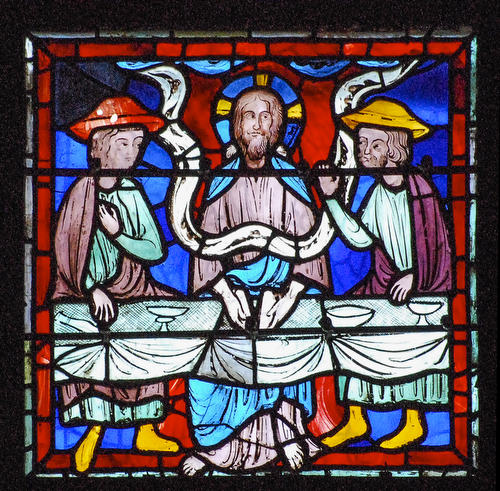
Jesus revealing himself to two disciples after the resurrection (Luke 24:31)

In the case of the disciples, Jesus said their grief would turn to joy. That was his promise. Not an easy life, health and wealth, power or privilege. In fact, early Christians sometimes were persecuted horribly, many lived in poverty their entire lives, and ten of the original 12 disciples were martyred.

Yet, at the same time, somehow, there would also be joy. The disciples would literally see Jesus again. They would be able to resume their close, intimate relationship. Their grief would turn to joy—a joy no one would be able to take from them (John 16:22). And that has been the experience for countless millions of people who have come to know and experience Jesus in their personal lives ever since.

For me personally, I feel so much joy every time I hear again the good news of the Gospel—even if it is for thousandth time: “God so loved the world that he gave his one and only Son, that whoever believes in him shall not perish but have eternal life” (John 3:16, NIV). Knowing and believing that God loves me and generously offers me forgiveness, salvation and eternal life is so marvelous that I cannot find adequate words to describe the joy I feel. And it doesn’t stop there. Whenever I sense God’s gracious, merciful, kind, generous, healing, or life-giving presence, the peace and joy I feel is indescribable.

Over the past five years, one of my greatest sources of joy has come from commiserating with other like-minded people of faith, many of whom are also grappling with so much death, destruction, and suffering in the world. Many conversations can devolve into angry outbursts or rehearsing the same offenses and fears again and again. But the turning point for me often comes when we stop complaining or wringing our hands in fear and start praying.

When I pour out my heart to God with a brother or sister in Christ, a deep peace often settles over me. And more than once, I’ve opened my eyes to see one or more of my prayer partners beaming with the same joy that I was feeling. In such moments, I don’t feel so alone or hopeless anymore. Jesus’s living presence has been revealed. I see him in them, and they see him in me. God has not abandoned me in my suffering. There is still goodness in the world. Jesus Christ is present and at work in me and among others who know, love, and serve him as I do.

As Jesus said: In this world you will have much grief, but your grief will turn to joy.

No matter how much you may have lost or what you may be going through right now, Jesus’s promise to his disciples is for you, too. You don’t have to suffer alone, without hope and without joy.

The journey to joy begins and ends with Jesus. See where he is. Embrace him. And you will have a source of comfort and joy, forever.

With the love of Jesus Christ,

Dr. Tim

“May the God of hope fill you with all joy and peace as you trust in him, so that you may overflow with hope by the power of the Holy Spirit” (Romans 15:13).

Leave a comment

Filed under Hope

A Time to Grieve

Sometimes weeping is exactly what we most need to do. (A Biblical Reflection for Holy Week)

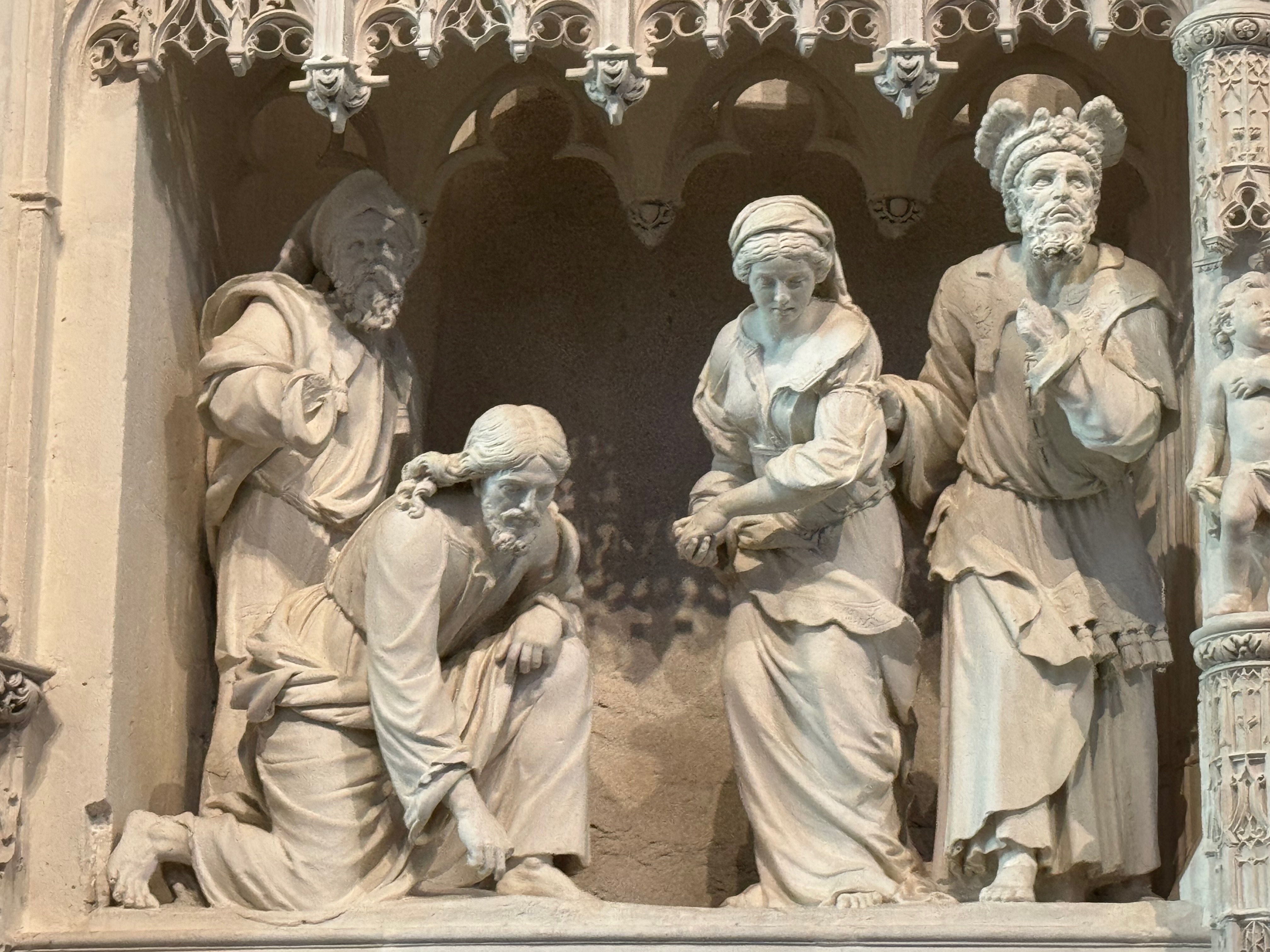
The Pieta in a frieze depicting Mary’s grief (In the choir, Chartres Cathedral, France)

In the biblical book of Ecclesiastes, the preacher writes: “There is a time for everything, and a season for every activity under the heavens: a time to be born and a time to die… a time to weep and a time to laugh, a time to mourn and a time to dance…” (3:1,4).

So, what time is it? What time is it for those living in places like Myanmar, Eastern Congo, Ukraine, Gaza, and many other places around the world, for those whose lives are consumed by unimaginable hardship, violence, and loss due to war, earthquakes, famines and other apocalyptic like disasters? What time is it in America? What time is it for you?

For me, there is not one simple answer. On one hand, the problems and suffering of the world call me to take my responsibility as a global citizen all the more seriously, to look for more ways to support my brothers and sisters in Christ around the world, to speak out against injustice at home and abroad, to protect the vulnerable and abused, to share the Gospel with those who do not know the hope that comes through Jesus, and to link arms with others who are trying to exhibit the love of Christ in concrete ways to those in need.

At yet, sometimes it all feels like too much. Sometimes weeping is exactly what I most need to do. And it’s not just me. One of my closest colleagues in Myanmar, who does more than anyone I know to help others in need, wrote to me after the 7.7 magnitude earthquake and admitted, “Sometimes I feel very depressed.” Another colleague from Ukraine confided to me, “I am war fatigued, to say the least.” At such times, as much as I would like to bury my painful feelings, run away, or just collapse in weariness, what I usually need most is to stop trying to help anyone else for a moment and take some time to grieve.

  • By grieving, I release the tremendous pain I feel before it explodes inside me or utterly depresses me.
  • By grieving, I can feel and not forget how much I loved whomever or whatever I lost.
  • By grieving, I can rage against the powers of death and destruction, refusing to be defeated by evil.
  • By grieving, I feel the depth of my frustration and tap into my determination to live.   
  • By grieving, I admit to myself, “So much is out of my control. There’s so much I would like to have been able to do but couldn’t.”
  • By grieving, I give up expecting unrealistic miracles. Instead, I reach the end of myself and reach out to God and others for the comfort and strength I need.

On Good Friday, Christians remember the awful day when evil forces conspired to kill Jesus. In the photo you see, Mary, the mother of Jesus, is depicted with her hands outstretched, her face contorted with grief, and her eyes turned heavenward. Her beloved son, Jesus, had just been brutally nailed to a cross, executed for daring to challenge the religious authorities, who were blind to God’s working through his life and indifferent to the needs of the poor, needy, and vulnerable.

In her moment of unimaginable pain, with Jesus’s lifeless body draped over her knee, Mary could only see and feel her great loss. She didn’t know that resurrection was coming. Even if she had all the faith in the world, the horror of it all remains. What must it have been like for Jesus’s poor mother? What is it like for those burying their dead in Mandalay, in bombed out villages, in IDP camps? For those who are still searching for lost ones, who have disappeared or are presumed dead under the rubble of fallen buildings?

I only imagine how great their grief must be. But I do know this. For those who turn to God amid their pain and loss, and for those who put their faith in Jesus Christ, they do not “grieve… as those who have no hope” (1 Thess. 4:13). Why not? Because through a relationship with Jesus Christ, we do have hope. Hope that we are not alone or abandoned by our Creator. Hope for life after death—not just a reincarnation into another life of suffering, but eternal life with new bodies, hearts, and minds, re-created to live in fellowship with God forever. This promise is for all those who know and love their Creator and who put their faith Jesus Christ as their Savior and Lord. It’s by Christ’s sacrificial death that we are forgiven. It’s by the Holy Spirit that our hearts and minds are renewed. And it’s by believing that we are saved (Romans 8:1-6; 10:9-10).

That’s the hope we as Christians live by. But for this holy week, we must pass through Good Friday first. The night is so very dark, and our tears flow. It’s a time to grieve.

With the love of Jesus Christ,

Dr. Tim

Next time, I will write about “The Journey to Joy”.

1 Comment

Filed under Uncategorized

What kind of person do you want to be?

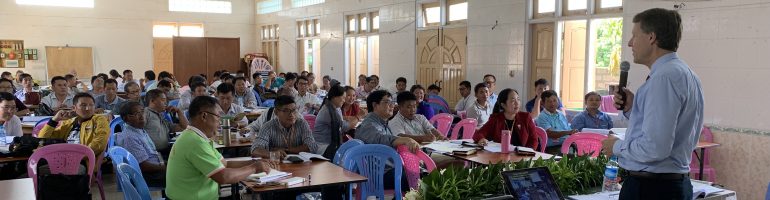
Charge to Kawthoolei Hope Theological Seminary graduates (March 30, 2025)

Graduates, congratulations! You’ve successfully completed your degree. And we’re here today to celebrate your great accomplishment. At the same time, as you probably know, graduation ceremonies are also called commencements. And that’s because, we are not only celebrating what you’ve achieved. We’re also marking the beginning of a new chapter in your life.  

After graduation, you are going to move from a time of academic learning to a new period for productive service in the Kingdom of God. With your education, you are now better prepared to move into positions of leadership, service or ministry—whether it is back in Kawthoolei and Burma or here in Thailand or somewhere else in the world. Wherever you go, you can be sure that you have important things to do and valuable contributions to make.

So, with your future in mind, I’m going to ask you three questions to help you go forward into this next chapter: Who are you? Who do you want to become? And how are you going to become that person?

Let’s take each of these three questions one at a time.

  1. Who are you?

All your lives, someone else has told you who you are. Your parents, your friends, the church, your teachers, and even your enemies. You’re a son or daughter. You’re Karen, Karenni, Chin, or some other ethnic group from Burma. All this is true, but who are you at the core of your being? Who are you in God’s eyes?

One of the things I’ve struggled with in my life is guilt and shame. Some of it is my own fault. I feel guilty about things I have done that I shouldn’t have done. Like sinning, disobeying God, hurting other people, and things like that. I also feel guilty about things I should have done but didn’t do. Like reaching out to someone who needed my help, or being more generous or sacrificial with my time and resources. I know nobody is perfect, but sometimes it’s hard to accept that I fall so short of the man, the husband, the father, the friend, the neighbor, that God wants me to be.

Shame is even more painful. According to psychologists, guilt is feeling bad about something I’ve done wrong. Shame is feeling like I am wrong. Whatever is wrong with me is unacceptable, and maybe unforgiveable. And when shame gets too intense, it becomes toxic. It poisons our minds. And the result is either, we just give up trying to be good. Or, we try and try and try to be as good as possible, or to accomplish as much as possible, or to impress other people as much as possible, trying to make ourselves feel better.

The only problem with trying to overcome shame by trying so hard is that it doesn’t work. Other people might be fooled, but we’re not fooled. We think we know the truth about ourselves: We’re bad, and there’s no hope for us. That’s what they call toxic shame.

Thank God, one day I attended a seminar on shame that set me free. The teacher explained that there is only one cure for toxic shame and that is the love and grace of God. I had to believe that God saw everything that was wrong with me, including all my sin, failures, and shortcomings. But he still loved me. Through Jesus, he forgave me. And what he wanted more than anything else was for me to believe him and to love him in return.

In that moment, I suddenly remembered the day my first son was born. I shared this story with some of you during the seminar last week. The nurse put my newborn son into my arms and without thinking I heard myself say to him, “No matter what you do in your life, I will always love you.” Remembering that moment in the middle of the seminar made me think, “If I could feel this much love for my son, how much more could my Creator love me!”

Two years later, my brother-in-law came up to me one day with a very strange question. He asked me, “Tim, who are you?” At first, I was taken aback. How am I supposed to answer a question like that? He knew me very well. I’m a man, a husband, a father, a minister, a teacher, an American. What kind of answer was he looking for? I said a quick silent prayer, because I knew this question was very important to him for some reason, and I wanted God’s help. Then, suddenly the answer came to me. Who am I? I am loved. That’s who I am.

2. My second question, as you enter this new chapter in your life, is who do you want to become?

Some of you already have plans and commitments. Some of you are still uncertain about what you’re going to do after graduation and how God is calling you. But apart from whatever role you’re going to play in your family, church, school, or community, who does God want you to become?

According to the Apostle Paul, in Ephesians 2:10, if you have put your faith in God’s grace, as we have been talking about tonight, you are now “God’s workmanship, created in Christ Jesus, to do good works, which God prepared in advance for you to do.” In other words, the person God wants you to become is the person God is already creating you to be. 

In his letter to the Galatians, Paul said that God’s calling is not to try to impress other people with your religiosity, accomplishments, status, cleverness, skills, or anything else like that. Rather, he said, in effect, none of that matters, because “what counts is a new creation” (Gal. 6:15b). What he meant was that through Christ’s presence in your heart and mind, you now can become more and more like him (Rom 8:29). Through the filling and leading of the Holy Spirit, you can discern all the good work that God intends for you to do. In other words, the person God wants you to become is not more full of yourself. It’s to become more full of Jesus.

It’s that simple. I didn’t easy, I just said simple. God’s vision for you is to become more and more like Jesus Christ in your heart, mind, and behavior—that’s what makes you a new creation. And with Christ at the center of your life, you will draw on your education, intelligence, skills, personality, and opportunities to do all the good works that intends for you to do.   

3. This leads us to our third question: How are you going to become this person—the new Christ-like creation that God has called you to become?

By now, you know that it is not easy to think and act like Jesus. Every one of us has to deal with temptations, human weakness, forces of evil, and so many other limitations and challenges. Sometimes, we feel confused and unsure of how to best serve God’s purposes.

Fortunately, there is an answer. And we find it in Paul’s letter to the Philippians.

In chapter one he calls the Philippian Christians “partners together with him in the Gospel” (1:5). As believers in Jesus Christ, loved by God, and saved from their sins, the Philippians devoted their lives to serving Christ and the Gospel. However, Paul, the founder of their church, had been arrested. He was being persecuted, and now they were facing persecution. They were scared and intimidated by their enemies. They started fighting among themselves.

So, the Apostle Paul writes them a letter both to remind them who they were and who God was calling them to be. And along the way, he explains how they can faithfully live out their calling.

He says many things, but I want to focus on the most important reason that they should have confidence going forward with their faith and calling. In chapter one he simply says, “He who began a good work in you is faithful, he will complete it.” (Phil. 1:6) Then, in the next chapter, he wrote, “Work out your salvation with fear and trembling, for it is God who works in you to will and to do what pleases Him” (Phil 2:13).

The answer to our third question, how can we hope to become the people God has called us to be is simply this: God is the one who will do it.

Your job is to keep submitting yourself to God and to keep listening for the leading and guidance of the Holy Spirit. You must cooperate with the Spirit and work as hard as you can to do the good works God puts before you to do. But God is the one who can transform your heart and mind and make you more and more like Jesus. The Holy Spirit is the one who enables you to become the person God is calling you to be.

Looking back on my life, I can see that I never could have planned all the things that I’ve done or learned or accomplished on my own. I had many more weaknesses and limitations than I realized. And I made many mistakes as well.

But God has been very gracious to me and has led me all along the way. Through all the ups and downs, and despite my many failures and weaknesses, God taught me many things. I was humbled by my failures, but I learned from them. And through so many trials, God kept calling me back to himself and encouraging me to not give up.

And so I’ve learned, for me to fulfill my calling and to become the person God has called me to be, the most important thing is maintaining a close relationship with God. I must keep humbling myself, listening to others, asking for help when I need it, and keeping my eyes on Jesus. I am far from perfect, and sometimes I don’t know what I’m supposed to do next. But I trust God to complete the good work that he began in my life. I trust God to lead and guide me, and to make my life fruitful. And then I keep moving forward as best I can. 

Today, I’ve raised three questions for you to think about as you start the next chapter of your life: Who are you? Who do you want to become? And, how are you going to become the person God is calling you to be? You must answer these questions for yourself, but God’s answers are these:

Who are you? You are a dearly loved child of your Creator God. Your Father in heaven wants you to rest in his love and to know, love, and serve him in return.

Who does he want you to become? God wants you to become more and more like his Son, Jesus, and to use you to shine Christ’s light and love into this broken world through your good deeds and words of comfort, encouragement, and hope.

How are you going to become more like Christ? Only through the work of the Holy Spirit. You must set as your highest priority maintaining a close relationship with God by listening and cooperating with the Spirit in every way possible.

No one can do these things for you. We travel through life in community, but every great leader in the Bible, from Abraham to Moses, David, the prophets, Mary, Elizabeth, Jesus, Paul and all the apostles had their own personal relationship with God. And so my charge to you today is this: Seek God with your whole heart, mind, and strength and put the Lord first in every aspect of your life.

May our Lord Jesus Christ himself and God our Father, who loved us and by his grace gave us eternal encouragement and good hope, encourage your hearts and strengthen you in every good deed and word. —2 Thessalonians 2:16-17. Amen.
Leave a comment

Filed under Commencement Address (Charge to Graduates), Spirit-Led Living

The Light of Day

Why keeping our eyes on Jesus is so helpful

What do you think? Is the sun rising or setting in this photo? Without context, it’s not always so easy to tell the time of day.

Likewise, when darkness casts a thick shadow over our personal lives, or over our country and so many other places around the world, we may feel confused and uncertain about what’s really happening. What does all this turmoil, violence, and destruction mean for us and the people we care about? Is the light we’ve been depending on going to keep shining, get brighter, or God-forbid, go out altogether?

Personally, I’ve been going through all the stages of grief lately (shock, bargaining, anger, depression–but not yet acceptance) over the cataclysmic changes in my own country and all the upheaval and fallout globally. As I’ve written about before, I especially feel a lot of empathy for my students, colleagues, and friends trying to cope with ongoing, unimaginable oppression, abuse, and hardship in their war-torn contexts—especially those trying to survive in Eastern Congo, Myanmar, and along the Thai-Myanmar border, where I am serving now.

But this blog post is not about social and political problems, or even empathy for those who are suffering the most in our lives or around the world. It’s about how you and I can cope with the prevalence of darkness in our lives, especially when the light appears to be dimming in so many places for so many reasons for so many people. At times, I am tempted to despair. And you may be, too.

But I don’t. Despair, that is. And here’s the reason why.

The Apostle John wrote about him in the Bible, when he said:

“In him was life, and the life was the light of all people. The light shines in the darkness, and the darkness did not overcome it” (John 1:4-5, NRSV).

John was speaking, of course, about the incarnation of God in the form of Jesus Christ. He was saying that Son of God came into this world to shine the light of God into our darkness. Despite appearances to the contrary at times, our Creator is good and does care for us. Regardless of how bleak our circumstances or how unloving or hurtful others may be, in Jesus, there is light. There is love. And there is hope.

The key is to know where to look for the light and how to let the light of Jesus shine more brightly in our hearts and minds. You may have your own way of drawing on the light of God, but in my experience, if I want more of God, I have to reach out to him as a matter of intentionality and discipline. I have to pay attention to what’s beautiful, good, and inspiring in creation and in my family and among my friends. I must surround myself with others who can encourage me with their experiences with God, especially my brothers and sisters in Christ who remind me that I’m not alone and that God does answer prayers. And then what probably helps me the most is getting outside myself to do something loving and kind for somebody else. When I help lighten the burdens of others or simply show up to encourage them in their distress, I often feel better. I intend to be a conduit of God’s love to them, but I wind up experiencing God’s love for me in the process. And the light in my life gets brighter for me as well as for them.

These are dark days for many people. Perhaps for you, too. But do not assume that the light in your life is about to go out. Suffering may be an unavoidable part of human experience, and great losses are inevitable for all of us in this life. However, John’s word of hope remains true: “In him was life, and the life was the light of all people. The light shines in the darkness, and the darkness did not overcome it.”

May Jesus be the Light of your day today and shine more and more brightly in your heart and mind in the days ahead.

With love always,
Dr. Tim

Photo: Sun rising in Chiang Mai, Thailand.

6 Comments

Filed under Hope, Light in the darkness

Do the Good Thing

“[God] has shown you, O mortal, what is good. And what does the LORD require of you? To act justly and to love mercy and to walk humbly with your God” (Micah 6:8, NIV).

These are really tough times for so many people, for so many reasons, in so many places globally. In addition to the violence, oppression, and exploitation destroying lives in Myanmar and Eastern Congo, where I teach and minister, an abrupt U.S. foreign aid freeze is wreaking havoc among humanitarian organizations and producing fear and despair in millions worldwide. As you probably know by now, hospitals, clinics, food and medicine distribution, and many other critical services have already been shut down, and the world’s suffering is rapidly multiplying.

But all this is an old story. And it’s one I don’t want to get lost in. What I mean is the story of humanity’s selfishness, cruelty and neglect of the needy is as old as time. We have no choice about living in the world as it is, but I for one don’t want to let all the evil and suffering crush me or turn me into an angry, bitter, cynical person myself.

Running away, hiding, closing our ears, fuming incessantly, hating, or striking out with rage aren’t the answers. Those responses belong to our fight, flight, and freeze instincts. They’re normal reactions, which are sometimes helpful under certain circumstances (for example when the internally displaced people in Myanmar instinctively run for cover when they hear military jets flying overhead). But long term, thoughtful action rather than instinctive reaction does more good. Instead of being consumed by negativity and powerlessness, biblical writers teach us to stay focused on the good that is within our power to do, and then do it. Every day. As best we can according to the opportunities, abilities, and resources available to us.

The prophet Micah lived in a society where the rich were violent, exploitative, and oppressive (e.g., 2:1-2; 6:10-12). Those in power were manipulating the judicial system to favor themselves and subvert justice (e.g. 3:11; 7:3). And, unsurprisingly, the result was societal breakdown and widespread suffering among the most vulnerable and weak (e.g., 3:1-3; 7:1-6).

Micah’s response to these societal ills was to speak truth to power. He rebuked those who were in a position to do good but instead used their advantage selfishly and harmfully. In no uncertain terms, he called the powerful, the rich, and the unscrupulous religious ministers to repent and renew their commitment to living by godly values. What is the good thing that the LORD requires? Micah asks rhetorically. You should already know, he answers: “To act justly, to love mercy, and to walk humbly with your God” (6:8).  

Micah was written to call the powerful and privileged to repentance, but his ethics and standards are for everyone—including those of us who might be incensed by the seeming heartlessness and self-serving behavior of others. Everything we do should be measured against God’s standard of justice, mercy, and humbly walking with God. In other words, every time we’re tempted to judge, dismiss, push away, harden our hearts toward someone else, accuse, blame, lash out, or self-righteously justify ourselves at the expense of others, we should ask ourselves, “Am I being fair?” “Is this a situation in which God would want me to be merciful?” “Is my attitude humble and godly?” Or as Jesus would ask, “Am I acting out of love for my neighbor?” (Matt. 22:37-40; Mark 12:29).

Of course, when we try to apply this simple formula today, things can get complicated very fast. We live in a complex world with so many layers of competing needs, dysfunction, corruption, misinformation, partial truths, limited resources, and forces well beyond our control. Yet, we have to try.

Embracing godly values is what keeps us grounded in what is right, good, and true, so that we don’t get sucked into negativity or forget that we are called to put into practice what we preach to others. Walking humbly with our God is what reminds us that none of us is without sin. Every one of us has been the beneficiary of God’s grace and mercy, and God expects us to pass on what we have received freely.

At a time when there is so much human need and suffering, and so much chaos and turmoil within the United States, the world does not need any more self-righteous, judgmental religious people, or worse, those who are inflicting harm on others in God’s name. Nor do we accomplish anything by putting our heads in the sand or running away from the current crisis, or by throwing up our hands in helplessness. No, the enormity of the needs in the world and the magnitude of distress in America demand that each of us do something, something good, for the sake of others. Something that passes the Micah 6:8 test and fulfills Jesus’ command that we love our neighbors as we love ourselves.

The only truly good people are those who do good, as God defines goodness. So, let’s not be defeated by evil but join ranks with those who overcome evil with good (Rom. 12:21).

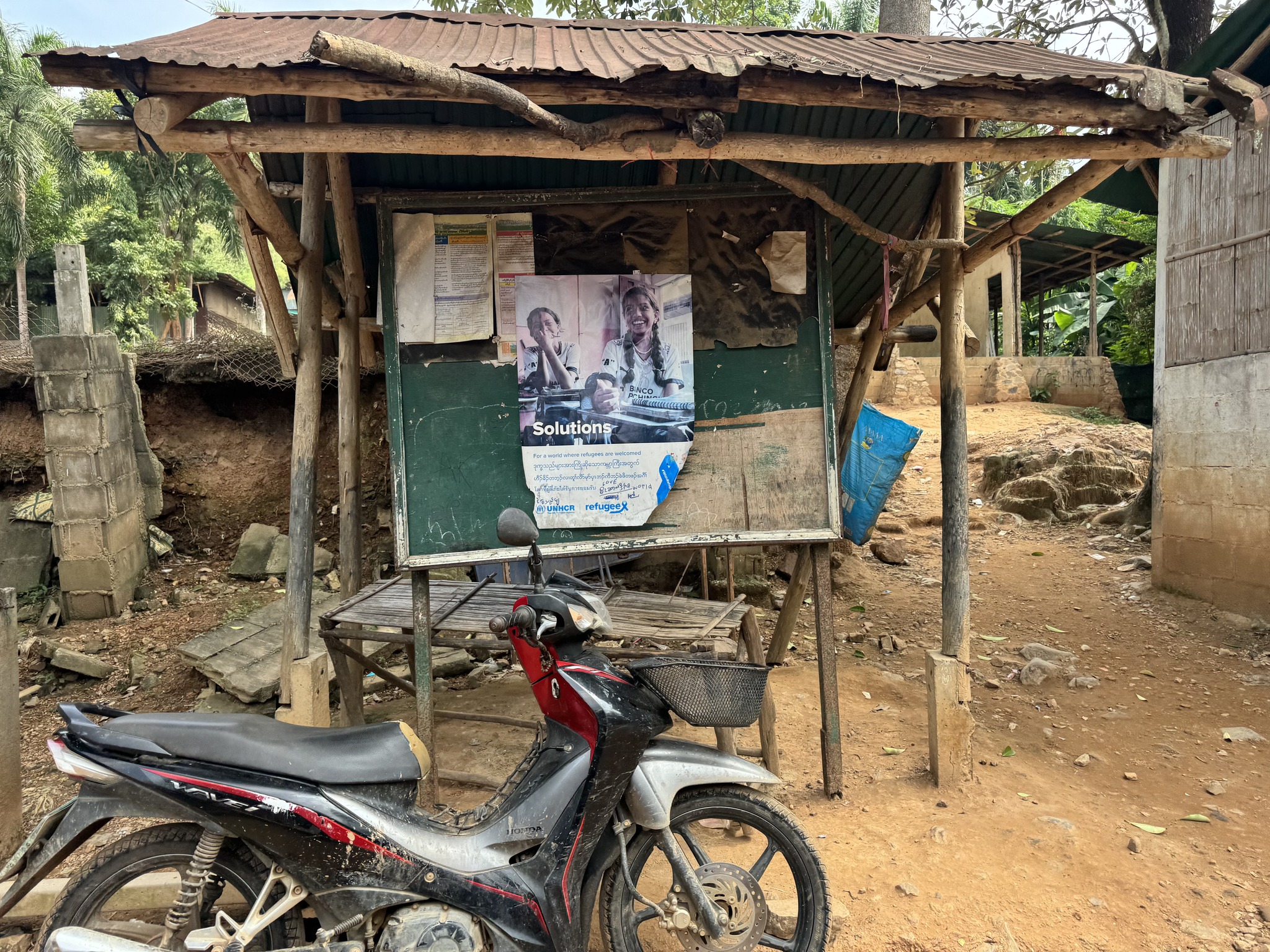
Photo: Tham Hin Refugee Camp, Thailand. The tattered poster on the board promotes a UNHCR (UN Refugee Agency) program, which is just one of many resources for impoverished refugees that has been defunded the United States administration. The hospitals in this and six other refugee camps have also been forced to close their doors due to the freeze.

1 Comment

Filed under Loving Others

A Different Kind of Happy

Saw Newton, two of my Karen students, and I being hosted by the pastor of one of the churches in Umpiem Refugee Camp, on the Thailand side of the Myanmar-Thai border.

Faith-inspired happiness

This holiday season, I’m thinking a lot about those who are far away from home, those who cannot go home, those who no longer have a home to go to, and those who may still live at home but no longer feel safe or happy in their own home. That means, I’m thinking a lot about so many of you–my students, colleagues and friends in Myanmar, Thailand, and the Congo, and also about so many others I know who are carrying such heavy burdens right now. I know this past year has been tough in many ways for so many, and the year ahead may be full of even more uncertainty.

At the same time, as we move into a new year, I see something else at work in your lives. Something hopeful.

The Psalmist wrote: “The LORD is near to all who call on him, to all who call on him in truth. He fulfills the desire of all who fear him; he also hears their cry and saves them. The LORD watches over all who love him, but all the wicked he will destroy.” (Psalm 145:18-20, NRSV)

Repeatedly we read such hopeful messages in the Bible. Though evil doers cause so much pain and destruction, God is still able to fulfill our heart’s desire and accomplish his good purposes in our lives. Even in our darkest night, nothing can extinguish the light of Jesus Christ or snuff out God’s forgiveness and salvation. Amid our suffering and long wait for God to bring justice to this broken world, the Holy Spirit comforts us by reminding us that God is watching over us.

We may not always perceive God’s care, and too many of the world’s population see no hint of God’s justice throughout their lifetimes. But the consistent witness of the Bible is that the world is not spinning out of God’s control, despite appearances to the contrary. No one knows when God may undermine evil doers, overthrow cruel tyrants, and subvert systems of oppression, but God will ultimately right the wrongs and save those who love him and put their trust in him. Our job is to continually pray for God’s will to be done and for God to deliver us from the evil one (Matt. 6:9-13) and to focus on the good that is within our power to do—loving God and loving our neighbors as ourselves (Matt. 22:37-40).

When I stop to think about all this, I feel happier. I’m happy to be loved by my Creator, to know him, and to believe that my life has meaning and purpose because of God’s ongoing work in my life. I’m happy to not have to face the troubles of this world alone. I have support. I have help. I’m also happy that I am surrounded by other people who, like me, know and love God and want to serve him by helping others and contributing to the world. We have so much in common that even our shared tears, along with all we are working for and experiencing together, fill the empty, longing places in my heart.

And all this makes me happy, very happy, most of the time. Of course, I struggle with sadness, anger, frustration, despair, and fear like everyone else. Sometimes, all I can do is cry out to God or try to distract myself from my pain. But having such a personal relationship God and surrounding myself with other like-minded and like-hearted followers of Jesus has made all the difference. It’s this kind of faith-inspired happiness I treasure the most. And that’s what I am wishing, hoping, and praying for you, too, as we go into another year.

So, Happy New Year. Take heart. “The LORD is near to all who call on him, who call on him in truth.”  

With the love of Jesus,

Dr. Tim

President, Faith, Hope, and Love Global Ministries (www.fhlglobal.org)

1 Comment

Filed under Hope

When They Die Too Soon

A Biblical Reflection on Handling the Premature Death of a Loved One

Monument in the Mae La Refugee camp, near the Myanmar-Thai border, in Thailand

When Paul had finished speaking, he knelt down with all of them and prayed.They all wept as they embraced him and kissed him. What grieved them most was his statement that they would never see his face again….” (Acts 20:36-38, NIV)

Recently, another one of my former students from Myanmar was tragically killed. Not yet 25 years old, La Seng sacrificed his life for something he believed in. He died a hero and inspiration to many. One of his closest friends, in mourning his death, told me that La Seng was a symbol of love and integrity. He showed by his life—and by his willingness to risk death—what it means to live by his faith and put love into action.

Yet, his death was deeply disturbing, too. He was way too young, and the hole he left was big. Those who knew and loved him feel devastated. To me, he was like a spiritual son. God had used our special connection to guide and encourage him at a critical point in his life. He had found peace in the direction he chose. Alongside his willingness to serve his country, he led a ministry to children and became known among his classmates and friends as someone who was exceptional conduit of God’s love and grace.

What good could possibly come out this loss and so many others like it? How are we supposed to handle it when someone like this dies too soon and leaves such a big void in our lives?

In Acts 20, the Apostle Paul doesn’t answer this question directly, but his farewell speech to the elders of the church in Ephesus (in modern day Turkey) offers many helpful insights. He called the elders to meet with him one last time on a beach a several days journey from their home. He knew that he would be arrested, abused, and unjustly killed at some point in the future, and he wanted to prepare them and say goodbye. Knowing that their hearts would be broken, he prayed for them and urged them to remember their experience with him, to live by what he taught them about Jesus, and to follow the example that he had set for them.

At one point he said, “Now I commit you to God and to the word of his grace, which can build you up and give you an inheritance among all those who are sanctified.” Then later he added, “In everything I did, I showed you that by this kind of hard work we must help the weak, remembering the words the Lord Jesus himself said: ‘It is more blessed to give than to receive.’” (Acts 20:32, 35)

The lesson from Paul’s words and example is profound. In your times of great loss and suffering, you are not alone. You are not without hope. All is not lost. Your painful experiences and heart-breaking losses don’t have to break or defeat you. God still has a purpose for your life. And Jesus shows you the way.

The death of those who die too soon may feel like a waste, but their death need not be wasted. When you lose people whom you’ve admired, respected, or loved, all that they gave to you is still within you. Nothing can remove the sting of their death, and your grief may linger for years. Yet, the memory of them can remain a source of inspiration and strength for the rest of your life. And God’s “word of grace” can minister to your broken heart and nourish and feed your soul.

You can move beyond focusing so much on the pain of your loss and turn your attention to those who are still living, those you who need from you what God has equipped you to offer. And, by God’s grace, the road filled with too many early deaths can become a pathway overflowing with life.

“And after you have suffered for a little while, the God of all grace, who has called you to his eternal glory in Christ, will himself restore, support, strengthen, and establish you. To him be the power forever and ever. Amen.” (1 Peter 5:10, NRSV).

6 Comments

Filed under Hope, Uncategorized

Deep Calls to Deep

A Reflection on God’s Comforting and Inspiring Presence in Nature

“Why are you cast down, O my soul, and why are you disquieted within me? Hope in God; for I shall again praise him, my help and my God. …Deep calls to deep at the thunder of your cataracts; all your waves and your billows have gone over me. By day the LORD commands his steadfast love, and at night his song is with me, a prayer to the God of my life” (Psalm 42:5, 7-8, NRSV).

Some of my most treasured experiences have come from sitting by the lake in northern Wisconsin, watching yet another beautiful sunset and sharing the moment with the love of my life. With so many troubles and concerns always on my mind—especially for my students, colleagues, and friends who have been suffering for years in Myanmar, Thailand, and Eastern Congo—taking time in nature is so therapeutic.

When I contemplate the wonders and beauty of God’s creation, listen to the cry of the gulls soaring overhead, and almost feel the velvet-like softness of the rippling waves gently rolling to the shore, I feel peaceful once again.

What is it about being in nature that draws me to God and transforms me? How is it that I can start out weary and drained and leave renewed and reinvigorated?

“Deep calls to deep,” the Psalmist wrote. I get it. Somehow in the presence of God’s handiwork, it becomes easier for me to perceive God’s presence. I can believe again that I am not alone in this world and that there is something good and hopeful that is worth believing in and working for.

In this vision of goodness, beauty, kindness, and love, my desire to participate in God’s sacred love flow is rekindled. And while I cannot say what hope there may be for those I care and feel so much compassion for, I know that I cannot turn away from their pain or mine. I cannot carry all the burdens that so easily overwhelm me. It’s too much. But I can continue to care and to love to the best of my ability. I can offer whatever I have to those who need a helping hand, a smile, a word of encouragement, a relevant Bible verse, or just a listening ear. I can let God’s love flow through me, trusting that the Holy Spirit will use me if I simply make myself available within my limits.

I think the secret of this kind of renewal of the heart and mind is this. The more I lift my eyes to look at my Creator and contemplate the goodness in creation, the more my despair dissipates. The more my angst over my powerlessness recedes, and the more comfortable I am with my limitations. It’s not resignation or surrender, it’s acceptance and trust.

I have such limited ability to save others anywhere near as much as I would like to. But by re-grounding myself in God and renewing my weary and broken heart, I find new strength to reach out once again and be present to those in need. In those moments of deep connection with my Creator, the Holy Spirit reminds me that God is still actively at work in the world for good, and I still can participate and contribute, despite my frailty and limitations. And that is enough.

4 Comments

Filed under Faith, Knowing God

To Speak Up or Not?

What Jesus’s example teaches us about integrity and courage

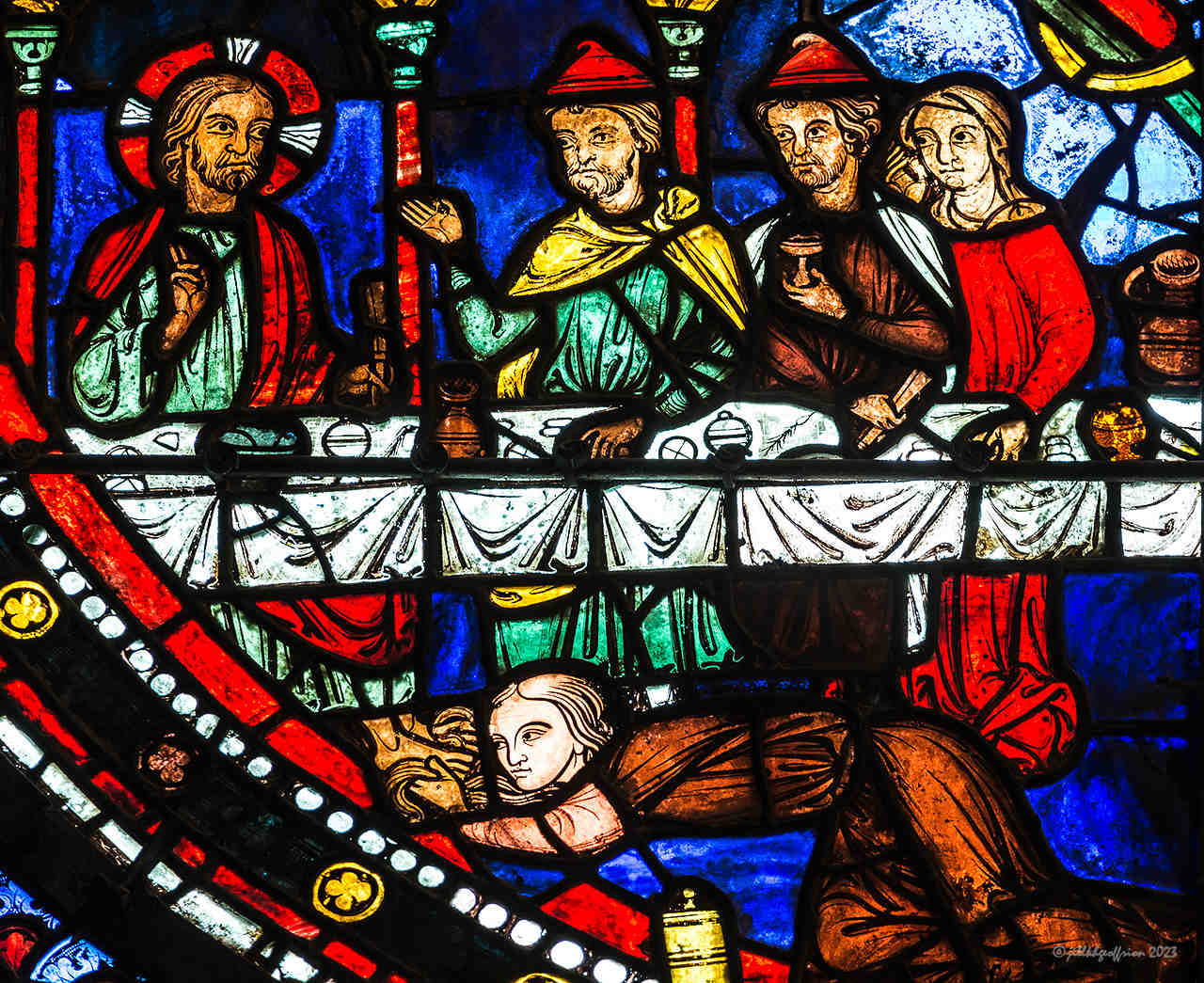
Jesus and the woman caught in adultery, depicted in the Chartres Cathedral

Sometimes what other people think, say, or do is very upsetting to me. But I don’t always know how to handle the situation. Should I say something? Should I ignore them? Do I dare risk their criticism or some other kind of backlash? I want to have the courage to speak up, but I don’t want to say or do something that I will regret later.

When I reflect on some disastrous interactions I’ve had in the past, I realize that some situations are just too fraught to speak openly. When I counsel my students in war-torn Myanmar, I have to remember that they might be imprisoned or killed for saying the wrong thing in public. In the family or at church, I want my voice to be heard, but I sure don’t want to alienate or cause irreparable damage unnecessarily. 

Recently, while searching for how to handle a situation that was disturbing me, I had the opportunity to pray with these discernment questions in the Chartres Cathedral. As I looked around at the stained-glass windows and sculptures of Jesus’ life ministry, I suddenly realized something. Now I know why the well-known guideline, “What would Jesus do?” isn’t always helpful. Jesus didn’t have just one way of responding to people with whom he disagreed or who were saying or doing something he found offensive. The context mattered, as did the person with whom he was interacting.

Sometimes Jesus spoke up, and other times he remained silent. Sometimes he was confrontational and spoke harshly, other times, he was gentle and kind. Sometimes he spoke with words, other times he let his actions speak for him. But no matter how he responded, he made his choices wisely and courageously, always in keeping with God’s values and priorities, whether he spoke up or not.  

  1. Jesus spoke up when moved by compassion. For example, on one Sabbath, Jesus wanted to heal a man with a shriveled hand, but the religious leaders forbade any “work” on the Sabbath. So, Jesus “asked them, ‘Which is lawful on the Sabbath: to do good or to do evil, to save life or to kill?’ But they remained silent. He looked around at them in anger and, deeply distressed at their stubborn hearts, said to the man, ‘Stretch out your hand.’ He stretched it out, and his hand was completely restored” (Mark 3:4-5). Sometimes, we have to speak up when those around us (e.g., leaders, friends, family) forget that God values justice and mercy above our human-made rules and regulations (Micah 6:8).
  2. Jesus was clever in his choice of words when it was too dangerous to speak directly. One time, the leaders tried to trap him in his words by asking him if Jews should pay taxes to the Roman government. Jesus saw through their hypocrisy, and cleverly answered by saying “Give to Caesar what is Caesar’s and to God what is God’s” (Mark 12:17). By doing so, he could sidestep the trap being laid for him without compromising his integrity. Sometimes, we have to be smart about what choose to say when others want to harm us.
  3. Jesus spoke up when his followers might have been confused or misled by their religious leaders. Once, while teaching, he said, “The teachers of the law and the Pharisees sit in Moses’ seat. So you must be careful to do everything they tell you. But do not do what they do, for they do not practice what they preach” (Matt. 23:2-3, NIV). Sometimes, we have to speak up when our leaders are betraying godly values by their behavior for the sake of those who are at risk of following their bad example.
  4. Jesus knew how to skillfully defuse volatile situations by speaking the truth while avoiding direct confrontation with dangerous people. In the well-known story of the woman caught in adultery, Jesus both circumvents the trap set for him by the religious leaders and protects a vulnerable person at the same time. Jesus said, “‘Let anyone among you who is without sin be the first to throw a stone at her.’ And once again he bent down and wrote on the ground. When they heard it, they went away, one by one…. Jesus straightened up and said to her, ‘Woman, where are they? Has no one condemned you?’ She said, ‘No one, sir.’ And Jesus said, “Neither do I condemn you. Go your way, and from now on do not sin again’” (John 8:6-11). Sometimes, we have to calculate the risks of speaking directly and find creative ways to speak and live by our faith and values.
After his arrest, Jesus evades the questions of the religious leaders,
curtly responds to Pilate, and completely refuses to answer Herod (Luke 23).
  1. Jesus remained silent when he knew there was nothing to be gained by speaking up. After Jesus had been arrested, “the high priest stood up before them and asked Jesus, ‘Are you not going to answer? What is this testimony that these men are bringing against you?’ But Jesus remained silent and gave no answer” (Mark 14:60-61). Likewise, when he was brought before King Herod, he refused to answer his questions (Luke 23:9). Sometimes, silence is the best response to people who aren’t looking for the truth or who are just looking for an excuse to condemn or hurt you.
  2. Jesus spoke up most loudly by his actions, with or without words. Jesus once said of himself, “The Son of Man came not to be served, but to serve, and to give his life a ransom for many” (Mark 10:45). And that’s how he lived, day after day. And that’s why he was willing to sacrifice all for the sake of those who put their faith in him. Sometimes, action, not words, is our most powerful way to “speak up”. How we love others is how we best reflect the light of Jesus Christ in contexts full of darkness and evil.

Discerning how and when to speak up often isn’t easy. In the situation that led me to seek God’s wisdom so earnestly while in France, the answer eventually came. I had to speak up. I am bending over backwards to do so in the most constructive way, but I could not let my fear of judgment or rejection make me hide or pretend that I was fine with what was happening. I still don’t know how it is all going to turn out, but I feel peaceful and confident that I did (and am doing) the right thing by speaking up.

May God give you the wisdom you need to discern where, when, and how you need to speak up in your life, and then courage and strength to do with integrity.

In the Chartres Cathedral, Jesus is seated on the great throne of Judgement in the West rose window, holding out his nail pierced hands. God has appointed him to be our Judge (2 Tim. 4:1), but he judges as one who bled and died to save those who put their faith in him.

Leave a comment

Filed under Practical Christian Living

Grieving Our Losses

…honestly, yet hopefully

[Four minute read]

Serving victims of oppression, brutality, and destruction in Myanmar, Thailand, and the Democratic Republic of the Congo has forced me to grapple with unimaginable trauma and despair afflicting those living in or fleeing war zones. Their suffering and losses are often unimaginable to someone like me, who grew up in a comfortable, relatively safe, Midwestern town in the United States. Yet, there they are. Right in front of my eyes.

Sometimes, all they have left is their tears. Sometimes, all they can feel is their rage. Their future has been decimated. Their hope shattered. Biblical promises fall flat. God seems cruelly absent.

Just recently, one of my former students in Myanmar, Pastor “Kyaw”, texted me with some tragic news. His village had been bombed. Several were killed or injured. For many, everything they owned went up in flames. More than 200 homes now lie in ruins, including his own. As is true for some three million people throughout Myanmar, most of the people have sought shelter in an internally displaced persons (IDP) camp or have fled the country. Their village has become a ghost town.

How are they going to survive? How are they going to cope psychologically, emotionally, and spiritually? What will be the long term of effect of such trauma and loss?

In talking with Pastor Kyaw, Psalm 137 came to mind. I’m sure the ancient Israelites were asking themselves the same questions during their exile in Babylon (6th Century BC). They had been conquered by an invading army. They were forced from their beloved villages and country. They had lost everything that was “home” to them and were now captives in a foreign land. As far as they could see, they had no hope. No future.

“By the rivers of Babylon—there we sat down and there we wept when we remembered Zion…. O daughter Babylon, you devastator! Happy shall they be who pay you back what you have done to us! Happy shall they be who take your little ones and dash them against the rock!” (Psalm 137: 1, 8-9, NRSV)

According to the famous psychiatrist, Elisabeth Kübler-Ross, those who suffer significant loss typically move through five stages of grief: denial, anger, bargaining, depression, and acceptance (On Death and Dying, 1969). 

  • “Denial” is when you are still in shock or just can’t get your head around what just happened or what bad news the doctor told you is going to happen. 
  • In “Anger,” you rage, sometimes quietly, sometimes loudly. You never dreamed that something like this would happen to you. And if someone betrayed you or let you down—whether it is yourself, someone else, or God—you might be really angry about it, and wind up lashing out with hateful or violent words to hurt whomever you blame for your loss.
  • In the “Bargaining” stage, you might obsess on how you might have prevented the tragedy. “If only I had done [this or that] ….” Or, if you’re grappling with bad news for the future, you may make desperate promises to yourself, to others, or to God. “I promise I will do better….” hoping to somehow prevent the inevitable.
  • In “Depression,” the horrible truth has finally sunk in, but it may feel like too much to bear. Your energy and drive are gone. You may be plagued with guilt, shame, or despair. You may not even want to get out of bed in the morning. 
  • Fortunately, depression need not be the final stage in grief. For most people, at some point, there comes “Acceptance.” Here, you finally accept what you cannot change in the past or something that is going to happen. You may retain an emotional tie to someone or something you have lost, but the bond you feel ceases to be debilitating. Your strength and motivation to live return. 

I don’t know for sure which stage the ancient Israelites were in when Psalm 137 was written. It’s obvious they were in a lot of pain, and they certainly hadn’t reached the acceptance stage. They were still weeping and raging. The psalmist was even dreaming of the most cruel kind vengeance imaginable. His feelings were raw and real, but only one snapshot within his undoubtedly long grief process.

Thus, we should not think this psalm is blessing hatefulness or brutal retribution. Rather, it acknowledges the need for honesty about our darkest and most troubled feelings en route to healing and wholeness. Our instinctive reactions may look really ugly at times, but honesty must precede transformation.

When I feel distraught or full of rage, as painful as it may be, it’s usually best if I let myself feel my feelings. I try not to condemn myself for feeling hateful or vengeful, but I don’t act on these feelings. I recognize that I’m grieving, and such reactions are normal. I need to be honest about how I’m feeling, but I don’t have to stay stuck there. Truly, I don’t want to waste my life being angry all the time.

After Jesus’ horrific killing, followed by his astonishing resurrection, the time came for him to say goodbye to his disciples. One more loss for the disciples. Yet, according to the Gospel of Matthew (28:19-20), Jesus urged his disciples to look forward, not backwards. He told them to focus on their calling, which in their case was to preach, teach, and demonstrate the truth of the Gospel. And he assured them that they would not be alone. “And surely,” Jesus promised, “I am with you always, to the end of the age” (Matt. 28:20b). 

When I come to the depression stage, sometimes, I just need to feel sad. My sadness honors the fact that I cared a lot about whatever was (or will be) lost. Yet, as upsetting or devastating as the situation may be, I don’t want to spend the rest of my life feeling sad. Depression is not my destiny. I may not feel hopeful at the moment, but I can choose to believe that God is present and at work in my life for good. And I can reach out to Jesus to ask for help to escape the darkness and despair.

I don’t know what kind of loss you might be grieving right now, or what stage of grief you might be in. But based on my ministry among victims of war and great loss, my personal experience, and the teaching of the Bible, I can assure you there’s more to your life and future than whatever you’re experiencing at the moment. It won’t always feel this awful. There will be a better day. No matter what you may have lost, you still have an important purpose in life. There’s work for you do—people who need your love and care. Other grieving or struggling wayfarers, who need a word of encouragement or simply a helping hand. …those who do not know the hope you have of an enduring relationship with God through Jesus.

So, grieve your own losses honestly. Be compassionate and patient with yourself as you work through the various stages of grief. Yet also remain hopeful. You are not alone, and Jesus Christ has called you to share in his ministry of love in this broken world full of so much sorrow and pain.

Leave a comment

Filed under Hope

Don’t Forget to Stay Grounded

Karen refugees from Burma, living in Mae Sot, Thailand

When the winds blew and the waves crashed over their little boat on the Sea of Galilee, Jesus’ disciples panicked. Jesus was sleeping. Was he going to do anything to save them? Did he even care? In desperation, they woke him, crying out, “Lord, save us. We’re going to drown!”

But from Jesus’s perspective, there was no reason to worry. No matter how dark the sky or threatening the tempest, he knew that their lives were in God’s hands, and nothing could touch them unless God allowed it. So, he chastised his disciples, saying, “You of little faith, why are you so afraid?” Then, he rebuked the wind and the waves, and the sea became calm. And the disciples were amazed. (Matthew 8:23-27)

The disciples were not being criticized for waking Jesus up or for asking for his help. Nor is Jesus saying that you shouldn’t take threats to your health or well-being seriously. Neither is he suggesting that those who trust in God will never be harmed. You know that isn’t true. The Bible and history are full of stories of people suffering unjustly or dying prematurely from diseases or other natural and unnatural causes. Even Jesus himself was eventually crucified. But at that moment, in the midst of a raging storm, he was at peace. He trusted in God’s will for his life, and for his death. 

No, Jesus chastised the disciples because they were letting their circumstances unnerve them. They were giving too much power to their fears, forgetting that following Jesus into the boat calls for trusting God through the storm.

What about you? How are you coping with the many current threats to your well-being? Like Jesus’s disciples, sometimes all you might be able to see is the size of the waves, the strength of the wind, and all the real dangers. Sometimes it may seem like Jesus is sleeping or that God doesn’t care. But it isn’t the case. God does care, and Jesus is not sleeping.  

If you can do something reasonable to diminish the risks facing you or your family, do it. But no matter what is or isn’t within your power to do, keep returning to the Source of your life and eternal hope. God is your anchor, your rock, your strength. You need God’s working in your life not only to answer your prayers, but to enable you to experience peace amid the storm and courage to face the uncertain future. Without a solid connection to God and staying grounded in your faith, the storms may very well unnerve you and throw your life into chaos. The opposite of what you most need at such times.

Over the past two months, I had the privilege of teaching and ministering again along the border between Myanmar and Thailand. One of the things that has made a big impression on me is how much the refugees actively draw upon their faith to cope with their fears and hardships. This is true for those still struggling to survive and cope within Myanmar as it is for those who have fled to the other side of the border. Their lives may have been devastated, their future hope shattered, and family members and friends killed, but they keep going back to God for stability and strength. They frequently worship, pray, read Scripture, listen to sermons, sing, fellowship together, help one another, and participate regularly in many other such spiritual activities. It’s how they structure their lives and stay grounded in their faith. It’s how they find peace, courage, and strength despite their circumstances.

I don’t know what you might be going through today, but I do know that everything looks and feels different when I stay well connected to God and trust in God’s will for my life amid the storms.

The Psalmist put it this way, when he told himself: “Yes, my soul, find rest in God; my hope comes from him. Truly he is my rock and my salvation; he is my fortress. I will not be shaken” (Psalm 62:5-6, NIV).

5 Comments

Filed under Faith

“A Beautiful Thing”

“’Leave her alone,’ said Jesus. ‘Why are you bothering her? She has done a beautiful thing to me’” (Mark 14:6)

There’s a well-known story in the Bible about a humble woman who anointed Jesus in the home of a man named Simon. In Matthew and Mark, the woman anointed his head with expensive perfume, while Luke says that she anointed his feet with both her tears and the perfume. Despite the differences, all three Gospel writers agree that her behavior was both beautiful and scandalous, but for different reasons.

In Matthew and Mark’s versions, the scandal was her “wasting” valuable perfume, which could have been sold and the money given to the poor. However, Jesus rebukes her critics. She was preparing him for his burial, he explained. Of course, preserving resources and caring for the poor are normally very good things to do. But, in this special circumstance, what she did with the perfume was “a beautiful thing,” Jesus said (Matthew 26:10; Mark 14:6).

In Luke’s account, the scandal was that Jesus would allow a sinful woman to touch him (Luke 7:36-50). We don’t know if she was a prostitute, a woman who had committed adultery, or what her sin may have been. For Simon, the fact that she was a sinner meant that she was to be marginalized and avoided. However, once again, Jesus could see that unusual circumstances required an unusual response. Instead of rejecting her because of her sin, as the Law required,  he saw her heart and responded to her from his heart.

Through Jesus’s welcome, kindness, and mercy, the woman experienced the grace that she desperately needed to help her back on her feet and to restore her hope. Her heart was overflowing with gratitude and love, and her tears spilled onto his feet. As Jesus explained to Simon, “her sins, which were many, have been forgiven; hence she has shown great love” (Luke 7:47).

Whether these are two different occasions, or the same story was told in two different ways, we will never know. But one truth shouts out from both versions of Jesus’s encounter with the woman who anointed him: Sometimes our minds, traditions, and usual ways of thinking do not lead us to make right judgments or to see ourselves and others as Jesus does. Sometimes, only our hearts can show us the better way. As seventeenth century Christian philosopher, Blaise Pascal, famously once said, “The heart has its reasons of which reason knows nothing.”  

When the door to teaching and ministry in-person in Myanmar slammed shut three years ago due to a military coup on February 1, 2021, I was thrust into a confusing, frustrating, and terrifying time of loss and ongoing uncertainty. In partnership with my school in Yangon and in collaboration with other friends and leaders, we discovered online teaching and webinars, only to have grapple with daily power outages and unreliable, diminished wifi and internet access. In such a context, which has only worsened over the three years, I have struggled to find meaningful ways to still contribute.

What real difference can I make when so many lives have been shattered and so much hope has been snatched from their grasp? What’s worth working towards, when so much has fallen apart and some losses will never be recovered? Does it make any sense to build something today when it might be destroyed tomorrow? How can my few resources and limited abilities ever make a difference in the face of such overwhelming needs and mind-boggling obstacles?

I don’t know how to answer all these questions intellectually. But I do know this. When I listen to my heart, I often know what to do, why I’m doing it, and why I don’t quit. And inasmuch as I stay connected to God’s love and compassion, I usually know where I need to be. 

The unnamed woman in our story did a “beautiful thing” for Jesus, even though what she did didn’t make sense to others. But it made sense to her, and history has proven the rightness of her heart and her actions. As Jesus predicted, wherever the Gospel has been preached throughout the world, “what she has done has been told, in memory of her” (Matt. 26:13). 

What beautiful thing is in your heart to do? When there are no longer any questions to answer or decisions to be made, what story is going to be told about you and what you have done with your life?  

Photo credit: Jill K.H. Geoffrion (www.jillgeoffrion.com), window inside Chartres Cathedral, Chartres, France

Leave a comment

Filed under Love, Loving Others

“How to Have A Happier New Year”

Happy New Year! Of course, that’s what everyone always says this time of year, and I sincerely mean well whenever I say it. I also like it when someone says it to me. But the truth is, what I really wish for you is that you would discover greater peace, joy, meaning, and love this year, no matter how happy you may feel on any given day.

In other words, I’m not satisfied with just expressing or receiving wishes for happiness. I want so much more for myself and for you. And there’s so much more that goes into finding happiness than just wishing or making resolutions. If I am going to experience more of the abundant life that Christ talked about, I’m going to need to lean into my relationship with God in a big way. And I’m going to need to make a lot of good decisions about how I think, how well I stick to my daily habits, and how I choose to respond to life’s troubles and to other people who annoy me or cause me pain.

For me, it starts with attitude. I always look forward to the start of a new year, but first, I find it very encouraging to pause long enough to count my blessings from the year just ended. Despite so much grief, frustration, and uncertainty everywhere I look, I thank God for all the good exists amid the pain and struggle. I am particularly grateful for the love of my family, a new granddaughter, many good friends, and wonderful colleagues and co-workers. I treasure the many precious Spirit-filled moments I experienced with family, friends, students, and other people that I care about. 

I can easily find many things to complain about, but I choose to name and celebrate all the love and goodness in my life amid the darkness and suffering. That’s my starting place for preparing for a happy new year.

As you look back on 2023, what do you see when you look at your experiences through the eyes of faith and gratitude? For many of you, the year has been full of tears, frustrations, and painful memories. Can you see the blessings, too? 

As I look ahead, I assume that God will continue to be active in my life in loving for good ways. I also accept that I have a part to play in securing my own happiness. But the key here where I’m going to look. As a Christian, I believe that I will find the greatest satisfaction, meaning, peace, and joy in life by living for Christ and prioritizing love of God and neighbor, as Jesus taught us. 

For me, this means asking the right questions and seeking answers that will qualitatively effect how I think and live. For example, what habits do I need to form or strengthen so that I could know, love, and serve God better from day to day? How do I need to structure my prayers, reading, and giving so that I could better support and strengthen my brothers and sisters in Christ? What disciplines do I need to put into place so that I will “not be overcome by evil” so easily, but will be better able to “overcome evil with good” (Rom. 12:21)? What changes do I need to make in my calendar, my attitudes, and my interactions, so that I will keep growing as a person, husband, father, grandfather, boss, co-worker, mentor, and friend? Above all, what spiritual practices will help me to keep my eyes on Jesus and to keep listening for the “still, small voice” of the Holy Spirit in every aspect of my life, every day?

What are your hopes, intentions, and prayers for 2024? What is your part in pursuing and securing your own happiness?

No matter what may happen (or not happen), may God work in your life in ways that you can perceive and appreciate. May you get clear about your role in seeking and securing your own happiness. May you see that what you most want and need is God, and that your inner peace and joy depend upon your relationship with Jesus Christ and on staying firmly in the sacred love flow—God’s love to you and for you, and God’s love flowing through you to others.Though we often cannot understand the ways of God, we have the promise in Scripture that God does indeed work all things together “for good for those who love him and are called according to his purposes” (Romans 8:28). Though sometimes we cannot see any good coming from our suffering or the evil deeds of others, this promise reminds us that we’re not alone amidst our struggles and suffering. For me, the thought that God is present and active in my life for good motivates me to order my life, thoughts, and priorities in the best possible ways. And to stay positive and keep going.

May you find the peace, joy, meaning, and strength you are looking for in 2024 by loving God and devoting yourself to serving his good and loving purposes. This is Christ’s pathway to the life you were called to. And this is what I mean when I wish you Happy New Year.

3 Comments

Filed under Hope

“What’s worth celebrating this Christmas?”

The angel announcing Good News to the shepherds (Chartres Cathedral, Chartres, France)

“In that region there were shepherds living in the fields, keeping watch over their flock by night. Then an angel of the Lord stood before them, and the glory of the Lord shone around them, and they were terrified. But the angel said to them, “Do not be afraid; for see—I am bringing you good news of great joy for all the people: to you is born this day in the city of David a Savior, who is the Messiah (Christ), the Lord.”

Luke 2:8-11 (NRSV)

Every year at Christmas time, these beloved verses from the Bible are read in some 37 million churches and in countless Christian homes all over the world. They concisely express why Christians celebrate the birth of Jesus year after year and why he is the focal point of their faith. In fact, the Greek verb, euangelizomai, which is translated, “bring good news” in verse 10 is a cognate of the Greek noun, euangelion, which is usually translated “Gospel” (literally, “good news”). In other words, the good news of the Christian Gospel, which has been preached and throughout the world over the past 2000 years, has its roots in the angel’s “good news of great joy for all the people,” the birth of Jesus.

Yet, as I sit in the comfort of my relatively safe and secure home in Minnesota, surrounded by all the privilege and material abundance of the American context, I can’t help but wonder how these verses sound to the millions of people in my own country and elsewhere around the world who must suffer daily from hunger, deprivation, or violence. I’m thinking about those who are abandoned, neglected, alienated, or simply alone without loved ones and friends at Christmas time. I’m imagining what it must be like for the 100 million internally displaced people and refugees who live in war-torn countries such as Ukraine, Myanmar (Burma), the Democratic Republic of the Congo, Gaza, Sudan, Syria, and other such places, some of whom have been or are my students. Amid such terrifying, unstable, or oppressive conditions, is there any “good news of great joy” for them? Is this Gospel message really for “all people” or only for those fortunate enough to live in peace, abundance, and security?

To answer these important questions, we have to get back to what the angel meant by “good news of great joy” and to what we can learn by observing the response of the shepherds to this good news.

In context, according to the Jewish writers of the New Testament, Jesus’s birth was the supreme moment in history when God fulfilled his promise to send a Savior to a troubled world. However, he didn’t arrive as a king, a political mastermind, a great warrior, or super-hero. Jesus identified with the most disadvantaged and beleaguered people in the world by living in poverty and suffering unjustly. Jesus was “God-with-us” (Immanuel), who experienced the same pain of discrimination, oppression, and mistreatment that afflict so many around the world.

Amid such difficult circumstance, Jesus lived with integrity, courage, faith, and compassion despite how he was mistreated and the obstacles he had to overcome. Even though he was forced to die a hideous and cruel death, he did not shrink back from his faith or devotion to God the Father. Evil-doers could and did take his life, but they couldn’t touch his soul. They could nail him to a cross, but they couldn’t keep him from changing the course of history and giving hope to billions of people globally.

In other words, Jesus’s birth was good news of great joy for all people because of what it signified about God’s faithfulness and what it announced about God’s intentions to provide a way of salvation through Jesus, despite our circumstances. 

  • By God’s incarnation in the form of Jesus Christ, God became one of us, identified with the suffering of humanity, and showed us the way forward.
  • By Jesus’s teaching, we understand that the most important thing in life is to seek to know, love, and serve God with all our beings and to love our neighbors as ourselves. 
  • By Jesus’s death, he demonstrated the extent of God’s love for us and invited us to share in his life and love through faith and obedience.
  • By Jesus’s resurrection, God proved that there is life after death and thus hope for all those who follow Jesus.

The overall message of Jesus’ life, teaching, death, and resurrection is clear: We need not be crushed by distressing circumstances and suffering. Even the most tragic life can be so much more than the sum of the injustice, misfortune, and suffering that we may have to endure. We can choose how we are going to be in the world and how we are going to respond to our troubles. By keeping our eyes on Jesus, we can face our adversity with greater strength and courage. And when we reach our limits, and even stumble and fall, Jesus is there to show us the way to get back on our feet again. And when we cannot even get back on our feet again, Jesus does for us what we cannot do for ourselves. He saves us. 

I don’t know how much of all this the lowly shepherds would have understood when the angel announced good news of great joy that first night in the fields. But they didn’t need to understand it all at once. They simply needed to believe that God did in fact have good news for them of great joy. And they needed to start looking for Jesus. 

This Christmas, I cannot guarantee for myself or anyone else that the day will be merry or that the year ahead will be better than the year just finishing. However, because of the birth of Jesus, we have a Savior, who is Christ the Lord. Despite our circumstances, there is always good news of great joy worth celebrating. 

Sculpture of worshipping shepherds (Chartres Cathedral)

*Photo credit for two images: ©Jill K.H. Geoffrion https://jillgeoffrion.com/

Leave a comment

Filed under Faith, Hope

When God and the Church Let Us Down

I find myself thinking a lot about God and the role religion is supposed to play in the world. And I’m not happy. I wish that God would do more to help those who cry out to him for relief from their suffering. I wish that the Church would do a better job at reflecting the love and light of Christ and stop failing the people so miserably. And I wish I were a better follower of Christ myself and could be less selfish and self-serving. 

But God is who God is. The Church is who she is. And I am who I am. I will never fully understand God. The Church will always be flawed. And I will continue to struggle with my own demons, sin, and shortcomings until the day I die. Nevertheless, I have found this to be true as well: my faith and relationship with God has filled my heart with a peace that surpasses understanding, with joy I could not produce on my own, with love like no other, and with meaning and purpose in a chaotic world that sometimes seems bent on its own destruction. 

There is so much in this world and in myself that I wish were different, and so much more that I would like God to do, but I cannot imagine grappling with life’s challenges without God’s help, guidance, and encouragement. Though I have had to swallow the bitter pill of disillusionment and disappointment with God, religious leaders, and even with myself, my faith keeps evolving and producing hope—only now in more realistic ways. 

I now understand better that Jesus did not come to solve all our problems for us, at least not in this life. Rather, he came to show us the way to God and the way to know, love, and serve God in our daily lives, as we struggle along with the rest of humanity with all that is wrong with our troubled world. The more I let go of what I cannot change and what God chooses not to change, and instead focus on God’s priorities of loving God and neighbor, the more God seems to appear. The more I shift my focus from asking God to fix everything to seeking wisdom, ability, and opportunities to grow through my adversity and to serve others instead of myself, the more I truly believe that we flawed human beings can still make a difference. Living by faith and God’s love is both our calling and our opportunity to “not be overcome by evil,” but to “overcome evil with good” (Romans 12:9-21).

On my 66th birthday this past week, my loving wife, Jill, gave me a special tour of the beautifully restored south transept of the Chartres Cathedral in France. Among the many splendors were stained glass windows depicting many Old Testament prophets and New Testament Apostles, such as Peter and Paul. I was particularly drawn to the window of Micah (pictured above), who summed up God’s requirements for human beings in the familiar command to “do justice, love mercy, and walk humbly with our God” (Micah 6:8). I was also touched by a window portraying two doctors (pictured below), who were being honored for treating the needy for free and sharing the Gospel with those  who did not know the way of salvation.

Outside, on the south porch is a tall, striking sculpture of Jesus, le Beau Dieu (the Beautiful God). He’s holding the Book of Life and is surrounded by his disciples, almost all of whom gave their lives to share the Gospel and bear witness to the life, death, and resurrection of Jesus. Underneath him is a much smaller sculpture of a wealthy donor, accompanied by two assistants, who are busy distributing bread to the hungry. 

What a perfect combination of images: Prophets and apostles, who teach us about our Creator’s intention for humanity and who show us the way to God. Powerful and privileged members of society, who nonetheless demonstrate their Christian faith by generously serving the needy, at their own expense. Jesus—the way, the truth, and the life (John 14:6)— alongside a faithful follower of Jesus, who shows us what faith looks like when those who are blessed with abundance are surrounded by those who lack the basic necessities for living. 

Suddenly the pieces came together for me. It was all there. In the windows and the sculptures, the answer to my broken, anguished heart. Light. Life. Love. Hope. My tears began to flow. Some emotional dam broke. It never felt better to let it all out.

Despite all that is wrong with the world, the Church, and me, and despite all my disillusionment, frustration and disappointment, the message of the Gospel is as relevant today as ever. There are countless individuals who are sacrificially serving others with kindness, compassion, and mercy. The power and presence of God are real. Christ does transform lives. There’s still a way forward for me. 

“Lord, thank you for another year and for the precious gifts from your Holy Spirit this morning. Please hold me close to you especially when I begin to doubt and feel so discouraged. Help me to see and accept the life-giving messages of the prophets and apostles. Help me to keep my eyes on Jesus, my heart open to the needs of those around me, and my hands busy serving others. May your will be done more and more.”

1 Comment

Filed under Faith

Does God Care?

What Jesus’ raising of Lazarus says about God’s heart.

Jesus raising Lazarus in stained glass window (Chartres Cathedral, France)

“When Jesus saw her weeping, and the Jews who came with her also weeping, he was greatly disturbed in spirit and deeply moved.”

John 11:33

Normally, the well-known story of Jesus’ raising Lazarus from the dead (John 11:1-43) is told as evidence of the miraculous power of Jesus Christ. It also vividly illustrates the hope of all Christians. God the Father will give eternal life to all those who put their faith in God’s son, Jesus, the promised Messiah and Savior of the world (11:25, 41). All this is true to the biblical story. But there is more.

When we pay attention to the emotion of the story, we can also perceive the heart of God. John tells us that Jesus “loved Mary, Martha, and Lazarus” (John 11:5). After Lazarus’s death, when he spoke with Mary and the others who were grieving, he himself was “deeply moved in spirit and was troubled” (11:33). Then, when he saw the tomb of Lazarus, “Jesus began to weep” (11:35). In other words, through Jesus’ emotional response to the tragic death of his friend and the grief of his sisters, we learn how deeply he loved and cared about his friends, despite his decision to delay in traveling to Bethany after he heard the news of Lazarus’s sickness.

Jesus had known that his delay would result in Lazarus’ death. Nevertheless, he deliberately waited, because, as he explained to his disciples, he knew that raising Lazarus from the dead would bring more glory to God and to God’s son than if he rushed to Bethany to save him from dying (11:4). But we should not think that his interest in bringing himself glory came from egoism. No, bringing glory to himself was ultimately for the sake of the people he loved. The greater he was held in their esteem, the more confidence they would have to look to him for eternal salvation. In other words, there was a reason that he delayed in going to save his friend, but it wasn’t because he didn’t care. 

In troubled places like Myanmar (Burma), western Thailand, and Eastern Congo, where I teach and minister, sometimes I hear Christians who sound a lot like Mary and Martha. Why doesn’t God rescue us? Why doesn’t God do more to help us? If Jesus would come quickly, then so many people would not have to suffer and die.

Indeed, there is so much evil in this world that defies explanation for those who believe in a loving, all-powerful God. We know that sometimes we suffer because of the sin of others, who abuse, neglect, or exploit us. Sometimes, we cause our own suffering, because of our ignorance, foolishness, or outright sinful behavior. But, other times, we simply cannot fathom why God allows his children, people God has created and loves, to suffer so horribly and painfully, day after day, year after year. 

Throughout time, humans who believe in God have wrestled with the perplexing problem of evil. If God is both good and all-powerful, why does evil exist? Why does God not intervene to alleviate human suffering and put an end to evil? In the Bible, the Apostle Paul taught that the whole world is under the curse of sin and will not be delivered until Jesus returns, when God will save all those who put their trust in him (Romans 8:22-30). But why did God create a world in which evil even exists, and why doesn’t God do more to rescue his loved ones from their suffering while they wait for Jesus’ return?

Some theologians suggest that the explanation for human suffering lies in God’s decision to give humans freedom. Only those who are truly free can love from their hearts and with their wills. But when we have ability to choose to do good or to do evil, to love or to hate, to care or to harden our hearts in indifference to others, etc., sometimes our choices are going to make things worse.

Other theologians speculate that for some mysterious reason, either due to how God designed the universe or due to the very nature of God, God is powerless to stop the suffering on his own. God cares and is active among us but can only produce positive change in the world in conjunction with the actions of his human creation. In other words, perhaps God cannot stop human suffering unless human beings choose to cooperate with the Holy Spirit’s leading to overcome evil and alleviate one another’s suffering.

We may never be able to solve the problem of evil or explain God’s actions or inaction in face of human suffering, but one thing we can hold on to. The story of the raising of Lazarus illustrates that God does indeed care about his children, despite God’s delay in coming to rescue or save us. Jesus was moved by the grief of Mary of Martha because he loved them. He wept at Lazarus’s tomb, because his heart was broken.

I pray every day for God to deliver the Burmese people from their oppression, to provide for the IDPs and refugees in Myanmar and Thailand, and to bring peace to Eastern Congo. And I agonise over God’s delay and grieve with those who have lost and suffered so much. But one thing I do not do. I do not doubt God’s love. I may not understand God’s ways and delays, but I believe that God cares. I believe that God is grieving with us, and he hears our cries and weeps alongside us. I believe he will continue to supply the love, courage, and strength we need to keep caring for one another. And while I struggle amid so much grief and suffering, I trust that God will not delay forever. Jesus Christ is already with us now by his Spirit, and one day there will be resurrection and eternal life for all those who put their faith in him.

That’s the kind of hope we find in the Bible. Not freedom from all suffering in this life or the promise of a human-created utopian society on earth. But an eternal relationship with a caring God and his crucified son, who lived, died, and was resurrected for us.

May our Lord Jesus Christ himself and God our Father, who loved us and by his grace gave us eternal encouragement and good hope, encourage your hearts and strengthen you in every good deed and word.

2 Thessalonians 2:16-17

Photo Credit: Jill K.H. Geoffrion

1 Comment

Filed under God's Love, Hope, Love

What Makes Jesus So Special?

A Christmas Meditation

As most people know, Jesus was born in a stable, a lowly place fit for animals, not humans (Luke 2:1-7). He grew up poor, without privilege or comfort. His family and all the Jewish people lived in a land occupied by Roman soldiers, who could be heartless, cruel, and brutal at times. At one point, they even had to flee to Egypt to save Jesus’s life, when one of the Jewish collaborators, King Herod, sought to kill all the Jewish children two years old and under (Matt. 2:16-20). Yet, this poor, underprivileged, at-risk Jewish boy, whose birth we celebrate on Christmas day, rose to become the Savior of the world for all those who put their faith in him.

“In that region there were shepherds living in the fields, keeping watch over their flock by night. Then an angel of the Lord stood before them, and the glory of the Lord shone around them, and they were terrified. But the angel said to them, “Do not be afraid; for see—I am bringing you good news of great joy for all the people: to you is born this day in the city of David a Savior, who is the Messiah, the Lord. This will be a sign for you: you will find a child wrapped in bands of cloth and lying in a manger.”

Luke 2:8-12 (NRSV)

It’s truly an amazing turn of events. As author Fulton Oursler put it years ago, Jesus’s life is the greatest story ever told. His poverty wasn’t bad karma. And his rise wasn’t good luck. Jesus’s birth, life, death, and resurrection were all one big demonstration of the incredible love and power of God to save the world. Jesus’s story, his teaching, and the Gospel he preached shouted out, “God sees you in your pain, suffering, and struggle! No matter how poor, disadvantaged, or marginalized you might be, God loves you. Repent of your sins and put your faith in God’s son, Jesus, and you will know the full measure of God’s grace and forgiveness.” (John 3:16; Luke 24:47) And once you enter into this new relationship with God through faith in Jesus, nothing will ever be able to separate you from God’s love, in this life or the next. (Romans 8:31-39)

“For God so loved the world that he gave his only Son, so that everyone who believes in him may not perish but may have eternal life. Indeed, God did not send the Son into the world to condemn the world, but in order that the world might be saved through him.

John 3:16-17 (NRSV)

This is the true meaning of Christmas. It’s not about power, privilege, material possessions, glitter, or parties. It’s not something just for a few ethnic minority groups or people in the West. It’s about Jesus. And it’s about what Jesus did for the whole world by giving hope to even the most hopeless people in the most hopeless of circumstances.

As such, Christmas is rightly a time of great celebration. It’s a wonderful time to eat special foods, give and receive gifts, laugh and enjoy the love and friendship of those we hold most dear. But Christians do not party at Christmas time to forget their troubles, or look for life in material things, food, and drink, as some may be doing over the holidays. No, followers of Jesus celebrate joyfully because he has given us something precious that no one can take away from us. Through faith, believers have entered into a loving, grace-filled, hopeful relationship with God that will last for eternity.

This is what makes Jesus and Christmas so special for me. I hope this is true for you, too. It can be, if you will put your faith in God’s love and in Jesus for yourself.

Leave a comment

Filed under Faith

Coping Better with Unwanted Change: Four Steps to Greater Peace and Joy (Conclusion)

Conclusion

The four-step restorative process that we have been discussing in successive weeks—See, Accept, Appreciate, and Delight—is simple in theory, but often takes a fair amount of work and patience to move through all the steps fruitfully. Are you seeing progress? If not, go back to the earlier steps, and spend more time thinking, praying, and processing until you feel ready to move forward to the next step.

No matter how much you may still be struggling with one or more steps, the way forward will surely include thinking positively, prayer, and applying your faith in concrete ways. Paul’s teaching to the Philippians speaks directly to this spiritual truth.

Rejoice in the Lord always; again I will say, Rejoice….

Do not be anxious for anything, but in everything, with thanksgiving,

make your requests known to God.

And the God of peace will fill your hearts and minds

with the peace that surpasses all understanding.

Finally, whatever is true, whatever is noble,

whatever is right, whatever is pure,

whatever is lovely, whatever is admirable

—if anything is excellent or praiseworthy—

think about such things.

Whatever you have learned or received or heard from me,

or seen in me—put it into practice.

And the God of peace will be with you.

Philippians 4:4, 6-9, NIV

When the Apostle Paul wrote to the Philippian Christians, he was in in prison for his faith, facing the possibility of execution. Yet, amazingly, he was able to be at peace and find joy in the midst of his suffering. He accepted his difficult circumstances and appreciated the opportunities they gave him to serve Christ and the Gospel ministry. He gave his heart to those in whom he delighted, and he laser-focused his mind on all the good and beauty he could see and perceive in the world and in others.

Such positive thinking and faith will not spare any of us from loss, unfair treatment, and suffering. You will struggle with many painful things throughout your life, just as I do every day. Yet, when I focus on what I’ve lost or can’t have or do, I get grumpy or depressed. When I focus on trying to please myself, I may feel happier for a while, but the feeling doesn’t last or doesn’t satisfy. However, when I delight in my relationship with God, in loving my family, friends, and neighbors, in thinking more about what I could give than what I could get, and in all the beauty and goodness in this amazing world, my life is often delight-full. And peace and joy are frequent companions.

In Practice

What step are you ready to take next? See? Accept? Appreciate? Or, Delight?

Find a quiet place where you can sit and breathe deeply for a few minutes. Detach yourself from whatever emotional turmoil you might be feeling and quietly observe yourself. Then, depending on where you are in the restorative process, choose one or more of the following steps to take.

Step 1: Name the unwanted change or loss in your life that is troubling you. Ask God for help by praying, “Loving God, please help me to see what I need to see. Give me courage to face the truth, and wisdom and strength to act on whatever you reveal.” Then, when you feel ready, tell yourself, “I can face this. I will face this. I want to be able to go on with my life.”

Step 2: When you can clearly see the troubling turn of events that you cannot change, take a deep breath, exhale loudly, saying, “The truth[CK2]  is clear. This is the way things are now. It’s not what I wanted, but I can accept it.” Repeat these sentences until you can express them with conviction and power in your voice.

Step 3: When you feel that you’ve let go of most of the emotional charge you’ve been carrying, turn your attention to your blessings and opportunities. Say aloud, “There’s more to my life than what I lost. I’m ready to start counting my blessings and looking for the opportunities that God may give me. I’m ready to move forward with my life.” The first few times you try to say these words, you may choke up or break down in tears. If moving on were easy, you would have done it a long time ago. Don’t give up. Keep saying these words until you believe them and feel your energy start to shift.

Step 4: Give yourself permission to enjoy your life again. Pray, “Loving Creator, please help me to delight in you more than in anyone or anything else. Please enable me to love what you love, to enjoy what you have given me to enjoy and to do, and to order my life by what you most desire.” Then, make a date with yourself. Perhaps it’s as simple as taking a day off or spending time in the garden. Maybe it’s sitting at the piano, singing a song, holding a baby, playing a game, or going for a walk. It’s time to laugh and love.


Bottom Line: Think positively and keep your eyes on your Creator and on Jesus. In life, there will always be so much that you cannot control, and so much suffering that you cannot avoid, but the more you focus your mind on and open your heart to whatever is good, beautiful, admirable, and life-giving, the better. The more you put your anxieties and grief in God’s hands, the sooner you will know the peace that surpasses understanding and the joy your heart longs for.

Suggested Prayer

“Loving God, I want to experience greater peace and joy, and I want to be the kind of person who brings more peace, joy, and love into the lives of others. Please draw me closer to you and lead me out of all those places where I feel stuck emotionally. Help me to see, accept, appreciate, and delight more and more in you and all the good you have for me to experience and to do. Thank you. In Christ’s name, I pray. Amen.”

/

Leave a comment

Filed under Coping Better with Unwanted Change

Coping Better with Unwanted Change: Four Steps to Greater Peace and Joy (Step 4)

We’ve been talking about a four-step restorative process to help you cope better with unwanted change or loss in your life. Once you can see and accept what you’ve lost or cannot change (Steps 1-2) and have started to appreciate your remaining blessings and opportunities (Step 3), you will experience more peace and joy. But there’s still another step.

Hiking through the Swiss Alps

Step 4: “Delight”

Trust in the LORD and do good;

dwell in the land and enjoy safe pasture.

Take delight in the LORD,

and he will give you the desires of your heart.

Psalm 37:3-4 (NIV)

What do you take delight in? What are the desires of your heart?

For me, I love my birthday, which I just celebrated last week. As usual, I took the day off from work to do whatever I felt like doing, all day long. I went out for breakfast, spent hours interacting with well-wishers on Facebook, reflected on my life and future, read something I was very interested in, celebrated with my family, and, of course, ate ice cream!

But birthday delights, holidays, Friday night dates, lazy Sunday afternoons, and other special times are the spice of life for me, not the main course. In the right measure, the little (or big) treats in life bring me a lot of joy. Too much of them, and they lose their specialness. If I try to take too much from them, they can become like idols—alluring and wonderfully distracting from weights and responsibilities, but lacking sufficient nutrition for my psychological, physical, emotional, and spiritual well-being. If my delights become addictions, they become my masters and can even slowly destroy my life or the lives of others.

From Scripture, we learn that God gave us many wonderful things in nature, in our beloved relationships, in our vocations, and in many other aspects of our lives. They are God’s gifts to us, and key ingredients to living fully and joyfully. God wants us to delight in them, providing that our greatest love is for our Creator God. If we keep this relationship first in our hearts, then then rest of our desires, delights, and loves will fall into their proper places, in the right proportions.

When I was teenager, I thought that these verses in Psalm 37 meant that if you put God first in your life (“delight in the LORD”), then God would give you whatever you most want (“the desires of your heart”)—perhaps a lovely spouse, riches, property, good friends, fun experiences, etc. etc. But one day it dawned on me that there may be a more profound way to view this promise. Instead of interpreting these verses as describing something transactional (if you do this, then God will do that), the process may actually be transformational (if you do this, then your heart and mind will be changed, leading to an entirely new set of desired outcomes).

When the Psalmist says, “delight in the LORD,” he is not talking about saying or doing something just to try to win God’s favor to get something from God. Rather, he’s saying, genuinely take pleasure in your relationship with God, just as Jesus taught us to do when he said, “Love the Lord your God with all your heart, with all your soul, and with all your mind” (Matt. 22:37). Then, the more your heart’s desire is genuinely to know, love, and serve God with all your being, the more you will want what God wants for you, i.e., to live righteously (or justly) and to do good, or in Jesus’ words, to “Love your neighbor as yourself” (Matt. 22:38). Delighting in your Creator God leads to delighting in fulfilling God’s good purposes for your life. And when you think and feel this way, the greatest joy and privilege God could ever give you would be to enable you to know, love, and serve God even better, and to receive more opportunities to let God love others through you.

For me, delighting in God includes taking time to appreciate all that God has done in creation and in my life. As a minister and professor, it also translates to spending most days happily teaching, researching, writing, coaching, praying for or with others, mentoring, and trying to help or encourage those who cross my path. As a married man with children, delighting in God and God’s calling on my life also means loving my wife and family as best I can.

I’m deeply grateful for the life that God has given me and for the ways Christ has inspired and called me to worship, serve, and love. Even with all the suffering, loss, and difficulties I and my family have had to endure over the years, putting God and Christ at the center of my heart and priorities has given me great meaning, purpose, peace, and joy, which I could not have found in the same way otherwise.

For you, delighting in God first may look different than it does for me, because you have your own relationship with God and Christ, and unique calling. But the spiritual principle is true for all those who can accept it, and the result of ordering your life in this way (greater peace and joy) will be the same: When you choose to delight in God and let God transform your heart’s desires to match God’s desires, God will surely give you the desires of your heart.

In Practice

By now, you should be experiencing the fruit of working through the first three steps: See, Accept, and Appreciate. But don’t stop there. Make a conscious decision to move toward finding and doing more things that delight you. And start with God.

If you’re ready to take the fourth step, reflect on the following questions.

  • Where are you looking for pleasure, peace, and joy from day to day?
  • How well does what you delight in line up with what God wants you to delight in?
  • What would it look like for you if you delighted more in God and God’s good purposes for your life?
  • If your heart’s desire matched God’s desire for you more closely, how would you order your life differently? What would you be praying for?

Bottom line: You can make a lot of progress toward greater peace and joy in your life by seeing, accepting, and appreciating. But the most important step of them all is Step 4: “Delight in the LORD, and he will give you the desires of your heart.”

Suggested prayer: “Loving God, I want what you want for me and my life. Please teach me to delight in you, and transform the desires of my heart to match yours.”

Next week: The conclusion to this series of articles with more practical suggestions for how to move through the four steps to greater peace and joy in your life

1 Comment

Filed under Coping Better with Unwanted Change

Coping Better with Unwanted Change: Four Steps to Greater Peace and Joy (Step 3)

By now, if you’ve been working through Steps 1 and 2, you know how hard it can be sometimes to face the truth about something you don’t want to be true. Even when you think you’ve accepted whatever you’ve lost or the burden you must carry, sometimes the old feelings of resentment, anger, or sadness can come surging back without notice. At such times, you may wonder if you’re ever going to heal or be able to let it go. This kind of regression is fairly common in my experience, but over time, the pain will diminish, and new life will begin to bud and then blossom once again.

Taking Step 3 can help.

Swiss Alps

Step 3: “Appreciate”

Then Jesus said to [Bartimaeus], “What do you want me to do for you?”

The blind man said to him, “My teacher, let me see again. Jesus said to him, “Go; your faith has made you well.” Immediately he regained his sight and followed him on the way.

Mark 10:51-52, NRSV

The story of Bartimaeus is about seeing one’s need, reaching out to Jesus for help, experiencing healing and transformation, and setting out on a new path. It’s not a formula for how to experience a miracle, but a testimony about someone who lived in blindness and despair whose faith led to regaining his sight and infusing his life with new meaning and purpose. “Immediately he regained his sight and followed [Jesus] on the way.”

As I struggled with accepting that the doors had slammed shut for me to return to Myanmar, I didn’t want to get over it, at first. I felt sorry for myself, and I didn’t want to imagine a new life or start a new ministry. I wanted the old one back. Yet, over time, as I began to accept reality more and more, I became less willing to stay stuck in my misery and more ready to notice and appreciate what I had gained in place of what I had lost.

For example, I began to see that not being able to travel abroad due to safety concerns was giving me more time with my family, and I loved it. Since I was now stationed in Minneapolis, I was now free to regularly conduct webinars on multiple continents, in Asia, Africa, and North America, sometimes all in the same week. Meanwhile, the crises brought a demand for me to write articles and a book, which were eventually translated into several languages for distribution in several countries. My point is, none of this would have happened if I hadn’t been forced to stop traveling abroad, and if I hadn’t been willing to look for, notice, and appreciate the silver linings, blessings, and new opportunities that were coming my way.

I am not suggesting that acceptance implies being thankful for every loss or unwanted change. Some things in life are so painful or downright evil that you can only grieve them. What I’m saying is that the restorative process requires not only opening your eyes to see the truth about your situation (Step 1). It also entails accepting what you can’t change (Step 2) while simultaneously opening your eyes to see beyond what you’ve lost to appreciate how God is still at work in your life for good (Step 3).

In Practice

According to the dictionary, the word “appreciate” means “recognizing the full worth of” something or someone. When you allow yourself to stay consumed with your negative emotional reactions to your circumstances or to annoying or burdensome people, there won’t be much room for peace and joy in your life. If instead, you open your eyes to appreciate (“recognize the full worth of) all the love, resources, opportunities, and gifts that are also part of your life, then you will experience a positive shift in your attitude and feelings.

However, to move from acceptance to appreciation, sometimes we need help. Bartimaeus asked Jesus to open his eyes, because he knew he was blind and that he couldn’t restore his sight on his own. Likewise, you may have reached the point where you want to believe there is hope for your future, but you just can’t see any. Here’s where good friends, pastors, counselors, and prayer can be immensely helpful. You don’t have to heal yourself on your own. You need to want to move forward and to be willing to get the help you need. You need to keep believing that God has not abandoned you and keep asking the Holy Spirit to help you to see what you cannot see (or appreciate) on your own.

Since experiencing your loss or unwanted change…

  • Who has come into your life or is contributing to your life in a new way?
  • How have you changed (in your heart, attitude, values, or priorities), for the better, because of how you have suffered?
  • What new clarity has emerged or is emerging?
  • What doors have opened to you (new opportunities)?
  • How do you sense God leading or calling you to something you highly value?

Bottom line: Self-pity or endless grief will only increase your sense of isolation, loss, or burden, while simultaneously blinding you to the very people and resources that you most need and value. Focus, instead, on what God is doing in your life for good and see where that takes you.

Suggested prayer: “Loving God, open my eyes that I may see all the good that you’re doing in me, and want to do through me.”

“Open My Eyes that I May See”

(Hymn by Clara Scott)

Open my eyes that I may see

Glimpses of truth thou hast for me.

Place in my hands the wonderful key

That shall unclasp and set me free.

Silently now I wait for thee,

Ready, my God, thy will to see.

Open my eyes, illumine me,

Spirit divine!

Next week, Step 4: “Delight.” Peace and joy are real possibilities for those who learn to delight in God’s blessings once again.

Leave a comment

Filed under Coping Better with Unwanted Change

Coping Better with Unwanted Change: Four Steps to Greater Peace and Joy (Step 2)

To help you cope better with unwanted loss, change, or burden in your life, the four steps in this restorative process provide a road map to greater peace and joy. The timetable can range from minutes, days, months, to even years in some cases. Don’t try to rush the process. If your head and heart can move in concert with one other, the process will work better.   

In Step 1, we looked at the importance of fully seeing the truth about whatever you’re going through. Feel your feelings. Assess and name what is real about your circumstances. Let yourself grieve, as ancient Israel did when forced into exile to Babylon. Then it’s time for acceptance.

Descending a treacherous path in the Swiss Alps

Step 2: “Accept”

Thus says the LORD of hosts, the God of Israel, to all the exiles

whom I have sent into exile from Jerusalem to Babylon:

Build houses and live in them; plant gardens and eat what they produce.

Take wives and have sons and daughters;

…multiply there, and do not decrease.

But seek the welfare of the city where I have sent you into exile,

and pray to the LORD on its behalf,

for in its welfare you will find your welfare.”

Jeremiah 29:4-7, NRSV

In these verses, Jeremiah is telling the exiles to accept that they were not going to go back to their homeland any time soon, and to start acting accordingly. They should build houses, have children, plant gardens, and even pray for the well-being of their new city (no doubt on the theory that if their new city prospered, so would they). It was time to move on, mentally, emotionally, and physically, and to start rebuilding their lives in their new location. This is what true acceptance looks like in practice. We let go of the emotional weight we’ve been carrying and controlled by, and start acting in ways that enable us to create a better future for ourselves.

As I was grappling with the shock and trauma from what was happening in Myanmar, I had to accept that there was nothing I could do to protect my students, colleagues, and friends there. I had to accept that frustrating, substandard, online courses (due to terrible internet issues) was the new normal for education there, at least for now, and that something was better than nothing for the young people feeling hopeless about their future. I also needed to let go of many of the relationships that had been important to me when I lived in country. It just hasn’t been possible to keep them going, long distance. And then my church, where I often preached twice a month, closed permanently. I will never preach, teach, or serve that congregation again. In fact, I might never be able to return to Myanmar in person, ever.

All this loss was hard to see, let alone accept, at first. Yet, accepting what I could not change was critical to my ability to preserving my sanity and redirecting my attention to something more constructive. I focused my attention and channeled my energy into my writing and online webinars. I consciously let go of my irrational belief that I had to stay in emotional turmoil to be supportive, and accepted my new circumstances. While I did not choose to be in this place of trying to serve Myanmar from thousands of miles away, the more I accepted the change as something outside my control and focused on what I could realistically accomplish, the more peace I felt. It was freeing and energizing at the same time.

In practice

What truth have you known for a while, but now need to accept? What might open to you, if you let go of your preoccupation with what you’ve lost and cannot recover?  

Acceptance doesn’t mean denying, minimizing, or rushing past your pain and distress. Whatever anger, resentment, bitterness, frustration, self-pity, or any other emotional reaction that has been consuming you takes time to work through. But the more you see these reactions as holding you back rather than helping you cope, the sooner you may be ready to let them go. Somewhere in the process, acceptance also means admitting to yourself that sometimes you cannot undo or fix something that is lost or broken. It’s not necessarily a weakness or failure on your part to accept your limitations. It’s actually a strength. When you find the courage to face and accept whatever truth you need to face, you will naturally shift your focus to what you can do, as opposed to what you cannot. You will start to see the opportunities that are present for you, and your motivation to pursue them will start to rise.

This week’s questions for reflection are these:

  • What troublesome turn of events, inconvenient truth, or unwanted change do you need to accept as a fact?
  • What would acceptance look like for you, in action? That is, if you really said goodbye to what was lost, what would you do differently? How would you invest your thinking, energy, and time?
  • How could you move toward building your home, developing new relationships, planting a garden, and blessing your new circumstances, as Jeremiah instructed the ancient Israelites to do?

Bottom line: Acceptance means letting go of your emotional turmoil related to your unwanted circumstances and looking forward once again.

Suggested Prayer: “God, grant me the serenity to accept the things I cannot change; courage to change the things I can; and wisdom to know the difference.” (Reinhold Niebuhr)

Next week, Step 3: “Appreciate.” Accepting what you cannot change sets the stage for moving to the next step, where you will discover many possibilities for experiencing greater joy and satisfaction.

Leave a comment

Filed under Coping Better with Unwanted Change

Coping Better with Unwanted Change: Four Steps to Greater Peace and Joy (Step 1)

What unwanted change is wreaking havoc in your life right now? Maybe it’s a significant loss—you were fired, someone you loved died or left you, or you’re grappling with an unexpected financial setback or liability. Maybe you received a frightening diagnosis, or you are struggling with an ongoing illness or disability. Maybe it’s an upsetting situation (or person) that you can’t avoid, such as an unreasonable boss, a troublesome neighbor, or a forced move and undesirable change of location. Whatever it may be, how are you handling it?

I’ve always been a glass-half-full kind of person. I believe in the power of positive thinking. Yet, how can you be upbeat when your life suddenly changes dramatically for the worse? How can you get past all the inner turmoil when you’ve lost so much or continually have to deal with a person or situation that you hate but can’t get away from?   

In this multi-part series, I’m going to share four steps that have been very helpful to me when I have felt heart-broken, frustrated, disappointed, sorry for myself, or any number of other negative emotions due to some unwanted change, circumstance, or person in my life. These insights first came to me many years ago when wrestling with painful relational issues when my family and I walked across northern Spain on the Camino in 2006. Over time, I’ve come to see that the same “4 Steps to Loving A Hard to Love Person” (See, Accept, Appreciate, and Delight) also provide a pathway to coping better with any unwanted change in my life. These steps may take a great deal of time to work through, but when taken thoughtfully and prayerfully, they have proven very helpful in getting unstuck mentally and emotionally in a wide variety of difficult situations. In this post, we’ll look at just the first step in this process.

Step 1: “See”

By the rivers of Babylon—

there we sat down and there we wept

when we remembered Zion.

Psalm 137:1 (NRSV)

When ancient Israel suddenly found themselves as captives in Babylon in 586 BC, they had to grapple with incredible losses—the destruction of the Temple in Jerusalem (Zion), their forced exile from their home country, and the collapse of their lives as they knew them. We can’t go back to reconstruct all the ways they handled this tragedy, but can infer from the text that, instead of putting their heads in the sand (e.g., by believing false prophets who tried to give them false hope of returning to Judah), the exiles saw the situation for what it was, faced the awful truth, and let themselves feel the emotional weight of their losses. “By the rivers of Babylon—there we sat down and there we wept….” Such grief was bitter, but it was also an important step toward moving forward.

However, for many of us, when we experience great loss or are suddenly forced to cope with frightening or overwhelming burdens, instead of facing the truth as the Israelites did, we get stuck in nonproductive, emotional turmoil. We may walk around in a daze or even in denial of what’s happened, or our fight-flight-freeze instincts may trigger an intense emotional response that either ties us up in knots on the inside or pushes us to act in unhelpful or even hurtful ways.

That’s what was happening to me for much of 2021. After 13 years of (in-person) teaching in Myanmar, the doors suddenly slammed shut in my face, when the military seized power in a coup-d’état on February 1. My school suspended all classes, the country began its ongoing slide into disarray, and it became no longer safe for me to return. Then there was the daily trauma from continual reports of imprisonment, beatings, or killing of protestors, doctors, journalists, political opponents of the regime, and even some of my students. Houses were burned to the ground and hundreds of thousands fled to the jungles to survive.

All this felt overwhelming and too difficult to fully face. For months, I felt almost panicky about my powerlessness to help them. I felt guilty that I wasn’t doing more, yet I could never identify what I could do differently. And so, instead of coming to grips with reality, I lived in a perpetual state of anxiety on their behalf, as if sharing their distress and desperation would somehow prove that I wasn’t abandoning them in their hour of need. The truth was, I was so caught up in my unexamined, emotional reaction that I couldn’t realistically assess the situation. I was stuck in my emotional turmoil, carrying a burden that wasn’t helpful to me or anyone else.

In practice

How about you? Where are you being held prisoner by your emotional reactions? What do you need to see more clearly about whatever you’re grappling with?

  • What did you lose or what burden has been placed on your shoulders that you did not choose and do not want?
  • What is the clearest, most accurate, description of what happened or is happening?
  • If you could name it, in a word or two, what would you call what happened to you?
  • How is this [unwanted situation] affecting you emotionally, physically, relationally, and spiritually?
  • What is your best realistic assessment of the implications of this change for your future?

Even if it takes more time than you’d like to be able to answer these questions clearly, don’t give up until you get enough emotional distance to accurately assess your situation. Be patient with yourself, but don’t give up. The goal is to be able to make good decisions about your future based on the truth instead of being held prisoner to your emotional reactions or a distorted picture of reality.

Here is one short prayer that I created many years ago continues to be helpful to me whenever I’m in emotional turmoil and can’t seem to see clearly. Perhaps it will help you, too.

“Loving God, please help me to see whatever I need to see. Give me courage to face the truth, and wisdom and strength to act on whatever you reveal.”

Next week, Step 2: “Accept,” the next critical step toward recovering your inner peace and joy.

Leave a comment

Filed under Coping Better with Unwanted Change, Hope

Look Up for Hope

I lift up my eyes to the hills—

from where will my help come?

My help comes from the LORD,

who made heaven and earth.

The LORD will not let your foot be moved…

The LORD will keep you from all evil;

he will keep your life.

The LORD will keep your going out and your coming in

from this time on and forevermore.

From Psalm 121

These are amazing words of inspiration and hope, but are they true? What does such faith mean for those who are traumatized and brutalized by others, such as the people of Myanmar, where thousands of people have had to flee for their lives into the jungle since the political upheaval began in 2021? How does the psalmist’s confidence apply to those whose homes have been burned to the ground? What sense do these assurances make to the families of those who have been beaten, tortured, or killed?

For years I struggled with such broad promises of the LORD’s protection and help in the face of so much exploitation and abuse of the vulnerable around the world. To trust in God’s deliverance sometimes seems ridiculous when so many suffer and die at the hands of evil doers. I’ve heard many testimonies of people who have experienced God’s miraculous help, yet other people of faith are never rescued by God.

At the same time, in spite of gut-wrenching experiences and unanswered questions, my faith in God has been indispensable and life-giving to me. God’s unconditional love, acceptance, and forgiveness have provided a powerful source of self-acceptance and daily hope. Jesus Christ’s resurrection gives me hope that someday there will be justice, if not in this life then in the next. God’s presence in my life motivates me to become the kind of man God wants me to be for my family and for my community. My experience of God’s love and grace fills me with more compassion and mercy for those who are weak and vulnerable, people who need to experience the light of Jesus Christ and the love of God through a fellow human being. Even though I can’t fully understand why God allows so many to suffer so horribly, I am deeply grateful for all that God has done in my life and in the lives of so many other people who have similarly reached out to God and put their faith In Jesus.

So how should we interpret assurances of God’s help and deliverance like we find in Psalm 121? Was every Israelite saved from evil, as the Psalmist declared? Certainly not. But the Hebrew writer was not a fool. He knew that even those with great faith in the LORD sometimes fall victim to evil and injustice. Everyone suffers in some way, and some day, each of us will die, no matter how many times we might be saved from a premature demise.

Yet, the psalmist is not offering words that are out of touch with reality, but ones that offer hope in the midst of our suffering. He provides guidance not so that we can live in denial or flee into fantasy, but so that we might find spiritual resources to face and cope with whatever is overwhelming us. He speaks in hyperbole and metaphor to inspire the people to lift their eyes from focusing on their troubles so that they might see what God sees and reach out for what only God can provide.

I cannot prove to you that God cares, and I cannot make sense of the gross disparities in the world and all the senseless violence and heart-breaking tragedies. Yet, I do know that hope and strength do not come from denial, fear or faithlessness. We will not be stronger or better by allowing ourselves to be swallowed up by cynicism, hatred, or vengefulness. If we focus on evil, we will be consumed by it.

If, instead, we focus on God, we will find the perspective and strength we need to face and overcome it. If you let go of questions about the prevalence of evil that no one can answer, and if you drop your resistance to that inner voice that is calling you to put your faith in your Creator and in Jesus Christ, you will find relief, acceptance, forgiveness, inner peace, and hope as never before. This kind of hope cannot be extinguished even in death. And the love that comes from God is more valuable, enduring, and powerful than anything else in all creation, for it is not based on your own accomplishment or worthiness, but on the character and power of God.

So, brothers and sisters in Christ, lift your eyes to gaze on the beauty and majesty of creation and of your Creator. “The LORD who made heaven and earth” has done amazing things in nature and for people of faith from the beginning of time. Lift your eyes to Jesus Christ to contemplate God’s character and intention to save you from yourself and from all those forces within you and in the world that you cannot overcome in your own strength, including death itself. Choose to trust that your Creator loves you and is active in your life for good. Lift your eyes up to your Redeemer–not necessarily to rescue you from all your troubles, but to provide strength to keep your head high, to follow Jesus Christ confidently, to serve God’s purposes faithfully, and to continue to reflect God’s light and love in the midst of so much darkness, hatred, and evil.

He who did not withhold his own Son, but gave him up for all of us, will he not with him also give us everything else? Who will bring any charge against God’s elect? It is God who justifies. Who is to condemn? It is Christ Jesus, who died, yes, who was raised, who is at the right hand of God, who indeed intercedes for us.  Who will separate us from the love of Christ? Will hardship, or distress, or persecution, or famine, or nakedness, or peril, or sword? …

No, in all these things we are more than conquerors through him who loved us.

For I am convinced that neither death, nor life, nor angels, nor rulers, nor things present, nor things to come, nor powers, nor height, nor depth, nor anything else in all creation, will be able to separate us from the love of God in Christ Jesus our Lord.

Romans 8:32-39, NRSV

Leave a comment

Filed under Hope

No Easy Answers in a War Zone

Only Faith, Hope, and Love

HEAL Africa Doctors meeting for Bible Study in war-torn Eastern Congo

How can you answer troubling questions about God that have no easy answers? How can you talk about God’s love to traumatized people in a war zone, when God seems so distant and disengaged from their suffering? During my weekly Bible study that I conduct for a group of 20-30 doctors (pictured below) in Goma, Democratic Republic of the Congo (DRC), I’m often asked, “What should we say to our patients, whose family, friends, or neighbors have been driven from their homes or brutally murdered?” In Eastern Congo, some six million people have died due to violence, starvation, and disease over the past 25 years. Their nightmare has raised earnest questions about God that are difficult to answer, such as, “Does God care?” and “Why didn’t God protect us?”  

Meanwhile, in Europe, Russian troops are wreaking havoc across Ukraine, thousands are being injured or killed, and over three million people have been forced to flee the country in a matter of a few weeks so far. In Asia, as you well know, the crisis in Myanmar continues unabated and the suffering keeps multiplying. Everywhere there is great suffering from injustice and violence, the same kinds of questions keep arising among Christians. Even my Burmeses theological students want to know, “Are we suffering because God is punishing us?” “Is God ignoring us?” “Should we expect any help from God?”

Homes burn Loikaw Township, Kayah State, Myanmar, following Junta airstrikes, 2_23_22 PC_Free Burma Rangers

In my role as seminary professor and Bible teacher in Africa, Eastern Europe, and Southeast Asia over the past 15 years, I’ve been asked these kinds of questions repeatedly by people who are being traumatized by genocide, war, or oppression. However, rather than try to make up answers to unanswerable questions or offer up false hope, it’s been far more helpful to admit the limitations of human understanding about God and to focus practically and realistically on how we know that God works in the midst of great evil.

As I have struggled with my own understanding of what to expect from God, I have longed ceased to put my hope in God’s sudden appearance out of nowhere to save the people. I’d be delighted for any miraculous intervention God may choose to make, and I pray for God’s help and deliverance daily. But most of my hope rests on how God works in, among, and through those who know, love, and serve Jesus Christ.

I have never had a vision of Jesus, but I see Jesus in his body of believers all the time—in their compassionate acts of kindness, self-sacrificial service, hospitality, and generosity. They are riddled with all sorts of imperfections and failings, yet they treasure their relationship with God. They keep drawing from the well of God’s love and grace for light and life in the midst of their darkness. They love Jesus, and they genuinely want to share Jesus’ love with others. And do so, sometimes even at great personal cost.

It’s been inspiring to me to see the outpouring of support for those who are suffering in all the places where I serve— including, Ukraine, Myanmar, and the Congo—both from faithful followers of Christ within the countries and from a wide variety of caring people internationally. This is surely part of God’s plan to minister to those who call upon the name of the Lord in their distress.

There are no easy answers to the cries and confusion of people in a war zone. Nevertheless, when we, as the body of Christ, fulfill our purpose to be the heart, voice, hands, and feet of Jesus, the world will know that there is a God who cares. The power, presence, and love of God will be evident for others to experience through us. And we who serve in Jesus’ name will be less overwhelmed by the evil all around us, because our eyes will be focused more on what we can do and less on what we can’t; on what God is doing through us, and not on just on what we hope and pray that God will do for us.  

May our Lord Jesus Christ himself and God our Father, who loved us and by his grace gave us eternal encouragement and good hope, encourage your hearts and strengthen you in every good deed and word.

2 Thessalonians 2:16-17

Leave a comment

Filed under Faith, Hope, Love

When I almost lost my faith…and the life-changing decision I made

When my mother slowly lost her mind due to dementia (Alzheimer’s disease), I was heartbroken. Then, I was angry. As the months turned into years, I started to become resentful and bitter toward God. Why didn’t God spare her and us from so much suffering? Why did he fail us?

In the final chapter of my book, What We Can Expect from God Now: Seven Spiritual Truths for Trusting God in Troubled Times, I tell my own personal story of grief over many losses in my life, including my mother’s heart-wrenching demise. During those years, I almost lost my faith. But one day, something surprising happened that saved my relationship with God. I understood that I needed to make a choice, a very important choice, with huge potential consequences.

In short, I finally understood what Danish philosopher, Soren Kierkegaard, meant when he wrote about his “leap to faith.” As a thinking-oriented person, ironically mired in resentment and bitterness, I had just about lost all hope for healing and renewal. But, what happened that day, and the decision I made, turned out to be a huge turning point in my life, for which I will always be grateful.

If you’ve been struggling with your faith, or feel resentful or even bitter toward God for something God did or didn’t do when you were suffering, I hope that something in this chapter will be life-giving and healing for you.

Chapter Eight (Conclusion) in “What We Can Expect from God Now” Video series (Read in ENGLISH with BURMESE subtitles. ©2021)

“ယခုချိန်တွင် ဘုရားသခင်ထံမှ ကျွန်ုပ်တို့ဘာကိုမျှော်လင့်နိုင်ပါသနည်း” စာအုပ်​၏နောက်ဆုံးအခန်း (မြန်မာစာတန်းထိုး ဗွီဒီယိုစီးရီးများ)

Leave a comment

Filed under What can we expect from God now?

Don’t let anxiety rule your life!

What’s your strategy for dealing with anxiety? Do you have a good one? Is it working?

In this chapter, I talk about my own experience with anxiety and some of what I have learned that has been most helpful to me over the years. For example, when I face my anxieties directly, they lose some of their power over me. When I use a practical tool that I developed to help me whenever I feel overwhelmed with anxiety (which I explain in detail in the video), I feel more peace and am better able to redirect my energy in positive directions. When a situation is completely outside of my control, I get strength by waiting on God. Most of the examples pertain to the COVID-19 pandemic, but I hope the application to the current political and social crises will be obvious.

I know that there is a lot to be concerned about in these troubled times. I pray that the teaching in this chapter will be practical and helpful for you. As you put your faith into action and apply this spiritual wisdom when you feel anxious, you will see the difference. You will grow in many ways, be more useful to yourself and others, and God will give you greater peace, strength, and confidence to face all that you must face and endure.

Chapter 7, in “What We Can Expect from God Now” (©Timothy C. Geoffrion, 2020) with Burmese subtitles:

Leave a comment

Filed under What can we expect from God now?

Chapter 6 in “What We Can Expect from God Now” (read by the author)

VIDEO SERIES ON TRUSTING GOD IN TROUBLED TIMES

Produced in ENGLISH with BURMESE subtitles

When we are so cruelly mistreated or suffer tragedy, or whose lives and hopes have been severely disrupted by abusers or threatening forces, we will naturally experience the typical symptoms of grief (shock, bargaining, anger, depression). Consequently, it is no surprise that the people who are writing to me from Myanmar this week are stunned, angry, confused, discouraged, or simply terrified over the wanton destruction in Chin State and elsewhere in Myanmar.

Just a week ago, one of my former students, Pastor Cung Biak Hum, was shot to death as he rode his motorcycle into the town of Thantlang (Chin State, Myanmar) to help families whose homes were being burned to the ground by occupying forces. Any death is painful, but senseless, cruel, and brutal killings of those who are trying to help others in their time of need, and who leave behind a loving spouse and small children, are especially distressing. He’s now an inspiration and hero to many, but he will greatly missed.

Right now, you may be feeling the same way about suffering or oppression in your own life or about someone you care about. You may be nearly out of your mind with distress, worry and fear. You’re wondering, what’s going to happen next? How should you be praying? If God is not going to spare you from suffering, why should you pray at all? What are some practical ways to deal with fear and anxiety about the future?

In this week’s chapter, the spiritual truth addresses these questions. Though it was originally written to help readers to deal with their anxiety over COVID-19, the spiritual truth in it applies to all kinds of fears and worries.

I cannot fully answer why God is allowing you to suffer as you are. But I can assure you of Jesus’ love and care for you, and of his desire to minister to you in your time of loss and suffering. After I finish reading the chapter, I offer some additional, personal words of encouragement, especially for those suffering in Myanmar right now.

Leave a comment

Filed under What can we expect from God now?

Chapter 5 in “What We Can Expect from God Now”

VIDEO SERIES ON TRUSTING GOD IN TROUBLED TIMES

Produced in ENGLISH with BURMESE subtitles

It’s such a disturbing and frightening time in so many other places around the world right now. The past weeks have been especially terrifying for the Burmese people in Myanmar. More brutality. More death. More uncertainty. More and more displaced people are on the run, fleeing for their lives. The spiritual question on the minds of many is, what is the relevance of faith and one’s relationship with God in the face of such horrors and challenges? What is the role of prayer when we all we are experiencing is oppression, deprivation, and suffering?

This week, in the chapter I’m reading from my book, “What We Can Expect from God Now: Seven Spiritual Truths for Trusting God in Troubled Times,” I share some biblical answers to these extremely important questions. In it, I talk about how the Apostle Paul encouraged other followers of Christ who were facing great suffering, deprivation, and even death in their day. His teaching is both reassuring and practical for all those who looking for more strength, courage, and confidence to sustain them throughout their long dark night, whenever and wherever it comes.

Though you may experience much suffering in this life, nothing can separate you from the love of God which comes to you through Jesus Christ. This kind of love is nothing less than God’s presence with you through his Holy Spirit, who consoles you in your suffering and enables you to live, to love, and to experience the love and support from other brothers and sisters in Christ. God’s enduring love and presence also guarantees that no matter what happens in your life, suffering and death are not the final chapters for followers of Christ. Once this life is finished, you will spend eternity in God’s loving presence.

With Christ’s love,

Dr. Tim

Leave a comment

Filed under What can we expect from God now?

Chapter 4 in “What We Can Expect from God Now” (Read by author)

VIDEO SERIES ON TRUSTING GOD IN TROUBLED TIMES

Produced in ENGLISH with BURMESE subtitles

Suffering. It’s so often unfair, unjust, and wretched. No one wants to suffer–ever! Yet, everyone suffers, and suffering is nothing new, particularly for those who seek to honor God and serve him faithfully. Jesus himself suffered horribly in order to fulfill his mission.

As hard as it is to hear or accept, suffering was promised to all his followers, as well. But here is our hope: so was his glory.

In this chapter, I talk about the promise that those who share in Jesus Christ’s sufferings will also share in his glory (Rom. 8:17). So many questions arise from this simple statement. For example, what kind of suffering did Paul have in mind? What did he mean that followers of Jesus will share in Christ’s’ glory? Why is this message so important for all followers of Christ, especially for those facing persecution, oppression, disease and possible death?

Not all questions can be answered definitively, nor is it clear how normal human suffering relates to suffering for Christ. Yet, the witness of the New Testament is clear that suffering is a certainty in life, greater suffering awaits those who follow Christ faithfully, and our great hope lies in trusting God to make all things right one day and to reward those who choose to live by their faith in the midst of their suffering.

My prayer is that God will speak to you through this video to give you more hope, strength, and courage to face whatever you must face in these very difficult days.

Leave a comment

Filed under What can we expect from God now?

Chapter 3 “What We Can Expect from God Now” (read by author)

VIDEO SERIES ON TRUSTING GOD IN TROUBLED TIMES

Produced in ENGLISH with BURMESE subtitles

In this third chapter, I talk about three types of responses to the COVID-19 crisis: there are the

• action-takers,

• positive-thinkers, and

• overwhelmed observers.

Which type of person best describes you? Which kind of person do you want to be?

On your own, you may feel very weak and afraid sometimes, especially when you are suffering so much. Yet, the biblical writers teach that if you put your faith in God’s working in your life, you can expect God to strengthen your faith, build your character, and restore your hope through your suffering. God will bring good out of your experiences, which God defines as our becoming more and more like Jesus Christ.

Leave a comment

Filed under What can we expect from God now?

Chapter 2–What We Can Expect from God Now (read by author)

VIDEO SERIES ON TRUSTING GOD IN TROUBLED TIMES

(Produced in ENGLISH with BURMESE subtitles)

In times of crisis, many of us instinctively respond with a Fight, Flee or Freeze response, which can lead to poor decisions and ineffective leadership. So, how can we go beyond these instincts to make good decisions, based on the leading of the Holy Spirit?

In this second chapter of my book, I talk about my struggle to discern the will of God when I was conducting leadership workshops for ministers in Myanmar, when the COVID-19 pandemic first started, back in March 2020. Through this difficult time, and in many situations since then, I have seen the wisdom and effectiveness of a “both-and” approach to decision-making, which I explain in the video.

I pray that each one of these spiritual truths will help you to experience more of God’s loving presence and the power of the Holy Spirit’s power from day to day, and that God will use these videos to strengthen and encourage you in many ways to live better by faith in the midst of your hardships and suffering.

Rev. Timothy C. Geoffrion, Ph.D., D.D.

Leave a comment

Filed under What can we expect from God now?

What We Can Expect from God Now–Chapter 1

NEW VIDEO SERIES ON TRUSTING GOD IN TROUBLED TIMES!

(Produced in ENGLISH with BURMESE subtitles)

I’m very happy to now be able to share with you my most recent book, “What We Can Expect from God Now: Seven Spiritual Truths for Trusting God in Troubled Times.” I originally wrote the book to offer a biblically-based perspective on how to live by faith in the COVID-19 crisis, but the spiritual truths are relevant in any time of uncertainty, hardship, and suffering. In this eight-part video series, I will be reading the entire book, chapter by chapter, as well as offering some additional words of encouragement each week.

In this first video in the series, I read Chapter One and talk about the impossibility of understanding all of God’s ways with our limited human minds. However, when Jesus opens our eyes, we can see God’s presence among us, and we can reach out to receive and benefit from all that God offers to us. I hope these videos will strengthen and encourage you in many ways. I pray that these spiritual truths will help you to experience more of God’s loving presence and the power of the Holy Spirit’s power from day to day.

In Christ’s service,

Dr. Tim

ဦး ထင် ကျော်

Leave a comment

Filed under What can we expect from God now?

Finding Jesus in the Darkness

This video was inspired by conversations with Burmese people inside of Myanmar, who feel powerless to stop the oppression, to keep their country from becoming a completely failed state, and now, to stem the advance of COVID-19, which has recently begun to spiral out of control. Hundreds of people are dying every day in Yangon alone, and COVID has spread to 90% of the townships throughout the country. The junta is increasingly shutting off access to oxygen and pharmacies for the people. Many are just waiting for someone in their family to get sick and die.

No one knows how long these crises will last or how much suffering they must endure, just as many others throughout the world live under the constant threat of abuse, exploitation, or unbearable hardship. While many are praying, watching, and waiting to see how God may intervene to help, at times it is easy to feel hopeless. It’s precisely in such moments that Jesus’ offer to help carry our burdens is so relevant and needed. Jesus’ presence, in and among us, is God’s great gift to comfort, strengthen, and encourage all those who follow him, especially when there seems to be so little hope for our circumstances to change.

Ahlone, mingalarbar. I’m Dr. Tim Geoffrion, a biblical professor with another spiritual word of encouragement for my friends in Myanmar.  

This is a horrible time for all of you. I know very well that your suffering is great. As I listen to the news and talk to so many of you, I know that many of you feel very frustrated and are discouraged. Every day is a living nightmare. You may be praying to God for help, but the situation doesn’t seem to be getting any better. More and more people don’t have enough food to eat. Just today, I got another message that more and more people are dying due to COVID. It’s hard not to feel hopeless sometimes.

If that’s how you’re feeling, Jesus’ words in the Gospel of Matthew are especially for you today. As Jesus was spreading the Gospel and teaching people about God’s love and God’s ways, at one point, he turns to the crowd and says,

“Come to me, all you that are weary and are carrying heavy burdens, and I will give you rest. Take my yoke upon you, and learn from me; for I am gentle and humble in heart, and you will find rest for your souls. For my yoke is easy, and my burden is light.” (Matt. 11:28-30)

As you know, out in the villages, you can easily find carts being pulled by animals. When there are two animals, they are usually joined together by a common yoke—which is often a wooden frame that goes over the necks of both animals. By being yoked as one, they move together and work together, and the result is that their work is easier than if just one of them had to pull the cart by itself.

The spiritual meaning or image is clear. Jesus knows very well how heavy our loads can be and how tired we can get trying to carry them. And so his message is a word of encouragement for those who believe him and who put their trust in him. If we will take on his yoke, then we don’t have to carry our load by ourselves anymore. He will always be with us, and his presence will be an abiding source of strength for us. And furthermore, compared to trying to go through life without God or trying to handle all our stresses and problems in our own strength, Jesus’ yoke is “easy and light.” Life is not easy and light, but putting Jesus’ yoke on us, submitting to his ways, trusting him, following his ways make it easier for us to find our ways through this life and to handle the darkness when we come into it and have to face it. He also said that he is “gentle and humble of heart,” he says, and if we are willing to learn from him, we will find rest for our souls.

For me, my relationship with God through Jesus, is my absolute lifeline. When I’m feeling overwhelmed or anxious, which is in the past five or so months has been pretty much every day, the best thing I can do is to reach out to God, not just to ask for deliverance from my enemies and problems, but to simply connect with the Source of my life. I may get away by myself to pray or meditate on Scripture, or I’ll step out into Nature or look at the stars at night, just to remind me that I have a Creator and that there is still some beauty left in the universe.

Another way that I like to experience Jesus’ presence is by meeting with other followers of Christ. The idea is this, as Jesus is in me, so he is in them, so that when we gather together in Jesus’ name, his Spirit truly is present among us. And that’s what I experience.

This past week, for example, I joined a dozen colleagues from Myanmar for a prayer service online. We read Psalm 143 together, and each person shared how the psalm had spoken to them and had given them encouragement. We listened to one another and prayed together. And at the end, even though on the outside, things were still very dark and dangerous throughout Myanmar, everyone who was there felt stronger and encouraged because of our time together. And that was just one experience of the week. Every day, I’ve had many other such experiences with brothers and sisters in Christ who are going through tough times; but what we all have in common is that we share the yoke of Jesus Christ. We look to Jesus for guidance. We look to God for help, not just to solve our problems but to be our source of strength to face our problems.  

The spiritual truth from these verses is this: When so much has been lost and the future is frightening and uncertain, you still have a hope that cannot be taken away from you. In the midst of so much that you can’t control or change, the presence of God through the Spirit of Jesus is the one solid rock you can stand on. Keep praying for God’s deliverance and intervention, but in your time of watching and waiting to see what will happen, don’t forget to also keep reaching out to Jesus. He’s the one abiding source of peace and strength that you can draw on to help you through the night.

Until the next time, I’ll be praying for you every day, as I have been.

ကိုယ့်ကိုယ်ကို ဂရုစိုက်ပါ (Take care of yourself.)

ဘုရားသခင်ကောင်းချီးပေးပါစေ… (May God bless you.)

Amen.

Leave a comment

Filed under Light in the darkness

The Power of God’s Love

In this short video, I talk about where I see God’s light shining amid the darkness in Myanmar’s current crisis. The darkness is great, but the power of God’s love is inspiring and very encouraging, as lives are being nourished, strengthened, and changed among those who are actively seeking to reflect the light and love of Jesus Christ.

Ahlone. Mingalarbar. I’m so glad you are watching this week’s video. I’m Dr. Tim Geoffrion, a biblical professor and a friend to the people of Myanmar.  I’m particularly looking forward to  sharing something with you that has been really encouraging to me this week.

But first, in case you haven’t been following the news, the situation in Myanmar continues to deteriorate. Since just February 1, there are now some 175,000 newly Internally Displaced People (IDP’s). This is on top of the 370,000 IDP’s that were already living in camps or church yards or makeshift structures prior to the current crisis. Many of these new IDP’s are running for their lives. They have become extremely vulnerable, living in the jungles, in caves, and small villages, some of them just waiting to die. As the rainy season begins, many of these people will not have adequate shelter, food, or medicine.

Some of the stories I hear are horrifying and very frightening. And every day, I’m terrified thinking about will one of my students or colleagues or acquaintances be arrested, beaten, imprisoned for years, or even killed. These are indeed dark and difficult days for all those who live in Myanmar, and it’s that way for all those of us who love the Burmese people.

In this video, as I suggested at the beginning, my purpose is not just to update you on all the darkness, but also to talk to you about where I am seeing God’s light, shining in the darkness, and why I feel so encouraged.

Every day, I keep hearing new stories about individuals and groups of people, all over the country, who are providing rice, advocating for the defenseless, praying with the broken-hearted, helping people escape from danger, listening to one another’s stories, visiting the sick, and so much more. The love is coming from so many different places and going out in so many different directions. As a result, many people are surviving who would not otherwise; many people are finding some strength, and encouragement that would just not be available if it were not for those reaching out to them; and, among those who are giving so generously of themselves, even at great personal risk, I’m seeing more smiles on their faces, energy in their voices, pride, satisfaction, and inner strength. It’s really beautiful, and very encouraging, because it says to me, God is present, and God is at work. There is hope.

From a spiritual point of view, what I’m talking about is what happens when we accept God’s call to be a conduit of his love to those around us. By letting God’s love flow to us and through us, we experience the abundant life that Christ came to give us. We rediscover the hope that the Holy Spirit wants to breathe into our hearts. We find meaning and purpose, because we are taking our eyes off ourselves and giving our lives to serve others, just as Jesus taught us to do and showed us how to do by his amazing example (Mark 10:45)

I like the way the Apostle John explained it when he said, “Beloved, let us love one another, because love is from God; whoever loves is born of God and knows God” (1 John 4:7).  

This past week, I was particularly encouraged by hearing about one young seminarian, a person who chose to become an instrument of God’s love and light to some fellow refugees. He, himself, had recently barely escaped after a dozen rocket propelled grenades were fired into his home, in a compound where he lived. After moving from place to place, just to survive, he finally settled in a place, at least for now, and he got the idea one night of holding “family devotions,” something he experienced as a child growing up. But he did it with nine other refugees, who weren’t actually related, but in those circumstances, they were a small family, victims of the same catastrophe, huddled together, so far away from home, facing the same fears and dangers. Under this young man’s leadership, they spent time reading Scripture, praying, and just talking and listening to one another about their fears and experiences with one another. By his own account, he didn’t have much to offer them, but he gave them what he could. And that was something really precious, in that moment, for that day, in that hour, when people in need needed to experience Jesus, and needed to experience God’s love.

So, it’s stories like this one that are encouraging me so much this week. This is where I see the power of God’s light and love sustaining and changing lives, in the midst of so much darkness and evil.

Until the next time, let God’s love flow through you. I’ll be praying for you every day.

ကိုယ့်ကိုယ်ကို ဂရုစိုက်ပါ (Take care of yourself.)

မြန်မာပြည်အမြန် ငြိမ်းချမ်းပါစေ (Peace be upon Myanmar soon.)

Amen.

Leave a comment

Filed under Hope, Light in the darkness

Power in Our Powerlessness

Today, I’m going to talk about a spiritual practice that has been very helpful to me when I feel so powerless and angry, especially in those situations where someone I care about is being treated unjustly or being mistreated, and when I feel so limited in my ability to help. This is the second short video (6 minutes) in the current series, “Light in the Darkness.” I’m creating these videos in support of the Burmese people who have been suffering greatly in Myanmar as a result of a political coup on February 1, 2021. (Video is in English with Burmese subtitles.)

I’m not there in Myanmar facing danger every day, the way that so many of you are, but every time I hear about another killing, or that one of my students is fleeing through the jungles to escape capture, or that refugees don’t have enough food or medicine, I want to do something to help. But, in so many cases, there’s nothing I can do. I feel so frustrated, frustrated. I feel angry. I feel helpless.

At such times, I’ve learned how important it is to be willing to accept my powerlessness, to lament, and to reach out to God for comfort and help.

In Psalm 137, we find a great biblical example of lament. The ancient Israelites had been conquered by the Babylonian army and forced to live in a foreign country. It was miserable for them. They hated it, but they couldn’t do anything about it. And we get this picture of masses of exiles, sitting down by a river, just weeping with sorrow, and shaking with rage.

Listen to just a couple of the verses from this psalm, “By the rivers of Babylon—there we sat down and there we wept when we remembered Zion [their homeland]. … O daughter Babylon, you devastator! Happy shall they be who pay you back what you have done to us! Happy shall they be who take your little ones and dash them against the rock!”

I used to wonder, how could such violent words be in the Bible? But after all that’s been happening lately in Myanmar and in many other places around the world, I think I understand better now. The Israelites had to get all all their sorrow and grief and rage out of their system. And they had to reach out to God to help them, and to reach out from a place of emotional honesty.

When Mindat was under attack, recently, I was so upset and angry. I kept looking for ways to do something, anything that I could to help. Yet, it seemed like there was nothing I could do. I had watch helplessly as people were being hurt and people were fleeing for their lives. I could feel myself almost getting frantic in my desperation, but then I remembered what I’m supposed to do when I feel this way. 

So, I found a quiet place. I took a deep breath. As painful as it was, I let myself feel my powerlessness. I didn’t stop caring, but I reminded myself that I have to accept my limitations. I have to wait until God shows me what I can do; and until then, I have to rely on God or someone else to do what I cannot.

Well, as I began to let go of what I could not control or do, I began to feel more peace. And with greater peace, I began to feel more strength. And little by little, I didn’t feel so powerless anymore.

The spiritual truth behind this practice is this: When we feel so much distress and pain, and our lives have been so wounded, and when we feel so overwhelmed and consumed with fear or despair, we need God. We need God’s help. We can’t face these things on our own. And so, we need to cry out to our Creator, who is the Source of our life. We need to cry out to the one who can renew our life when we feel as if we are about to lose it. We need to sit with our power-lessness. We need to lament, and we need to wait for God’s power-fullness, which comes to us through Christ and the Holy Spirit.

As the Apostle Peter said, “Humble yourselves…under the mighty hand of God, so that he may life you up in due time. Cast all your anxiety on him, because he cares for you.” (1 Pet. 5:6-7, NRSV) Amen.

Trust this. Let go of your powerlessness. Lament. And then reach out to God, reach out to Jesus Christ. Ask the Holy Spirit to give you the life that you can’t get in your own power.

Until the next time, I’ll be praying for you every day.

ကိုယ့္ ကိုယ္ ကို ဂရုစိုက္ပါ (Take care of yourself.)

ျမန္မာျပည္အျမန္ ျငိမ္း ခ်မ္းပါ ေစ (Peace be upon Myanmar soon.)

Amen.

Leave a comment

Filed under Hope, Light in the darkness

Light in the Darkness

I’m in the process of creating a series of short videos to support and encourage the Burmese people and all those who need and want God’s help in the midst of their suffering. Each video focuses on one spiritual truth, based on the teaching of the Bible, my faith journey as a Christian, and decades of experience as a minister and professor of New Testament and Christian Spirituality. Though the immediate context for this video series is the attempted military coup in Myanmar, the spiritual truths discussed are applicable for all those who are facing overwhelmingly difficult times and who are looking to Christ for guidance, strength, and courage to face their darkness. (This video includes Burmese subtitles.)

Today, I want to talk with you about where we can find some light in the midst of this present darkness. And I wish I could tell you when this nightmare is going to be over, but I can’t. Instead, I want to share with you something that I’ve learned, which helps me in difficult times.

There’s a well-known story in the Bible that explains how our Creator reached out to us to shine light into our darkness. When I reread that story this week, I realized again that this is not just a story for history, this teaching expresses a spiritual reality that is relevant today, especially in times of great evil.

You know the story. It’s about Jesus and the life that comes to all those who put their faith in him. The Apostle John put it this way. He said: “In him was life, and the life was the light of all people. The light shines in the darkness, and the darkness did not overcome it” (John 1:4-5, NRSV). That’s the critical point. The darkness, did not, does not, and will not overcome the light of God.

You see, when all we can see around us is darkness, we need to remember God has not abandoned us in our suffering; and through Jesus, we have a continual source of light, strength, and courage to face whatever it is we have to face, because he helps us to know that there is something more than the darkness. Through the Holy Spirit of Jesus, we have a deep source of love that we can draw on, love from God for ourselves and also love that that we can draw on to spread his light and love to other people.

Now, it’s true, evil-doers are going to do whatever they can to try to swallow us up in their darkness. But they will not succeed. Oppressors can suppress and try to control us; but, they cannot force us to believe a lie. Darkness cannot overcome the light. Once we have seen the light of God, we will never accept the darkness as truth. Once we have seen the light of Jesus, nothing can extinguish the hope that he brings, not now and not for eternity.

Jesus himself said, “I am the light of the world. Whoever follows me will never walk in darkness but will have the light of life” (John 8:12). He didn’t say that there wouldn’t be darkness. There’s a lot of darkness all around us. Rather, he’s saying that in the midst of the darkness, through himself, through Jesus, we will always have light to guide us and to comfort us.

Think about how helpful it is to have a flashlight, or, some kind of light on your phone or from a candle, to shine into the darkness when we have to be outside at night, or when all the lights are off inside the house. The darker it is, the more valuable and precious is the light. If everything is light around us, we don’t need a flashlight. But that’s not our situation now, and that’s certainly not the situation in Myanmar. Right now the night is very, very dark these days, we need Christ’s light more than ever.

Friends, I don’t know how much darker things will get in Myanmar or how long until we see light at the end of the tunnel. But I do know this: There’s light that comes from our Creator God that is available to you right now, and this light can shine faith, hope, and love into your hearts. There’s life that comes through Jesus, which can give you strength and courage, peace and even joy, such as when you are with the people you love. Or when I sometimes experience the most joy is when I stop focusing on my problems and take time to share God’s love with others by caring for them in their distress and need.

This is our Creator’s plan for how we may encourage one another. This is how Christ shines his light in the darkness. So, look to Jesus as the Light of the world; and keep bringing his light and love to one another, and see what a difference that will make.

Until the next time, I’ll be praying for you every day.

ကိုယ့်ကိုယ်ကို ဂရုစိုက်ပါ

May God bless you.

2 Comments

Filed under Hope, Light in the darkness

For Whom Should a Christian Vote?

There’s a lot of screaming going on right now. Emotions are running high, political opinions are polarized, and each side is predicting the end of democracy if the other candidate wins. November 3 is the official, designated Election Day, but who knows when all the votes will be counted and the country as a whole will agree who has been chosen as the next President of the United States. And Christians are in the thick of the debates, consternation, and furor.

Discerning the will of God

Disagreement among Christians is nothing new. In the early church in Jerusalem, there were “sharp disputes” among the leaders when it came to the right interpretation of the Gospel in various contexts (e.g., Acts 15:1-21). Paul and Barnabas disagreed, on at least one occasion, on the best candidate to accompany them on their missionary journey (Acts 15:36-41). Christians disagreed on lifestyle matters and religious freedoms, and they were prone to judge those who believed differently than themselves (e.g., Romans 14:1-5). At times, there was even inadvertent discrimination against various ethnic groups and leaders were charged with neglecting certain minorities, causing an uproar in the church (e.g., Acts 6:1). So, it should not surprise us today that sincere Christians would, at times, vehemently disagree with one another. There simply is not just one correct Christian view on community values, priorities, freedoms, policies, treatment of immigrants and minorities, etc.

The challenge for Christians does not come from the fact that we are disputing with one another and have sharp disagreements. No, the real issue is how do we do so in ways that honor Christ, glorify God, and truly lead to constructive outcomes. The Bible does not give a clear formula for how a church or society can always discern God’s will for the community. Rather, the biblical ideal calls Christians to learn how to listen to one another and seek God’s leading and will together. As individuals, we are called to submit ourselves to God, offer our lives as “living sacrifice” in the service of God and others, and to seek personal transformation by renewing our minds, so that we can discern the will of God (Rom. 12:1-2).

Of course, most biblical teaching refers to the Christian community and not the secular state. Furthermore, the political situation was different then from what it is today in the USA. Though the United States is republic, as was ancient Rome, prior to the empire, most early Christians would not have been Roman citizens or have had the right to vote. Yet, we can extrapolate from the teachings and examples in the New Testament to draw the following, simple guidelines at election time.

Biblically-based guidelines for making a responsible decision

  1. Take your status as a member of society seriously and fulfill your responsibilities. Biblical writers taught Christians to be good (moral, responsible), participating members of society to the extent that was available to them (e.g., Rom. 13:1-7; 1 Pet. 2:13-17).
  2. Be prayerful, discuss issues with other believers, and seek wisdom from God (e.g., Acts 15:6; James 1:4-7).
  3. Listen to your conscience, have the courage to have your own opinion, and then act in faith. Whatever your position, Paul says, “Be fully convinced in your own mind” (Rom. 14:5).
  4. Don’t judge those who take a different position or who choose to vote differently than you (Rom. 14:1-4).
  5. Whatever you say or do, be thankful in your heart for your privilege and opportunity to vote as a citizen in a free society, and always seek to bring glory to God by your actions (Rom. 14:6; 1 Cor. 10:31).
  6. Trust God to work for good in your individual life as well as in the nation, regardless of the outcome of the election (e.g., Romans 8:28-30).

In other words, in the secular context, in America, when it comes to voting for a particular presidential candidate, discerning the will of God mostly comes down to becoming well-informed, being prayerful, staying open to the leading of the Holy Spirit to change your heart and mind when need be, making the best decision you can, and then filling in the little circle in front of your chosen candidate’s name on the ballot in time for your vote to be counted.

The upcoming election: Our choices

While most of us are going to choose (or have already chosen) between Trump and Biden on Election Day (rather than a third party candidate), the positions people take are more complicated than just being for or against a particular candidate. As I see it, there are roughly six different clusters into which we could group ourselves as well as other people. The first three clusters of citizens would likely vote for Biden, the second group of three for Trump.

Identifying the various groups helps me understand myself better–where I fit, how I may still differ from others who are voting the same way, and how I might be able to explain my choice more easily to others who are voting differently. It also helps me better understand someone else who is making a different decision, and to realize that, when a friend or family member votes for a candidate I’m not choosing, it doesn’t mean that he or she has lost all sensibilities, values, or faith!

Cluster 1: Extreme left. Variously defined, they will include socialists, communists, antifa, anarchists, et al. They will vote for Biden (or some third-party candidate) because he is far closer to their views than is Trump.

Cluster 2: Genuine supporters of Biden, who generally embrace the Democratic platform (e.g., universal health care, reform criminal justice system, special emphasis on protecting civil rights widely, etc.). They are not extremists but are proudly liberal on many issues.

Cluster 3: Those left-leaning independents, moderate Democrats, or disaffected Republicans, whose greatest concern is the potential negative effect of four more years of a Trump presidency. These folks may even favor some of the Republican platform policies but consider Trump and his leadership to be a bigger threat to the future of America than a Democratic president and Congress.  

Cluster 4: Those right-leaning independents and moderate Republicans, who appreciate many of Trump’s accomplishments and actions taken as president, though they may be critical of his undesirable characteristics and behavior. For these folks, the Republican policies and platform are more important than how well they like the individual candidate.

Cluster 5: Those who both embrace the Republican platform and greatly appreciate and admire Donald Trump as an individual. They view him positively, possibly even the political, social, and religious (rights) savior of America and champion of Christian causes (most notably, pro-life/anti-abortion). They are conservative and probably very religious. 

Cluster 6: Extreme right wing. Variously defined, they include libertarians, white supremacists, white nationalists, and Ku Klux Klan. These folks will vote for Trump (or some third-party libertarian) either because they discern that he is more or less secretly one of them or because Trump will lend support to their causes far better than Biden ever will.

Now, my position

So, which cluster is most suitable for a Christian? For whom should Christians vote on or before Election Day?

The answer is, there is no “right” answer–that is, one that is right for everyone. The decision is up to you. If you’ve done your homework, if you’ve been prayerful and open throughout the discernment process, if you have been willing to think for yourself, and if you are willing to act according to your own faith and conscience, then your decision is the right answer for you.

You may not like your choices (few of us do). You may be afraid of making a mistake or of being criticized by others for your choice. But, don’t let any of that hold you back. This is what comes with taking your responsibility as a citizen seriously. Please vote for someone of your choosing. It’s what you can do.

The faith that you have, have as your own conviction before God. Blessed are those who have no reason to condemn themselves because of what they approve. But those who have doubts are condemned if they [do something they don’t believe in], because they do not act from faith; for whatever does not proceed from faith is sin.

(Rom. 14:22-23, NRSV)

Copyright © 2020 Timothy C. Geoffrion, Wayzata, Minnesota. All rights reserved to the author, but readers may freely download, print, forward, or distribute to others, providing that this copyright notice is included.


Photo Credits:

  • Photo of President Donald Trump: Washington Post
  • Photo of Joe Biden: Michael Brochstein / Echoes Wire/ Barcroft Studios / Future Publishing

To learn about my most recent book, What We Can Expect from God Now: Seven Spiritual Truths for Trusting God in Troubled Times, you can read samples, see reviews, and order exclusively on Amazon. This full color, devotional book, filled with beautiful photos from France and US National Parks, was written specifically to encourage Christians during this COVID-19 pandemic.


Leave a comment

Filed under Politics, Topics--Special Interest

A Marriage Full of Love and Grace

On October 10, 2020, I had the privilege of preaching at the marriage ceremony of the son of close family friends and his fiancée, both of whom I have come to know and love over the past several years. The following Charge to the Couple was edited both to protect their privacy and to make it applicable to anyone who wants more love and grace in their marriage.

The marriage day is one of the most important days of your life. It’s a day of celebration. It’s a day of commitment. And it’s a day of testimony to your love and intention to spend the rest of your lives together as husband and wife.

And yet, today is obviously not the beginning of your love and relationship. Today is a highpoint to be sure, but it is just one day, albeit one very special day, in a long flow that began when you first fell in love. So, for a few minutes, I’m going to talk about what you’ve been creating and what’s going to help you successfully continue on this path of mutual love and commitment, which we call marriage.

Live in love

To begin, it’s worth stating the obvious that we’re here today because of love. But, what’s not so obvious to everyone is that there are several different kinds of love, each of which has an important purpose in our relationships, and especially in marriage. C.S. Lewis famously wrote about each one in his book, The Four Loves. To make your marriage strong and enduring, commit yourselves to living in love and by love.

First of all, there is family love. This kind of love isn’t exactly the same for everyone, given that each of us has unique experiences growing up. For many it’s that special bond and affection that they feel for their family of origin. But for others, especially those who have had a painful childhood or been alienated from family members, family love may be felt for a group of people they have identified as their family members, whether they are actually related to them or not. No matter how we may define it, “family” is really important for most of us, because family love, at its best, is what gives us an emotional place of belonging, a place where we can experience unconditional love, and a place we can always return to in order to find people who accept us and want to be with us. What you’re doing today is creating a new family, and inheriting new, extended family members. Don’t take this love for granted. Commit yourself now to doing the hard work to nurture and develop family love as deeply and broadly as possible.

There is also the love between close friends. This kind of love enables you to be each other’s best friend—not only on date nights, but on Monday mornings when you don’t feel like going back to work, on Wednesday evenings when you’re having a hard time getting through the week, and on those long, cold days when there’s nothing to do and all you have is each other. No matter what you might have to face in the years to come, hold on to each other as best friends, and keep cultivating your friendship with one another at deeper and deeper levels.

Then, for a married couple, there is the love of mutual attraction, or what the ancient Greeks called, eros. This kind of love is God’s way of binding a man and a woman together in a unique way, creating a bond that is intended to last for a lifetime within the context of marriage. Celebrate it, thoroughly enjoy it, and carefully protect it. Reserve this level of intimacy for each other and no one else; and enjoy the special closeness that comes from it.

And then, finally, there is agape love. This is the kind of love that the Apostle Paul writes about in 1 Corinthians 13. Agape love is “patient and kind. It always protects, always trusts, always hopes, always perseveres.” In other words, agape love goes beyond constantly changing moods and feelings, and expresses a commitment to do what is in the best interest of the other person, even when it requires personal sacrifice.

This is the kind of love God shows us, and the kind of love he wants us to show toward one another, regardless of attraction, friendship or family relations. It’s the kind of love that led Jesus to sacrifice his own comfort and personal agenda to stand up for others, and ultimately to give his life to demonstrate the unimaginable extent of God’s love.

One of my favorite stories in the Gospels actually started out on a sad note. Jesus’ cousin and close friend, John the Baptist, had just been killed. Jesus, shocked and heart-broken, gathered his disciples together to get away by themselves for a little while. They got in a boat and intended to get some rest and time alone, away from the demands of ministry, at their “lake home.” However, we read in Matthew (14:13-14) that when Jesus got to the other side of the lake, a crowd was already there, looking for him. When he saw them, he had compassion on them, because, in his perception, they were like sheep without a shepherd. So, he gave up his vacation plans and began to heal and teach them many things.  

In marriage, there are going to be those times when your spouse is going to need something from you that you’d rather not give. Maybe you just sat down in your favorite chair with a book or turned on the TV to watch a show or game. Maybe you’re tired and just want some time to yourself. Maybe your annoyed or have lost patience. But you’re going to have to make a decision. Will you stop what you’re doing, or give up whatever you’d rather be doing, in order to care for your spouse? The degree to which you make these hard, self-sacrificial decisions will greatly determine how much love there will be in your marriage.

I know this is the kind of love you want to have in your marriage and in your family. It’s a noble ideal; but to live it out you’re going to need to help. And that leads us to the subject of God’s love and grace.

Be filled with grace

Your ability to be loving toward others is directly linked to your experience of being loved, especially by God. When you experience the kind of gracious love that God offers—unconditional, generous love, without strings attached—you develop your capacity to be loving and gracious toward others.  

God lavishes his love on us not because of our worthiness, but because of who he is. It’s how he wants to relate to his creation. He wants to love us, and he has within himself the unlimited capacity to be gracious and kind, even when we are at our worst.

We read in Romans chapter two, that God’s kindness is intended to lead us to repentance. In other words, God often chooses to be patient, kind, and merciful toward us, not because he’s soft or doesn’t care, but because he knows that mercy is more powerful than judgment. He knows that the real goal: changing our hearts, producing lasting change, and cultivating love for him will rarely come from harsh judgment and punishment. Changes in the heart come from experiencing agape love, mercy and grace.

In marriage, if you want, you can judge and punish one another when the other person fails you. You have a right to do so. But it’s not the better way. And it won’t make the other person love you more. It simply can’t produce the heart change and the love you truly long for from one another. Kindness, mercy, and grace is what your partner needs when they are trying to get back on their feet and have no right to ask for anything from you.

In other words, grace recognizes that none of us is perfect, and never will be; yet there remains value and preciousness in each of us. Grace chooses to focus on the good, rather than on what’s wrong. Grace accepts the other person as they are, and it forgives when necessary. Grace believes in the other person, even when he or she cannot believe in him- or herself.

Put Christ at the center

When Jill and I got married 38 years ago, we had no idea what we were getting into! We loved each other very much and had become each other’s best friend, but there was so much we didn’t know about ourselves, let alone the other person. We had so much growing up still to do. Sometimes, in our immaturity, frustration, and disappointment, we hurt each other, and said or did things we now regret.

Yet, God’s love and grace gave us the ability to forgive each other when need be. And our common commitment to Christ helped us to rise above ourselves to find direction and purpose that was bigger than our own self-centered instincts. We haven’t been perfect in following Christ by any means, but our relationship with him has been an anchor when we’ve needed stability; it’s been a lighthouse, when we’ve needed to avoid danger in the darkness; he’s been our North star, when we’ve needed to reorient ourselves and figure out which direction to go. And he’s been our common root, which nourishes, renews, and empowers us from day to day.  In other words, Christ is at the center of our relationship and we depend on him to lead and guide and empower our marriage.

To use the well-known metaphor of the cross, we have been seeking to cultivate both the vertical and horizontal dimensions of our relationship with God. The vertical dimension represents our personal relationship with God. It’s grounded in God’s love for us and in Jesus’ sacrificial act of love in dying for us. We respond by putting our trust in God’s grace and mercy and by accepting Jesus Christ as our Savior and Lord. Then, in the horizontal dimension, we express our faith in Christ by extending God’s love and grace toward others. This Christ-centered, multi-dimensional spirituality is God’s will for our lives.

So, on this wedding day, fill your relationship with every kind of love, but especially agape love. Put Christ at the center of your marriage and family, and learn how to draw more and more on Christ’s Spirit so that you can offer God’s agape love and grace freely and generously to each other and to others around you.

If you will do these things, you’re going to make it. But far more than just make it, alongside all the mundane and difficult moments, your life together will flourish. It will be full of joy, meaning, and purpose in more ways than you can even imagine now. It will never be perfect, but there will be love, and there will be grace. May this be your marriage story now and for the rest of your lives. Amen.


Copyright © 2020 Timothy C. Geoffrion, Wayzata, Minnesota. All rights reserved to the author, but readers may freely download, print, forward, or distribute to others, providing that this copyright notice is included.

Photo Credits:

  • Couple on their wedding day & Northern Minnesota- Timothy Clarence Geoffrion
  • Jill & Tim- Timothy Charles Geoffrion (thiswalkinglife.com)

To learn about my most recent book, What We Can Expect from God Now: Seven Spiritual Truths for Trusting God in Troubled Times, you can read samples, see reviews, and order exclusively on Amazon. This full color, devotional book, filled with beautiful photos from France and US National Parks, was written specifically to encourage Christians during this COVID-19 pandemic.

1 Comment

Filed under In Marriage