Staying on the Path (3 of 6)

This posting is in a series of reflections from my time in Chartres, France.

Chartres Cathedral Labyrinth

“You will keep in perfect peace all who trust in you, whose thoughts are fixed on you!” (Isaiah 26:3, NLT)

A labyrinth located in the nave of the Chartres Cathedral serves as a pathway of prayer for believers. It winds back and forth, symbolically representing the many twists and turns throughout our life’s journey. Christians have walked the labyrinth in the Chartres Cathedral to meditate, pray, and seek a closer connection to God for over eight centuries. While walking, believers often experience something that mirrors some aspect of their life, giving them new insight and prompting prayer.

While traversing the winding path over the past two weeks, I have been praying that God would help me to know better what it means to deny myself and to pick up my cross to follow Jesus, as he instructed all of his disciples to do (Mark 8:34). I have been asking Christ to set me free from the fears that have been holding me back from surrendering my will to God’s at a deeper level, and from the distractions and impulses that take me away from the Holy Spirit’s leading.

On one walk, as I approached one of the dozens of hairpin turns on the labyrinth pathway, I suddenly saw a picture of how easily I get off track with my thinking or behavior. For example, I may be thinking about my writing, or my family, or something to do with my work, and suddenly, I’m off rehearsing how someone hurt me or of how I would like to get revenge. Or, I can be doing well with living by my priorities, and then I’ll make some stupid decision that dissipates my energy or health. Or, I’ll feel love and kindness toward someone, only to bite someone else’s head off in the next instant. Or, I’ll be all set to go forward with God’s leading in some important aspect of my life, and then I get cold feet and start to question myself. I let myself get distracted from the calling and opportunity at hand, or my faith wavers, my confidence diminishes, or I start hedging my bets.

The 180 degree turns in the pathway in front of me were suddenly illustrating a troubling aspect of my life that I wished were different. Indeed, my life is full of contradictions and competing values and impulses, and I frustrate myself often (not to mention how I must negatively affect others at times).

Now, I know my path is going to keep winding back and forth in my life, shifting direction from time to time, but that’s not what I’m concerned about. What I what to know is how can stop letting my “flesh” (sinful impulses and fear) so easily cause me to veer away from the Spirit’s leading onto a path that is contrary to God’s will for me?

As I prayed about these things this past Friday, I realized again that on my own I do not have the power to change my most deep-seated instincts and habits. God has to do the deep inner work within me to set me free and to keep me on the Spirit-led path. Yet, my experience also teaches me that my response to the Spirit and the ways that I order my thinking and living can help.

• The path of the Spirit is pretty well marked out for me—not necessarily all the details, but the character, the spirit, the intention of God’s ways are well known to me. I can consciously remind myself of what I already know to be true.

• I can set out to walk this path every day, and in every circumstance, setting my intention to listen, learn and follow the Spirit.

• I can make a point of not letting other things or people so easily distract (disturb, entice, annoy, consume, intimidate, threaten) me. I will react often, but I can catch myself and ask, “Is this how I want to react?”

• I can choose not to distract myself when I become afraid, anxious, or overwhelmed.  I can simply remind myself, “Yes, this task is scary or hard, but the Spirit will show me what most needs to be done, and help me to do it.”

• When I discover that I have taken a sharp turn away from the Spirit’s leading, I can stop, reconnect with God, look around for how to get back on the Spirit-led path again, and start fresh.

• I can focus on walking the path that leads to God, rather than focus on trying to change myself or others. That is, instead of trying to make things happen so much, I can put my energy into connecting with God and letting the needed changes in me and in others flow from the Spirit’s activity.

• I can choose to trust God.

If I close my eyes I can see distinctly the spot on the Chartres Cathedral labyrinth where the Spirit spoke to me about how I am living my life. While, at first, the 180 degree turn painfully illustrated to me how easily I switch directions, change focus, and move out of the Spirit into the flesh in a moment. Yet now this mental picture also depicts how I would like to navigate the twists and turns in life by staying in the Spirit.

I leave today for Africa. I’m a little nervous, but now, after spending time seeking God in prayer, I feel ready. I do not know all of how God intends to use us there, but I’m sure the Holy Spirit is leading us, and will work in us and through us to serve Christ’s purposes. The most important thing is that I stay on the path.

Final Thought

Isaiah said that God would keep in perfect peace those whose minds are steadfastly fixed on God. Focusing on the Spirit-led path before us is what a steadfast mind is all about.

When you feel yourself starting to veer off the path in your mind, heart or behavior, try simply saying to yourself, “Stay on the path.” As your mind and spirit obey your instructions, feel the temptations diminish in power, and the peace within you deepen and strengthen.

What helps you to stay on the path?

2 Comments

Filed under Prayer, Reflections from Chartres

Christ in Judgment (It’s a good thing!) (2 of 6)

This is the first in a series of reflections based on my time in Chartres, France (September 2008)

West Wall of Chartres Cathedral

Placed in the most significant position, high on the west wall of the Chartres Cathedral (France), in the center of the multi-colored rose shaped window, Christ is seated on his heavenly throne. He is known here as “Christ in Judgment,” reigning over all of creation at the end of time, surrounded by apostles and the souls of the saved and condemned. This powerful symbol of faith says that, contrary to appearances at times, some day Christ will set wrongs right, the martyrs and faithful will be vindicated, and all the “dead will be judged according to what they have done” (Revelation 20:12).

Over the years, the notion of Christ as Judge has alternately frightened me, repulsed me, or simply left me cold. There is so much judgment and rejection in the world that crushes people that I often recoil from critical, damning attitudes and images of condemnation. I much prefer the Jesus who says, “Come to me, all you who are weary and burdened, and I will give you rest. Take my yoke upon you and learn from me, for I am gentle and humble in heart, and you will find rest for your souls. For my yoke is easy and my burden is light” (Matthew 11:28-30). Believing that God accepts and loves me as I am with all of my faults, experiencing God’s forgiveness, and living out of a place of grace (rather than judgment) has been incredibly healing and motivating for me over the years.

Yet, I am changing. I still am very drawn to the compassionate and forgiving Jesus, and I depend upon Christ for rest for my soul. Yet, at the same time, I’m starting to see that grace only has meaning when there has been judgment. Forgiveness is transforming, but only when we’ve acknowledged (judged) that we or others have done wrong. Truth sets us free only when we admit (judged) that we have been held in bondage by lies, distortions, and manipulative behavior. In biblical teaching, mercy triumphs over judgment, but judgment still has its place when it holds up truth for all to see and demands that we alter our lives to fit with the laws of love.

On Friday, I had been walking the labyrinth, which is uncovered only once a week on Fridays for pilgrims. When I reached the center of the labyrinth, I turned to look up at the magnificent rose window to the west. When I fixed my eyes on Jesus on his throne, I suddenly saw Christ as not only the judge, but my judge—and I was surprised by my reaction. I felt strength and encouragement. I felt at peace.

When I am honest with myself, I know that Christ’s judgment is always right. I know that his opinion is the only one that truly matters. If I submit myself to him, and actively seek out his perspective on my life, rather than experiencing domination, I find freedom. Rather than feeling disempowered, I find more strength and confidence to live the life I am meant to live.

If, on the other hand, I look to others (or even myself) to judge my life, the truth is going to be colored and distorted by their (or my) interests and limitations. Whether I submit to or rebel against the judgments of others, they will exert too much control over me. Only one person can rightly serve as Judge of my life. Only Christ offers me the full truth I need to see and the grace I need to accept it and live by it.

Over the past couple of years, I have been struggling with rejection and judgment from someone who used to respect me and was close to me. I know intellectually that I am being treated this way because I won’t go along with his way of thinking or do what he wants. However, emotionally, I keep churning inside. I keep wondering if I did something wrong to bring about his rejection of me, and what truth there is in his accusations and judgments. I can see that I’m too attached to his opinion of me. Yet, for some reason, I have been having a very hard time accepting what’s happened and my powerlessness in the relationship.

No wonder, then, seeing Jesus as my one and only true Judge was so comforting!  Jesus is not like this former friend. Jesus knows the truth. He knows I am not perfect and make many mistakes. I sin and let him down, hurt others, and work against myself all the time. Yet, in Jesus, I find truth. Where I have failed, he offers forgiveness. Where I am confused, he offers wisdom. Where I am wrongly trying to justify myself, he cuts through the pretense.

Christ my Judge does not jerk me around with self-serving demands. He is reasonable and fair, and speaks the truth when I need to hear it, not to hurt me, confuse me or try to manipulate me. Though his rebuke may cut me deeply, I never doubt that he speaks the truth out of love. He is for me, more than I can ever be for him.

So, I trust him. In his judgment I find peace and strength. I feel relief. Looking to him, it’s easier to let go the false judgments of others, and the unreasonable demands I place on myself. Then, ironically, the more I look to Christ as my Judge, the more I find my way back to Jesus, my Savior and Lord, whose yoke is easy and burden is light.

What does Christ in Judgment mean to you?

Leave a comment

Filed under Prayer, Reflections from Chartres

It’s Who You Are, Not Just What You Do

This is the second posting in a series on Spirit-filled pastoral leadership.

When you walk in the doors of the church on Sunday morning, what are you most hoping to communicate and accomplish? What is your message? I’m not talking about just the topic of the sermon, but also the intention of your heart and mind toward everyone you encounter throughout the day.

Spirit-led leaders seek to be conduits of the Holy Spirit, so that they can show others as well as tell others about God. They are authentic, transparent, humble leaders, who are willing to share their own weaknesses and struggles, while simultaneously expressing confidence in God. They are concerned with developing who they are as well as with improving the quality of what they do, and they also care about how they do whatever it is they are doing for Christ.

As you well know, people come to church for many reasons other than their own spiritual revitalization and growth, and many have expectations (even, demands) that are not necessarily realistic or aligned with the purposes of the church. Some believers will mistreat you, misjudge you, annoy you or frustrate you. It’s not easy to be a pastor or spiritual leader, even in the best of circumstances.

However, being the best leader, the best example, the best pastor you can be is still your calling. It’s up to you to help others know what the church is, why believers gather together on Sundays, and what their purpose in life is. If you don’t help them to get a picture of the ultimate goal of discipleship—to become more and more like Christ in their heads, hearts, and behavior—who will?

For example, on Sundays (or whenever you gather for worship and fellowship), you can:

• Signal the congregation that you are a follower of Christ (not yourself, not some other guru or celebrity), seeking to be transformed by God over time (not by your own effort alone, or in some once and for all quick fix program) in ways that fit with God’s will for your life as best you can discern it. (You are seeking to fulfill God’s purposes not your own.)

• Go to church to meet God and to help others meet God themselves.

• Check your ego and personal agenda at the door.

• Work to resolve whatever conflicts exist before you arrive on Sunday morning, or else make a plan to resolve them peacefully and constructively as soon as possible. Forgive, if need be. Get help when you cannot forgive.

• Consciously seek to connect with God, honor Christ, and listen for the Spirit as the guiding priorities in all that you do—especially in worship.

• When leading worship, forget the theatrics and quit making stupid jokes that have nothing to do with the purpose of the morning. Humor can add a lot, providing you are not trying to draw attention to yourself and you are not distracting the congregation from God.

• Be yourself, be real, care, and let your words express the thoughts and feelings you have for the congregation (the ones that come from the Spirit, that is). Let them flow out of your own prayer life, your study of Scripture, your desire to bless the congregation.

No matter what the size of your building, budget, staff or congregation, every pastor or Christian leader can aspire to model authentic faith and spiritual maturity. You can’t be perfect, but you can make choices every day that model sincere faith and commitment to Christ. You can set your intention on living a spiritually vital life, and you can take action to live authentically.

What helps you to be your best, Spirit-led self on Sunday mornings?

May the Lord make your love increase and overflow for each other and for everyone else, just as ours does for you. May he strengthen your hearts so that you will be blameless and holy in the presence of our God and Father when our Lord Jesus comes with all his holy ones. (1 Thessalonians 3:12-13, NIV)

1 Comment

Filed under Pastoral Leadership, Spirit-Led Leading

It’s the Spirit Stupid!

This is the first in a series on Spirit-filled pastoral leadership.

2 different churches within two days—one that has over 17,000 members and one that has 75 on Sunday mornings. Willow Creek Church in South Barrington, Illinois, has satellite churches and tentacles throughout the world. Faith Baptist Church at Mill Creek has been declining for 15 years, but is now excited about moving into a new building in three weeks.  The former just hosted 7500 pastors and church leaders on site for its annual Leadership Summit, with tens of thousands more viewing via satellite both domestically and (soon) internationally. The latter church hosted just me.

Both events were inspirational and electric, but very different. At Willow, some of the most articulate and capable leaders shared insights and wisdom with us, and we were led in worship by phenomenally talented musicians. The Leadership Summit provided a unique, mountain top type of experience that encouraged me to keep my vision big, my heart open, my will surrendered to God, and my efforts focused and dedicated. I left on a high, more motivated than ever to develop Faith, Hope and Love Global Ministries (see http://www.fhlglobal.org).

In contrast, the little church, also in the western suburbs of Chicago, could not begin to compete with the quality of speakers, music or leadership. Yet, the funny thing is, I felt just as motivated to worship and serve God after my time there as I did at Willow! How could that be? Yes, I was the speaker, and I did like what the speaker had to say! But the energy, the power, the joy, the quality of conversation and fellowship for me came from something else, or rather, Someone else.

Ah yes. It’s the Holy Spirit that makes the difference in morning worship—and in every other aspect of our life. What was your church experience like on Sunday morning? How about on Monday morning?

It’s so easy to look at a church like Willow Creek or Saddleback, or at leaders like Bill Hybels or Rick Warren, and feel awed, intimidated or even discouraged (if you try to compare yourself or your ministry to theirs). We look at our little churches (over 50% host fewer than 100 people on Sunday morning) and even medium sized churches (100-499 people, representing another 40% or so of all Protestant churches according to 1998 statistics) and wonder how we can compete with the mega-churches or superstar pastors. Or, if we’re not into competing, we may just feel discouraged by our limited resources or feel the weight of trying to lead people who don’t be to be led or who don’t want to change. Sure it helps to have a multi-million dollar budget, topnotch staff members, superb facilities, and sensational music, but are these the most important characteristics of a truly thriving church?

What I witnessed again a couple of Sundays ago is the same thing I experience when I speak at chapel at HEAL Africa in the Democratic Republic of Congo to women waiting for fistula reparative surgery and their doctors and nurses. When Jill and I are sharing our testimony with the 50 member Chemin Neuf community in Chartres, France, or simply participate in their praise and prayer service, we can feel the vitality “in the air”. When we preach to 50 or 75 people in small churches in our own country, or teach seminarians in Myanmar, lead workshops or continuing education classes, or facilitate prayer experiences on the labyrinth, what makes the difference is not the size of the group, the drama, the technology. It’s something else.

The quality of the experience is rarely about how many people are present. It’s about the Holy Spirit’s activity in our midst. It’s about the authenticity of those who share. It’s about the love that is offered and felt. It’s about how well God is genuinely honored, and the leaders humbly use their gifts rather than stroke their own egos or otherwise serve their own agendas from their position of leadership.

One of the speakers at Willow Creek’s Leadership Summit talked about the churches that have “it”. He couldn’t define what the it was, but he seemed to know if a church had it or didn’t. He didn’t want to identify “it” with the Holy Spirit, and deny that churches that don’t have “it” have the Holy Spirit. Yet, from a biblical perspective, how can explain the “it” without referring to the power, filling, and flow of the Holy Spirit?

I am not into judging who has “it” and who doesn’t. Rather, I want to hold up hope for every Christian leader, pastor and minister for their ministries. I have been in seeming dead worship services, and have led a few myself. Yet, I also know the experience of a Spirit-filled and Spirit-led ministry—from worship services to using my gifts in public settings to individual encounters on a daily basis, some planned and some entirely spontaneous. I know the difference.

I believe God intends to work in us and through each of us in more powerful ways that we can imagine—and the key is not church size, budget, technology, and superstar staff—as helpful as each of these things can be. The biggest factor by far is the Spirit. I pray that I can remember that every day.

What do you think is the key to making your life and leadership more Spirit-filled and Spirit-led?

Leave a comment

Filed under Pastoral Leadership, Spirit-Led Leading

How Bright is Our Light?

This is the third in a series of postings on my recent trip to China.

The Troubling Surprise

To me, in spite of all the obvious and subtle differences between China and America, and between an atheistic/syncretistic religious environment and a predominately Christian-influenced Western world, I was surprised at how at home I felt in many places we went. The children laughed, played, teased and fought with each other just like in every place I’ve ever lived or visited. Teenagers liked hanging out with their friends, buying the latest style in clothes, and clinging to their boy- or girlfriends in public. Young adults seemed consumed with selling in the market places, getting ahead, and marrying. Older people were concerned about their kids and grandkids, their standard of living, and comforts. People seemed more or less just as friendly as anywhere else, just as courteous (or not), just as forthright (or not), and so forth. On the surface, age, personality, social status and economic means seemed to be just as big determinants of behavior for the Chinese as they are for us in the U.S.

I don’t know what I expected to experience, but why was I so surprised that human beings in China acted like human beings everywhere else in the world? At first I was even a bit crabby to discover how “normal” life could be with virtually no visible or verbal reference to God or faith in Christ anywhere I could see. Again, I don’t know what I was expecting. Was I disappointed that “communists” (or people in a Communist country) didn’t have horns or that their society wasn’t in disarray?

No, what was really bothering me was that my own society, rooted in the Judeo-Christian religious and moral tradition, didn’t seem to be that different or better. My crabbiness came from suddenly realizing that a) Christianity has not transformed our way of life as I had imagined and would hope, and b) what we are transporting to China is not our best selves, but our humanistic, materialistic philosophy of life.

As a Christian, I would hope that my life would be so thoroughly characterized by Jesus Christ that others would be able to visibly see a difference in how I live, what I think, and what I value. I would hope that the love of God would shine through me so vividly that others would experience Christ through me and be inspired to seek out God for themselves.

To be fair, over the years, I’ve seen many Christians live out their faith in compelling ways—generously giving of themselves and resources to help others, faithfully enduring false accusation and persecution due to their faith, serving sacrificially, forgiving and being gracious to others. Not one of them is perfect, but I can see the difference their faith is making in their life, and how others benefit from their spiritual growth. My own life is different as well, because of my faith and spiritual growth over the years. Yet, is it different enough that others can see and feel the reality of God through me? Are our lights shining brightly enough for others who do not know God as a God of love, and Christ as Savior and Lord, to see the reality of God through us?

I suspect that regardless of whatever our official beliefs may be, we Christians often undermine our spiritual vitality and witness to others by our materialism, faith in human capabilities and technology, status-seeking, and power-grabbing. We’re so close to our way of life—I’m so close—that we often cannot see how much these secular and self-serving values affect us.

A Flash of Insight

The flash of insight I got since coming home is that syncretism is simply not just a phenomenon of Asia (or Africa or anywhere else where ancient traditional religions are still widely practiced). And godlessness—not knowing, honoring or serving God—is not just a phenomenon found among atheists or agnostics.

Christians can also be syncretistic. Christians can also live in ways that appear to be godless. I realize that this insight is nothing new to most of us, but the power of its truth hit me a new way while I was in China.

When it comes down to it, I’m not really concerned with the question, why are so many Chinese people increasingly like Americans? What I’m really wanting to know is this: why doesn’t our faith in Christ and relationship with God make us more noticeably different? If Christ is truly the Savior of the world, who calls us to radically re-orient our lives to follow him and serve God’s purposes, and the Holy Spirit is in us transforming us, then why do so many American Christians act so much like nonbelievers?

In Christ, we have forgiveness of sins, a personal relationship with a loving God, hope for eternity, and a sense of God-given purpose—concepts largely absent in Chinese religion. Through the Bible, we have wisdom for personal and community living. Chinese have Confucius, but not the teaching of Jesus, the prophets, and apostles. Most of us wouldn’t trade these huge gifts for anything. Yet, have we gone far enough? Is it time we think more seriously about how to take the next step in integrating our faith and our life?

Jesus warned us in the parable of the sower:

Others, like seed sown among thorns, hear the word; but the worries of this life, the deceitfulness of wealth and the desires for other things come in and choke the word, making it unfruitful. Others, like seed sown on good soil, hear the word, accept it, and produce a crop—thirty, sixty or even a hundred times what was sown.” (Mark 4:18-20, NIV)

In the years ahead, I hope many Americans and Chinese will become close friends. It’s already happening through an increasing number of students and tourists visiting one another’s country and through this year’s Olympics in Beijing. In spite of our many differences, we have much in common, too, that can be celebrated and enjoyed.

At the same time, I hope my life increasingly looks different from those who do not believe in God and do not follow Christ—not for my sake, but for theirs. Materialism is empty. Humanism can be misleading. Syncretism is confusing, contradictory and ultimately undermines a healthy relationship with God. Godlessness is false and dangerous, often leading to more suffering. Only Christ can rescue us from ourselves and lead us into the fullness of life God intends for us. My life has hugely benefited from understanding these things and growing spiritually. My prayer is that I can step up my faith and faithfulness so that others will be able to see better what truly makes me tick and gives me hope.

What do you think American Christians need to do differently to reflect the light of Christ more vibrantly in the world?

Leave a comment

Filed under Inter-Faith Dialogue

The Spiritual Vacuum

This is the second posting in a series of reflections coming from my recent experience in China.

Chinese Religion and Culture

Historically, politically and religiously huge differences still exist between East and West, in general, and China and America, in particular. In contrast to less than 250 years of history as a nation, China has had 2100 years of emperors, beginning in 221 B.C. with the Qin (pronounced “Chin”) dynasty, finishing with the Qing (pronounced, Ching) dynasty in 1911, followed by not quite 100 years of two different forms of “republican” government. Since 1949, the People’s Republic of China has been officially “communist” and ruled by a Central Committee. Mao Zedong sought to eliminate (or minimize) all traditional and foreign religions, and members of the Communist party are supposed to be atheists. However, for the masses, other religions are more or less tolerated and capitalism has been embraced to various degrees, as the country has increasingly opened up over the past 15-20 years.

Chinese religion and philosophy are rooted principally in Confucianism, Daoism (Taoism), and Buddhism, with the three often co-existing side by side, sometimes even within one temple. The couple of guides that were willing to talk to me about how Buddhism is practiced helped confirm what I have read. In China, as well as in South East Asia, “Buddhism” as practiced is mixed with traditional religions, including beliefs in many gods and spirits in trees, stones and other inanimate objects, having been highly influenced by Taoism (emphasizing inner communion with nature) and undoubtedly other traditional religions. Ghosts and spirits are widely believed in as well.

A handful of animal figures represent key Chinese beliefs or values. The dragon is seen as both a dangerous and benevolent divine-like figure (in contrast to Western views of dragons), symbolizing power. The Phoenix represents the high value placed on longevity on life. Fierce mythological, winged creatures (guardians) are frequently depicted in sculptures and art.

As opposed to Theravada Buddhists (see “What the Buddhists Taught Me” under the category of “Inter-Faith Dialogue at https://spirit-ledleader.com/?p=24), Mahayana (major way) Buddhism is practiced in China. Mahayana Buddhists are likely to view Buddha as a spirit to whom they can pray and who can come to help them. Like Hindus, Chinese Buddhists are likely to believe “in all the gods” (as one Chinese Buddhist informed me). Perhaps the closest parallel to Christians’ belief in a loving, gracious God who sent his Son for the redemption of humanity may be found among those Mahayana Buddhists  who see Buddha as benevolent, helping those who pray to him and inspiring enlightened Buddhists, called, Bodhisattvas. Refusing to enter Nirvana, Bodhisattvas choose to return to human incarnation to serve humanity until all reach enlightenment.

The Communist government has been officially atheistic since 1949, and during the Cultural Revolution (1965-67, especially), the Red Guard attempted to sweep away belief in the gods, including the traditional religious beliefs held by the masses. Religion was even outlawed for awhile. Today many young people consider themselves atheists, but practically, syncretistic forms of religion (a mixing of religious beliefs and practices from various traditions) exist in many places. In the past ten years, the number of Chinese people saying they are religious has tripled, and now represents over 30% of the population.

These shifts are very promising for the future of China, in my opinion. Largely stripped of the cultural dependence on superstition and ancient religious practices, a spiritual vacuum has been created.

But who and what is going to fill this spiritual vacuum? Where will they turn for spiritual wisdom and guidance?

Leave a comment

Filed under Inter-Faith Dialogue

China Today

This is the first of several weekly postings on my recent 18 day visit to China.

CHINA

Awe, Emptiness and Strange, Uneasy Feelings

I’ve struggled to find adequate words to describe my impressions and feelings that grow out of my 18 days in China, this great nation of 1.3 billion people whose philosophical and religious foundations are markedly different from my own. I was awed by the beauty of the mountains and intrigued by the history of the people, whose fierce national pride was evident everywhere. Yet, I often felt empty touring the country, led by guides that took great pride in China’s historic landmarks, but had so little to say about the meaning or vision of China today.

I became aware of many cultural differences from the West, though not as many as I had assumed. In fact, what surprised me the most—and even troubled me—was how at home I often felt.  I came away sad for the Chinese people, challenged to look more closely at the emptiness in my own life and culture, and resolved to let my light shine more brightly.

If all the Chinese people see when they see America is our materialism and economic prosperity (we were told repeatedly that everyone in China thinks of Americans as rich), then we have failed them. If all they see in me is a nice person with lots of money, then I have failed them. I came home asking myself, “How can I let Christ transform me more thoroughly, and shine through me more brightly?”

Impressions

In Beijing, home of the 2008 Olympics, I toured Tiananmen Square and the Forbidden City. A huge portrait of Mao hung from one building, repainted every year to keep it looking new. When asked about the June 4, 1989, our tour guide simply replied that she was too young to know anything about what happened there—leaving us with a curious and disturbing ellipsis in our introduction to China.

The “9999”  buildings/rooms of the Forbidden City, once the exclusive abode of emperors and their entourage, are now ghostly reminders of a bygone era, sparsely decorated, without vibrancy or much symbolic meaning for a modern China. I felt empty touring this great historical site, wondering what connection remained between the ancient dynasties and symbols and the modern communist culture. I was to feel empty often as we toured China, seeing and hearing about the great symbols from a bygone era alongside new skyscrapers and an improved standard of living for many, yet with no sense of purpose or meaning other than getting ahead for themselves and their nation.

The Temple for the God of Heaven excited me. I thought that perhaps here was evidence that the ancient Chinese had worshipped the Creator God of the Judeo-Christian tradition under a different name. Apparently not. The Chinese God of Heaven was a fertility god, someone to whom the Emperor offered sacrifices in order to procure good crops. The worship of this god also provided a basis for a type of emperor cult, whereby the ruler was honored as the son of the God of Heaven.

When walking six miles on the Great Wall of China, a 4000 mile Wonder of the world, built to help protect China from northern invaders, I again felt a mixture of awe and emptiness. I was inspired by the beauty of the mountains, exhausted by the near vertical climbs and descents, and impressed by the massive accomplishment. I was also horrified thinking that an estimated 2-3 million people died building the wall. The wall played an important role in its day, but had little purpose for modern China. Why were we shown the wall, but given no reflection on what such choices meant for the Chinese people, especially all those who died?

In Xi’an (pronounced Shi-an), we got a chance to see the famous Terra Cotta Warriors, thousands of skillfully crafted, clay military figures buried under ground by the first emperor of China. Xin (pronounced Chin) unified the nation in 221 B.C., became ruler at age 13, and began creating these warriors then. The craftsmanship is amazing. Infantry, cavalry, archers, chariots, and horses were built and placed underground, because he thought that he would need an army in the afterlife. I could not get an answer as to how he thought this great terra cotta army would help, but he apparently he believed they would. He used 720,000 criminals and prisoners of war to build them and place them in position.

Meanwhile, he required local farmers to work half a year to provide food for himself and others in his court. One year after his premature death, and after one of his sons killed 17 of his brothers and other relatives to secure his succession, the peasants rose up in a violent revolt. The guide offered no commentary, but the peasants from the past did. They broke into his underground system and smashed almost all of the thousands of terra cotta figures, as evidence of their rage.

Shanghai was very impressive. The Bund—a riverside street lined with reconstructed buildings in the British style, first built after Great Britain forced its way into the city to set up commerce in the mid 19th century—was striking and beautiful. Across the river were huge, modern buildings, most of which have been built in the past decade or two. The largest is the Pearl TV tower, over 1500 feet high!

As China has become more prosperous over the past 10-15 years, many good things have been happening for the people. Many are still poor indeed, but I was told that the standard of living is improving markedly for many, fewer are going hungry, and more goods and services are becoming available for more people, even though the average person still doesn’t have a lot of money to spend.

Yet, buildings are going up at a breakneck pace and an increasing number of five star hotels are appearing in Shanghai and Beijing especially, and not just for foreigners. Market places are swarming with Chinese tourists, with only a smattering of Westerners to pay the marked up prices. Stores in tourist areas sell name brand clothing (or knockoffs) at American prices or higher. KFC, Pizza Hut, and Starbucks are all there, too.

On the surface, Shanghai is becoming New York, with far more people. Modern China, especially in the urban areas we visited, looked very western in many ways. I was told that if I were to get out more into the country, especially into Tibet and other western regions I would see much more of the ancient Chinese culture, but where I was visiting, I saw the effects of globalization. In spite of great philosophical and religious differences between East and West, modern commercial China and America are starting to look more and more alike.

Is this a good thing?

Next week: Chinese Religion and Culture–Growing Spiritual Interest in a Religious Vacuum 

1 Comment

Filed under Topics--Special Interest

Conversing in “Post-Modern”

Holding spiritual conversations in a post-modern culture can be quite difficult at times, especially for evangelical Christians and those who still approach religion from a “modern” point of view. Yet, there is a great need for pastors, leaders and other individual Christians to learn how to think, listen and talk in post-modern categories, and to upgrade their understanding of God—not to something other than it is, but to use language and ways of thinking that incorporate post-modern insights and values.

For some of us, this means learning to not freak out or dismiss someone who doesn’t believe in absolute truth, or who doesn’t believe the Bible is inerrant, or who thinks there may be multiple ways to God. Instead of reacting, we need to listen for ways God appears to be at work in someone’s life, and not be overly concerned about philosophical or theological “accuracy.”

I don’t pretend to be an expert on post-modern thinking, but I do know that many people today simply assume, as self-evident, that everything is relative—truth is not something that is universal, but varies from person to person: “I have my truth, you have yours.” This is markedly different from the “modernistic” thinking that grew out of the Enlightenment, which consistently looked for laws of the universe, correct theology, and absolute truths in every area possible.

Now, before I get too thick with all this, my main point is this: If you want post-modern oriented people to listen to you, you need to learn how to listen to with an open mind and post-modern ears. Meaningful spiritual conversation with post-modern thinking people will require more humility and flexibility. I’m not talking about relinquishing your own beliefs or renouncing what you believe God has taught you through the Bible and experience. I’m talking about being more willing to admit your limitations as a subjective human being. I mean acknowledging that when you make a statement about God, Jesus Christ or the Holy Spirit, you are making “faith statements,” not verifiable statements of fact.

Now, you may be 100% right about this or that, but the post-modern thinker will not be convinced no matter how much the Bible seems to agree with you, or how “certain” you feel. So, if this is what a post-modern environment means for many, traditional evangelicals need to find a way to talk about spirituality, to share their own faith and beliefs about God, to discuss spiritual experiences, and to read the Bible with others that is less dogmatic (that is, less insistent that you know the truth and anyone who disagrees with you must be wrong), and more open to God’s mysterious, loving ways of being at work in individual lives that may transcend our ability to fit into neat theological formulae.

In other words, Christians who want to have a meaningful conversation with someone who thinks “post-modern,” will listen first, and talk second. And when we talk, we will share our own story of real life experience—why we believe in God personally, why we have put our faith in Jesus, why we ask the Holy Spirit to fill us and lead us, and so forth. We may certainly share verses from Scripture, but not to tell others what they must think or believe, but to share wisdom from spiritual heroes and giants, and to explain how these verses have been helpful to us personally.

When talking to post-modern folks about the inspiration of the Bible, remember that they are not simply going to take your word for it, no matter what authority-figure you may appeal to. Instead, they want to know what is your story, how has your faith and your experience with God made a difference in your life, and why do you still believe in the midst of so many troubling questions. They not only want to not hear your word and ideas, they also want to “feel” from you that God is real in your life and in how you treat them. They want to experience “the real thing” in you as they are trying to figure out what the real thing is for themselves.

3 Comments

Filed under Topics--Special Interest

Horror and Hope in Africa

(Warning: Some of the material in this posting is very graphic and disturbing.)

Our car tires kept crashing into huge pot holes every ten feet on the only “paved” road through Goma, Congo. We bounced along, veering to the right and left to avoid the worst of craters, and a steady stream of cars and motorcycles weaving in and out of our “lane.” The slow, torturous commute gave me a lot of time to see the row of lean-tos and shacks in each side of the road, and the many people hanging out, hawking items, walking here and there…

More disturbingly, I watched dirty children in tattered clothes playing in rusted out abandoned cars on top of hardened lava. For some of these kids, the cars were their homes. However, I was told, the situation out in the country was worse. Far worse.

I heard story after story of violent robbery, rape, killing, and corruption. Feelings of shock soon gave way to anger, dismay and despair. Mr. Kurtz’s final words, in Joseph Conrad’s disturbing novel, Heart of Darkness, kept coming to mind: “The horror. The horror.”

In the story, Kurtz had gone to what is now known as the Democratic Republic of Congo, as an idealist. He left it a sick, degenerated, savage man, who had become captive to his evil impulses. The story explores the evil (the darkness) that lies within even the most noble human heart, and what can happen when it is left unchecked. The horror refers to what humans can degenerate to, and what they are capable of doing to one another and to themselves, given the right conditions and lack of safeguards. As he lay dying, heading home from Africa, the depth of the horror he had experienced and participated in was expressed in his now famous words.

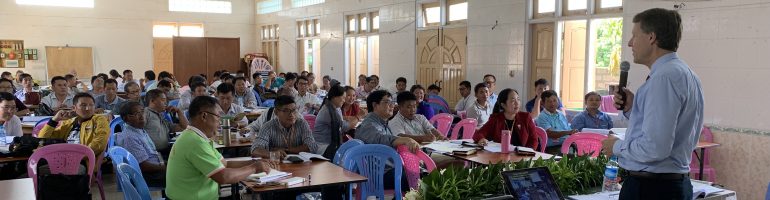
In our recent trip to Rwanda and Congo, my wife, Jill, and I were exposed to some of the horrors still taking place in our world. We have just returned from visiting the Genocide War Memorial in Kigali, Rwanda, where we saw and heard the story of how approximately 1,000,000 people were slaughtered in just over 100 days. We also spent a week leading a Pastors Leadership Conference in Democratic Republic of Congo (DRC), where 4,000,000 died in a five year civil war, which involved surrounding countries as well and the overthrow of a brutal dictator. The war officially ended in 2003, but senseless killing, maiming, and raping are still going on in the Kivu regions in eastern DRC. I hardly have the words to describe the revulsion and fury I feel, but I must try to express what I experienced. I also saw a few reasons for hope, and I want to share those with you, too.

The Horror
The horrors of the human capacity for evil exist in every culture, in every people group, in every nation, and in every person. Often, many of us are ignorant of the abuses taking place in our own community, let alone the rest of the world. Periodically, the scale of the atrocities becomes so great that they cannot be hidden—genocides against the Armenians in Turkey during the First World War; against the Jews during the Holocaust; the killing of millions by the Khmer Rouge in Cambodia after the Vietnam War; ethnic cleansings on every continent, the brutal killings of Tutsis and Hutus in Rwanda over decades, culminating in the great 100 day genocide in 1994; Darfur today. The list goes on and on.

I offer my experience and learning partly to inform others about what has happened and is happening in two African countries. Even more, I want to sound an alarm and call to action. There is human suffering all over the globe, including in our own country, cities, and some of our own families. We need to see what is happening, we need to see what part each of us plays in the suffering of others, and we need to do what we can to respond compassionately and thoughtfully. No easy answers here, but a recognition that we must pay better attention to the consequences of our actions, and inaction.

During the civil war, when four million people were killed in Congo, and since, unimaginable violence and atrocities have been committed. For example, I saw an independent film while I was there that included footage of two armed men abusing the bodies of two dead combatants, who looked to be just teenagers. One put his finger in a bullet hole in the dead boy’s head, and pulled back some of the skin as one would remove a mask, effectively peeling away part of his face. Another fighter stomped on head of a dead person. Another began to mutilate the dead body, before the camera turned elsewhere.

Today, in Congo, much of the country is gripped by great poverty, and the violence continues. In Goma, where I spent all of my time last week, most people are afraid to go out after dark lest they get attacked or shaken down by dishonest soldiers. Almost everyone is afraid to go into the countryside in many places, lest they might be robbed and killed, or worse, raped and mutilated by militias or rebels. On top of the political and social mayhem, a volcanic eruption in 2002 wiped out at least a third of Goma, ruined most of the roads, and further destroyed the infrastructure of the city. Most people are now living in simple wood shacks built on top of lava rock, waiting for the next eruption of the active volcano.

What’s perhaps most disturbing is the ongoing violence and the extent of brutality. The day before we left, for example, an alarmed foreign journalist ran up to me to tell me about an interview she had just completed with one of the women waiting for surgery at HEAL Africa’s hospital. The woman had been raped by six men out in the countryside. When they were done gratifying their lust, they took broken glass and cut off her labia. No wonder thousands of internally displaced people (IDP’s) have fled to various camps in the countryside to escape the violence and the threat of such terrifying violations and brutality.

I don’t have words to describe how sick some of these stories make me feel. What produces such cruelty, such viciousness, such brutality, such evil? No one seems to know. Hate perhaps, but why? If there are political purposes, no one can satisfactorily identify them. Terror, perhaps, but often the violation and violence seems purposeless, carried out by out-of-control teenagers with guns, who are filled with unimaginable hate and viciousness.

The better known genocide in Rwanda is another example of mind numbing violence in Africa. I had read a number of articles about what happened in 1994, but I didn’t realize how much more there was to the story. The Memorial states that over one million people were butchered, hacked with machetes, shot, burned, bludgeoned, and buried alive in a little over 100 days. Did you also know that the genocide against the Tutsi minority was pre-meditated, with lists of names prepared in advance of the onslaught? Within an hour of the assassination of the President in April 1994, roadblocks were set up all over Kigali, and gangs of armed people went out to systematically kill every Tutsi in the city. Over the coming months, as the United Nations and the rest of the world stood by doing nothing, these killers set out to exterminate the entire Tutsi population in the country. Did you also know that 350,000 orphans were left behind? Did you know that thousands of others still live with mutilations, trauma, and other physical and emotional scars? Did you know that killing is still going among Hutus and Tutsis, with Tutsis killing Hutus and Hutus killing Tutsis–only now the proxy war is being fought across the border, in the DRC, with thousands of Congolese getting caught in the middle?

I didn’t. To my embarrassment, I never thought about what it must be like for the survivors and for the country as a whole as the people try to heal and to promote peace and unity among all citizens. I tended to think of the genocide as a very unfortunate moment in history, now past. After visiting Rwanda and Congo, I now realize that the trauma goes on, even though Kigali has been sanitized and so much “guilt money” (as one aid worker described it) from foreign powers has poured in to help the country rebuild itself.

As we walked down the streets where thousands of dead and dying bodies had once been strewn, I tried to let in the magnitude of what had happened in a sudden surge of hate and savagery. As I drove by those convicted of genocidal crimes, now dressed in pink doing work for the community under armed guard, I tried to catch a glimpse of the faces of killers. Disturbingly, they looked like everyone else in society—normal human beings.

I met a number of survivors, such as Theoneste Kiki, who has been raising his three younger sisters since he was seven years old and his parents were murdered in front of his eyes. I realized that it is now almost 14 years that many orphans have been struggling to raise themselves and their siblings with very little help from others, many of whom are in similar situations. Healing and health are still a long way away for many.

Hope
Thank God, there is also some light and hope in these countries. Here and there, I see good signs. Rwanda is far ahead of Congo in most ways. Both countries are struggling, but Rwanda has many more visible signs of recovery, while Congo is still be torn apart in every imaginable way.

Mostly, I see hope in individual Africans who are rising up to try to address the suffering and to help their fellow Africans heal and create a better life. Non-Government Organizations (NGO’s) provide critical relief for many who are on the verge of death or disease. However, so much more is needed, and only the African people themselves can create a better society for themselves in the long run. Fortunately, some are trying to do just that. Let me give you just a few examples from what I saw in one week’s time.

HEAL Africa (http://www.healafrica.org) was created by a Congolese man, Joe Luci, and his wife, Lyn. Their vision is for Healing, Education, Action, and Leadership training. So far, most of their efforts have been focused on creating a hospital and clinic to serve the poor. HEAL Africa has also been creating Nehemiah groups to promote dialogue and cooperation in the villages to address pressing needs. These rural community-based programs work with local health centers, health and HIV education, economic recovery, legal initiatives and school scholarships.

At HEAL Africa, featured in a recent PBS special, “Lumo,” I also met a number of dedicated Congolese doctors, nurses, and other staff members who are seeking to bring healing, provide health education, and provide antiretroviral drugs for AIDS patients and children who are HIV positive. I was inspired by these people, as I was by Dr. Christina and other foreign doctors like her, who volunteer their time and resources on a short term basis. Visiting surgeons come to do fistular repair work on women who were brutally rapes or who sustained injuries incurred while giving birth at home at a very young age. Currently there are over 100 women waiting for operations.

Through the Pastors Leadership Conference, I met many pastors and others who are very committed to alleviating suffering, caring for traumatized rape victims and displaced persons, and to sharing the Gospel of Jesus Christ. I was particularly moved by hearing an Anglican bishop and HEAL Africa staff talk of their work with impoverished widows and shunned rape victims. In various ways they are supporting and helping these desperate women to learn skills and get material to start their own small businesses so that they can feed themselves and their children.

I was only in Rwanda for one day, but I had the chance to meet one particular woman whose tireless dedication helped understand better the plight of the orphans and what is needed to truly help. Beatrice Mukansinga, who founded a small outreach, “Speak. I’m Listening!” (See: http://www.mbwirandumva.org.) Beatrice, and her staff, has devoted much of the last fourteen years of her life to helping Rwandan orphans to grow up and survive the post-genocide years. They offer food, job skills, and post-trauma counseling.

A Response of Resolve
When I was at the Genocide War Memorial and read about the brutal slayings of over one million defenseless people, and when I hear about the atrocities being committed against women, children and men in the Congo countryside, and when I hear about abuse and neglect by individuals and governments all over the world, sometimes hate and rage wells up within me. But I realize that it is just such feeling that leads to violence and perpetuating suffering. Such rage is not going help anyone.

Instead, I am choosing a different, more constructive, response: resolve. I am resolved to pay better attention to the suffering I cause in others, and to find better ways to promote peaceful conflict resolution. I am resolved to not turn away from suffering, injustice, exploitation, and cruel acts of abuse and neglect when I see or hear of them. I am resolved to focus my attention, energies, and resources on standing up for those who need advocacy and on doing what I can to help. By God’s grace and the working of the Holy Spirit, I hope that my intentioned response will result in real changes in me and fruitful action for others.

I hope I can return to Africa to help in some way again this year. I also plan to travel again to various troubled spots in Asia to teach and encourage pastors and seminarians there as well. In the few small ways open to me, I am resolved to do what I can. I’m only one little light in a world of great darkness, but I am resolved to let my light shine as best I can.

The world needs your light, too. In the midst of all the horror, what hope can you offer to others somewhere, anywhere, within your reach?

“When Jesus saw the crowds, he went up the mountain; and after he sat down, his disciples came to him. Then he began to speak, and taught them, saying, “You are the salt of the earth; but if salt has lost its taste, how can its saltiness be restored? It is no longer good for anything, but is thrown out and trampled under foot. You are the light of the world. A city built on a hill cannot be hid. No one after lighting a lamp puts it under the bushel basket, but on the lampstand, and it gives light to all in the house. In the same way, let your light shine before others, so that they may see your good works and give glory to your Father in heaven.” (Matthew 5:1-2, 13-16)

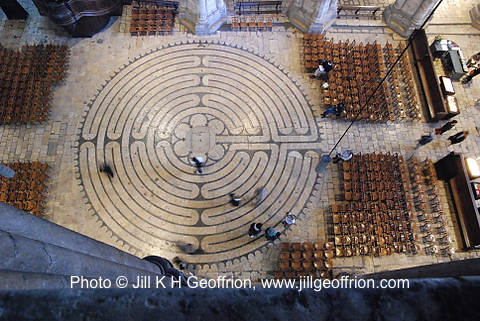
**Check out my wife’s website for pictures of the labyrinth she built for the Pastors Leadership Conference, and to read about the experiences of the participants who walked it: http://www.jillkhg.com/Congolabyrinth2007.html.
1 Comment

Filed under Horror and Hope in Africa, Topics--Special Interest

Hopes and Dreams

All I got was a blank stare. I had asked the group what their hopes and dreams for the future were. At first, no one knew what to say.

One person hoped he didn’t run out of money before he died. Another was scared about getting dementia. Someone else said he’d be happy just to get enough business to make ends meet. On the other end of the spectrum, another person dreamt of winning the lottery and winning the Pulitzer Prize, even though she doesn’t buy lottery tickets and doesn’t write much anymore.

Finally, someone blurted out that he doesn’t think in those categories. Hopes? Dreams? He’s just trying to get through life!

I felt sad for the “quiet desperation” I was hearing. At the same time, I was perplexed and deeply troubled. I continually meet people who seem to have no vision for their life. I hear comments that suggest that hopes and dreams are only for the rich, the lucky, the privileged. One pastor of a large, growing church even told me realizing one’s dreams doesn’t apply to 98% of the world’s population.

What? If Christians cannot hope for a better life, to realize their God-given dreams, or to fulfill their purpose in life, what in the world is he preaching and teaching?

Now, to be fair, the people who tell me that that hopes and dreams are not for them often are thinking about all that they cannot do. They have reluctantly come to the point of accepting that some secret aspiration that they have had is beyond their reach—becoming President of the United States, winning the Nobel Peace Prize, being a world explorer, or something equally grand. Or they feel demoralized after looking at someone else who has more money, more talent, more education, or more opportunity. With a twinge of envy, resentment, or resignation, they conclude that pursuing one’s hopes and dreams is only for a lucky few.

But does realistic thinking mean that there are not hopes and dreams that we can pursue? Do the special privileges of a few mean that we should give up on hoping and dreaming for ourselves?

I don’t think so. The nature, size and scale of our hopes and dreams will vary widely among us, but cannot nearly everyone aspire to something that they desire but is not yet a reality?

Abraham Maslow argued that humans must first meet “lower” level of needs before they will be able to pursue higher ones. That is, we start with seeking to meet basic needs such as food, shelter, clothing, and security. Only when these needs are met are we able to move to higher level needs, such as love, friendship, self esteem, and ultimately self-actualization. As a general rule, I think he’s right. Yet, how many people have let anxiety over lower level needs unnecessarily keep them from simultaneously pursuing higher level needs?

Here’s another problem. When we talk about hopes and dreams, so often people think in terms of wealth, status, power, comfort, or material gain. Thus, those who think that they aren’t the lucky ones, or as smart or talented as others, or who don’t have the same opportunities as others, sometimes falsely conclude that there is no point to hoping and dreaming for them.

But what about hoping and dreaming in different categories? What about a dream of closer relationships? What about building a stronger community? What about joy from serving others? What about knowing and loving God better? What about pursuing meaning and purpose in one’s life? What about simply finding peace in the midst of so many situations outside of our control? These things are not dependent on luck, financial resources, or special opportunity. In fact, some of the materially poorest people in the world are some of the most vibrant people I have ever met. Yes, they have some unfulfilled hopes and dreams, but many also have other blessings—joy, friendship, community, meaning, purpose, vitality and so forth. These qualities of life might very well be available to more of us as well—if we would learn to hope and dream in these categories.

The many people I’ve been meeting, interviewing, teaching, coaching and observing lately show me that hopes and dreams can fuel vision for almost anybody’s life—with very good results. To know what one most values and cherishes, to believe that God has planted dreams in our hearts to serve God’s purposes, and to pursue a vision for a more fulfilling and purposeful life, is powerful, motivating, and life-changing. No matter how hard the work, or how frustrating such a pursuit can be at times, I can’t imagine not living with hopes and dreams.

Next week I leave for the Democratic Republic of Congo, where over 4 million people have been killed in civil war in the past decade or so. I will be leading a Pastors Leadership Conference, teaching and speaking to people who have struggled with basic survival needs to an extent I have never known. Will I find people who still have hopes and dreams beyond survival there? Will suffering Christians still have a vision for a more vital spiritual life, for healthier churches, for caring for one another effectively, for love and friendship, and for other “higher” level needs and aspirations? I don’t know. My experience suggests, yes.

What do you think? Are hopes and dreams beyond survival and security just for the lucky few in our world?

1 Comment

Filed under Day to Day