
“[God] has shown you, O mortal, what is good. And what does the LORD require of you? To act justly and to love mercy and to walk humbly with your God” (Micah 6:8, NIV).
These are really tough times for so many people, for so many reasons, in so many places globally. In addition to the violence, oppression, and exploitation destroying lives in Myanmar and Eastern Congo, where I teach and minister, an abrupt U.S. foreign aid freeze is wreaking havoc among humanitarian organizations and producing fear and despair in millions worldwide. As you probably know by now, hospitals, clinics, food and medicine distribution, and many other critical services have already been shut down, and the world’s suffering is rapidly multiplying.
But all this is an old story. And it’s one I don’t want to get lost in. What I mean is the story of humanity’s selfishness, cruelty and neglect of the needy is as old as time. We have no choice about living in the world as it is, but I for one don’t want to let all the evil and suffering crush me or turn me into an angry, bitter, cynical person myself.
Running away, hiding, closing our ears, fuming incessantly, hating, or striking out with rage aren’t the answers. Those responses belong to our fight, flight, and freeze instincts. They’re normal reactions, which are sometimes helpful under certain circumstances (for example when the internally displaced people in Myanmar instinctively run for cover when they hear military jets flying overhead). But long term, thoughtful action rather than instinctive reaction does more good. Instead of being consumed by negativity and powerlessness, biblical writers teach us to stay focused on the good that is within our power to do, and then do it. Every day. As best we can according to the opportunities, abilities, and resources available to us.
The prophet Micah lived in a society where the rich were violent, exploitative, and oppressive (e.g., 2:1-2; 6:10-12). Those in power were manipulating the judicial system to favor themselves and subvert justice (e.g. 3:11; 7:3). And, unsurprisingly, the result was societal breakdown and widespread suffering among the most vulnerable and weak (e.g., 3:1-3; 7:1-6).
Micah’s response to these societal ills was to speak truth to power. He rebuked those who were in a position to do good but instead used their advantage selfishly and harmfully. In no uncertain terms, he called the powerful, the rich, and the unscrupulous religious ministers to repent and renew their commitment to living by godly values. What is the good thing that the LORD requires? Micah asks rhetorically. You should already know, he answers: “To act justly, to love mercy, and to walk humbly with your God” (6:8).
Micah was written to call the powerful and privileged to repentance, but his ethics and standards are for everyone—including those of us who might be incensed by the seeming heartlessness and self-serving behavior of others. Everything we do should be measured against God’s standard of justice, mercy, and humbly walking with God. In other words, every time we’re tempted to judge, dismiss, push away, harden our hearts toward someone else, accuse, blame, lash out, or self-righteously justify ourselves at the expense of others, we should ask ourselves, “Am I being fair?” “Is this a situation in which God would want me to be merciful?” “Is my attitude humble and godly?” Or as Jesus would ask, “Am I acting out of love for my neighbor?” (Matt. 22:37-40; Mark 12:29).
Of course, when we try to apply this simple formula today, things can get complicated very fast. We live in a complex world with so many layers of competing needs, dysfunction, corruption, misinformation, partial truths, limited resources, and forces well beyond our control. Yet, we have to try.
Embracing godly values is what keeps us grounded in what is right, good, and true, so that we don’t get sucked into negativity or forget that we are called to put into practice what we preach to others. Walking humbly with our God is what reminds us that none of us is without sin. Every one of us has been the beneficiary of God’s grace and mercy, and God expects us to pass on what we have received freely.
At a time when there is so much human need and suffering, and so much chaos and turmoil within the United States, the world does not need any more self-righteous, judgmental religious people, or worse, those who are inflicting harm on others in God’s name. Nor do we accomplish anything by putting our heads in the sand or running away from the current crisis, or by throwing up our hands in helplessness. No, the enormity of the needs in the world and the magnitude of distress in America demand that each of us do something, something good, for the sake of others. Something that passes the Micah 6:8 test and fulfills Jesus’ command that we love our neighbors as we love ourselves.
The only truly good people are those who do good, as God defines goodness. So, let’s not be defeated by evil but join ranks with those who overcome evil with good (Rom. 12:21).
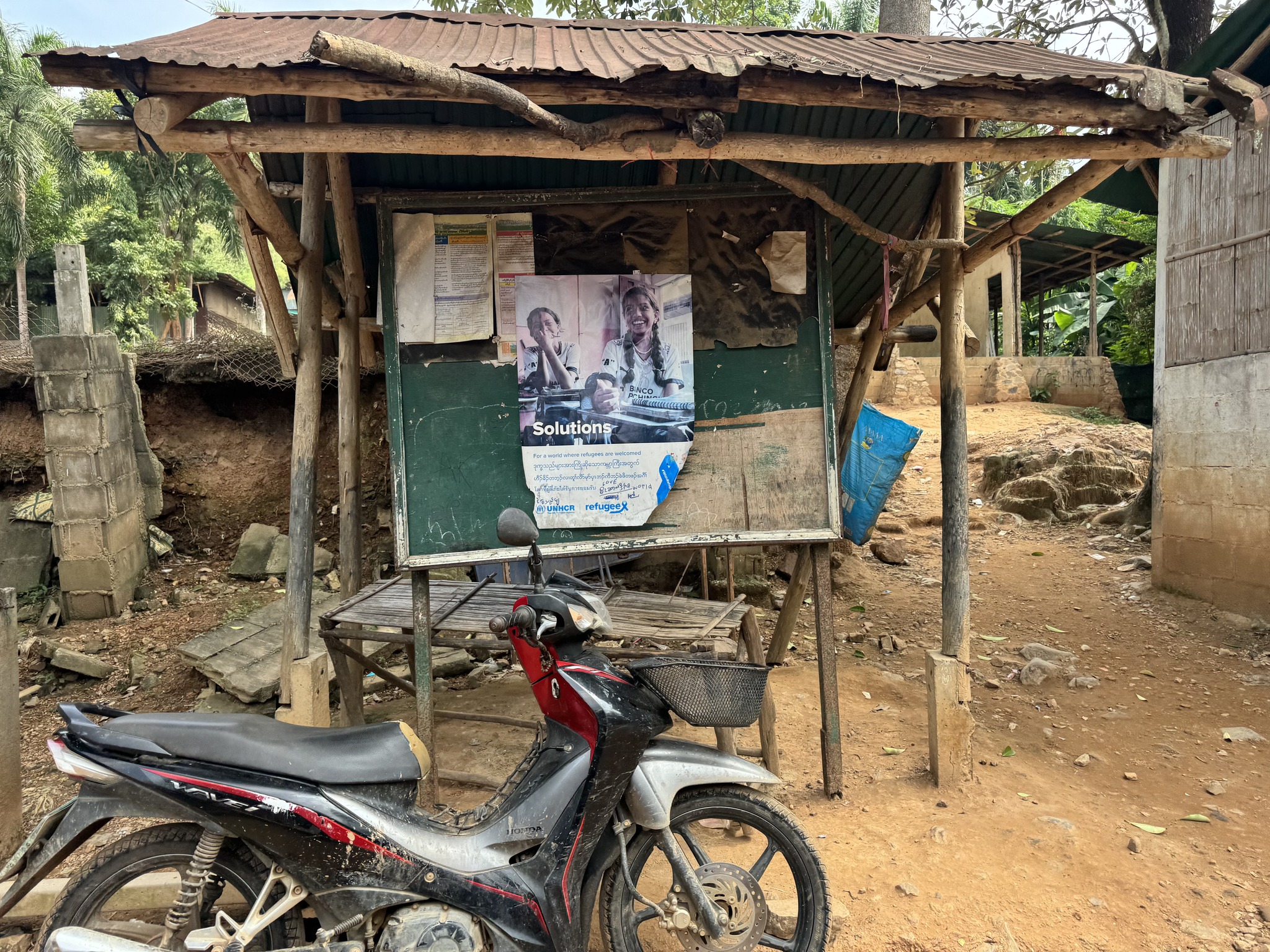
Photo: Tham Hin Refugee Camp, Thailand. The tattered poster on the board promotes a UNHCR (UN Refugee Agency) program, which is just one of many resources for impoverished refugees that has been defunded the United States administration. The hospitals in this and six other refugee camps have also been forced to close their doors due to the freeze.


 The Spirit-Led Leader