Tag Archives: Hope

What Can We Expect from God Now? (Essay 3 of 7)

Truth 3: Expect God to strengthen your faith, build your character, and lovingly restore your hope through your suffering

Ahhhh! When can I get out of this house? When is life going to go back to normal?!

Currently, some 95% of Americans are required to stay at home. Globally, billions are on some form of lockdown. For some people, it’s been OK. For most people, even if they welcomed a nice break from their normal life, are feeling more and more stress as the crisis continues with no end in sight. After weeks of living in close quarters 24/7, loss of work, fears of what’s to come, the pressure is mounting. Last week, protests started springing up. The people are taking to the streets. All this on top of 2.5 million (verified) people who have been infected, and over 160,000 deaths in just a few months so far.

In such times, what are Christians supposed to think, feel, and do?

Under different but equally difficult circumstances (such as beatings, shipwrecks, imprisonment), the Apostle Paul famously said, “Now, these three remain, faith, hope, and love. But the greatest of these is love” (1 Cor. 13:13). So, what does faith look like today? Where can we find hope? Where is love?

When I look around, I am deeply grateful for the action-takers among us. The heroism and dedication of countless doctors, medical workers, researchers, and other public servants, some of whom are literally risking their lives to save others, is humbling and inspiring. Furthermore, the creative expression from artists, musicians, and poets; the compassion and generosity of rich and poor alike; and the kind, thoughtfulness of so many individuals comforts and encourages me.  

Then, there are the positive thinkers, who are refusing to be imprisoned in their hearts and minds, even if their bodies are locked down. These inspiring, glass-half-full folks are seeing opportunities everywhere and are making the most of them—more time with family, space for creativity and music, quiet and rest, reading and reflection, communication with friends, and so forth. They are learning new things and finding meaningful ways to show Christ’s love to those near and far.

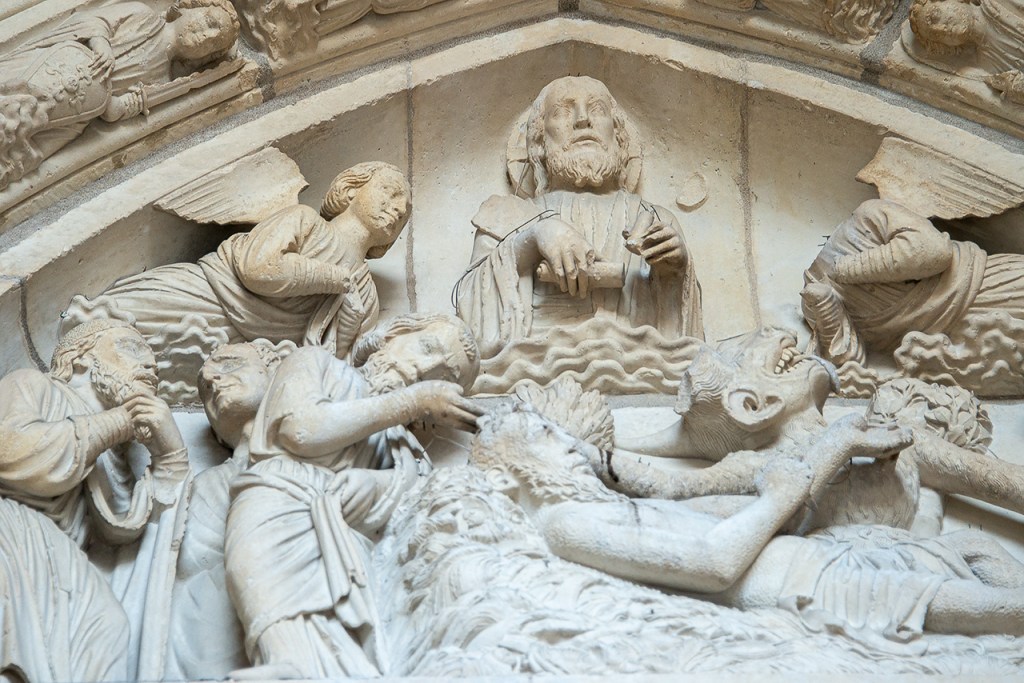
Job’s suffering, depicted on the North Porch of the Chartres Cathedral, France

However, for multiple reasons, not everyone can be an action-taker or a positive thinker. For those hit hardest by the coronavirus, lockdowns, or closure of businesses, there is a great deal of pain, fear, and loss. Some feel like Job, whose children were suddenly killed and health destroyed. All he could do was sit on the ground, weeping or calling out to God, grappling with a tragedy beyond comprehension. A growing number of people globally are grieving the unexpected death of loved ones or the shutdown of their lives and livelihood. They perceive no rhyme or reason in their suffering. They have no idea what hit them or where to go from here.

If this describes how you’re feeling, please know that, sometimes, in the midst of our suffering, we just can’t rise above our distress or despair. Sometimes, we cannot be hopeful, no matter how much we may want to be a positive thinker. And it’s OK. Faith in God doesn’t always mean being upbeat and emotionally stable. Faith in God is not just for the action-takers and positive thinkers. Faith includes trusting that he’s holding you even when you don’t have the emotional strength or wherewithal to hold on to him.

But there is hope.

Spiritual Truth 3: Expect your loving God to strengthen your faith, build your character, and restore your hope through your suffering. (Romans 5:3-5; 8:28-29; 2 Cor. 1:8-9; Lam. 3:22-24)

In the biblical book of Romans, Paul does not offer an explanation or defense of God for human suffering, but rather focuses on how a loving God works through human suffering for good. He writes:

We…glory in our sufferings, because we know that suffering produces perseverance; perseverance, character; and character, hope. And hope does not put us to shame, because God’s love has been poured out into our hearts through the Holy Spirit, who has been given to us.

Romans 5:3-5, NIV

Paul knew very well that when any of us suffer extensively, we can easily reach our physical and emotional limits. We may reach out to God for help, but when we’re not healed or our suffering persists, we may despair, panic, or want to abandon faith in God. But it is at just such a low point that many of us have been wonderfully surprised by God. We may unexpectedly feel peace. We may suddenly perceive his love through the kindness of those around us. We may find new motivation and power to finally put aside the sin that has been controlling our lives. We may unexpectedly see beauty in something or someone just when we may have lost hope of ever feeling that way again.

Through these kinds of surprising touches from God, our faith in God is rekindled. Our ability to persevere faithfully in the midst of our suffering increases. Our encounter with the goodness of God refines and strengthens our own moral character. Our spiritual vitality is renewed. We perceive God’s love for us in a fresh way. We see Christ’s love being expressed through us, and we feel purpose, meaning, and joy. Hope suddenly springs up within us again—now, not because we have been healed or delivered from our troubles, but because the Holy Spirit has opened our eyes to see God’s loving, caring presence in the midst of our circumstances. Right when we were about to give up—or actually had given up already—God touched us.

As the Holy Spirit works in our lives in the midst of our suffering, we will realize that we are not abandoned. We have somewhere and someone to go to in our darkest hours. We may weep, wail, confess sin with a broken heart, or simply shuffle along in grief, as Israel did after the destruction of the first temple in Jerusalem (586 BC) on their way to captivity in Bablyon. Yet, with them, we will reach a point where we also can say with Jeremiah, the prophet:

The steadfast love of the LORD never ceases, his mercies never come to an end; they are new every morning; great is your faithfulness. “The LORD is my portion,” says my soul, “therefore I will hope in him.”

Lamentations 3:22-24, NIV
Mary and John, grieving as Jesus’ body is removed from the cross

Spiritual Application

Are you experiencing overwhelming loss, hopelessness, or fear right now? Or, if not you, then surely there is someone you’re living with or whom you care about, who is. If so, this is not an easy place to be. But there is hope. There’s a bigger reality than what you are perceiving and experiencing at the moment. God may not be delivering you from all your trouble or distress, but that doesn’t mean God is irrelevant. On the contrary, it’s in your powerlessness and despair that God can produce some good in your life that would not be possible under different circumstances.

In the context of talking about human suffering, the groaning of creation, and our sometimes inability to even know how to pray, the Apostle Paul offers these words of perspective and hope:

We know that all things work together for good for those who love God, who are called according to his purpose. For those whom he foreknew he also predestined to be conformed to the image of his Son, in order that he might be the firstborn within a large family.

Romans 8:28-29 NRSV

And what is the good God has in mind?

The “good” is not necessarily your healing, prosperity, or anything else that you be asking for in your desperation. The ultimate good that God produces through your suffering is to make you more and more like Jesus Christ, God’s son—more and more full of faith, hope, and love.

Your greatest desire will probably always be for relief from your suffering or for some miracle in your life. Mine usually is. Yet, none of us knows what God will or won’t do. Are you willing to live with that uncertainty, yet keep reaching out to God? Are you willing to let go of expecting God to act as you want him to act, and yet never quit expecting him to work through your suffering for good, according to his priorities and values?  This is our faith. This is our hope.


[To read this essay in Burmese, go to “Resources in Burmese” in Faith, Hope, and Love Global Ministries’ Resource Library, or look for it on my Facebook page, later this week.]


This essay series, “What We Can Expect from God Now?” was created in response to the 2020 COVID-19 global crisis. It focuses on how believers can better trust God in troubled times. The essays expand on the practical suggestions offered in Chapter eight, “Trusting God,” in The Spirit-Led Leader: Nine Leadership Practices and Soul Principles (Herndon, VA: Alban Institute, 2005), pages 184-190.


PHOTOS from Chartres Cathedral ©JILL K H GEOFFRION, HTTP://WWW.JILLGEOFFRION.COM


Copyright © 2020 Timothy C. Geoffrion, Wayzata, Minnesota. All rights reserved to the author, but readers may freely download, print, forward, or distribute to others, providing that this copyright notice is included.

2 Comments

Filed under Faith, What can we expect from God now?

What Can We Expect from God Now? (Essay 1 of 7)

Truth 1: Remember your limited ability to understand the will and ways of God….

Jesus meets two disciples on the road to Emmaus — Charters Cathedral, France

Where is God?! Why isn’t God doing more to help us? Is God doing anything at all? If you’re asking questions like these, it’s a sign that you care deeply about what’s happening in our world right now. You believe in God and believe that he could be of great help. Yet, you’re confused or frustrated, or just scared. You’re not perceiving God’s presence or help as much as you need or expected it, and you want more.

The following short essay is the first in a seven-part series on the subject, “What can we expect from God now?” It’s a collection of biblically-based, spiritual truths for those who know, love, and serve God, who want to know how they can trust God in troubled times.

Spiritual Truth 1: Remember your limited ability to understand the will and ways of God. Take whatever God offers.  (Isaiah 55:1-9; Luke 24:13-22)

If we examine our expectations for God carefully, most of us we will discover that we expect God to act in ways that fit with our ideas and desires. They may be prompted by something we read in the Bible or heard a preacher say, but upon close inspection, most of us are wishing and hoping and expecting God to do what we want him to do. And what happens when God doesn’t come through for us as we hoped or expected? We are easily hurt, confused, distressed, or even become angry. So, the question becomes, is God to blame or is it our faulty expectations?

Biblical writers repeatedly tell us that we should not be so surprised when God does not meet our expectations. The reason is simple. You and I cannot know or understand the mind of God, and God is often at work in ways that are unseen and can only be discerned in retrospect.

What we need to understand

Through the prophet Isaiah, Yahweh (the Lord God) explains to Israel that God’s ways are not our ways. He writes:

For my thoughts are not your thoughts,

neither are your ways my ways, says the Lord.

For as the heavens are higher than the earth,

so are my ways higher than your ways,

and my thoughts than your thoughts.

(Isaiah 55:8-9, NIV)

Isaiah is saying that we must give up trying to understand the perplexing or surprising things God does (or doesn’t do). Instead, we should focus on what we can understand and benefit from. In this particular context, Isaiah is talking about God’s desire to meet their core spiritual needs. Though Israel might not be able to grasp God’s reasoning for how he was working in the world, they could benefit from God’s love, mercy and grace, if they reached out for what God is offering. They could repent of their sins and let God satisfy their deepest spiritual needs and longings. He writes:

Come, all you who are thirsty,

come to the waters;

and you who have no money,

come, buy and eat!

Come, buy wine and milk

without money and without cost.

Why spend money on what is not bread,

and your labor on what does not satisfy?

Listen, listen to me, and eat what is good,

and you will delight in the richest of fare.

Give ear and come to me;

listen, that you may live.

(Isaiah 55:1-3, NIV)

In times of distress, we may be so pre-occupied with our fears and desperate longing for help that we miss out on what is available. As long as we cling to trying to get what we cannot have (be it answers to unanswerable questions, guarantees of safety, assurance of health, comfort from the wrong sources, or something else that is very important to us, but out of our reach), we will remain in turmoil and unsatisfied. If, instead, we leave aside what we cannot understand and focus on reaching out for what is within our grasp, we will experience greater inner peace. We will become better prepared to face our troubles and will start to see better how God is at work in us and through us for good.

Let Jesus open your eyes

In the New Testament, we find the story of Jesus meeting two disciples on the road to Emmaus. The last they knew, Jesus had been crucified, died, and was buried in a tomb. So many of their hopes for their lives and future had suddenly, in a matter of a few days, crashed and burned. (Sound familiar?) However, what they did not know and could not see is that God was still very much at work in the midst of the crisis. Jesus had actually already been resurrected. God had inaugurated an incredible plan to bring salvation and hope to the entire world through Jesus’ death and resurrection. In fact, they were so swallowed up in their grief that they couldn’t even recognize Jesus when he appeared to them on the road. Luke says, when Jesus asked them what they were discussing, “they stood still, looking sad” (Luke 24:17, NRSV).

In this time of crisis and uncertainty, beware of getting “stuck” on the road of life, stopped in your tracks with downcast faces, supposing all is lost. When life’s events just don’t make sense to you and you cannot imagine how God could be a part of what is happening, remember the limitations of your ability to grasp the God’s ways. God may be up to something that you cannot even imagine, let alone comprehend.

I am not saying that God caused COVID-19 or that everything is going to turn out OK for everyone. It’s not. But this story reminds me of what Isaiah told us. God’s ways are not our ways. God often surprises us. Over and over again in the Bible, we read that God is at work in seemingly hopeless situations to bring good out of evil, loss, disaster, and suffering.  The story of the sad disciples on the road to Emmaus who could not see the risen Christ standing in front of them reminds us that we all need Jesus to open our eyes. On our part, we need to look for Christ in the midst of the crisis, in places and ways that we wouldn’t expect him to be.

Spiritual application

By all means, pray for every need and concern on your heart, because we never know when God may choose to use our earnest prayers to bring about some healing, deliverance, provision, or some other badly needed help. But, if your prayers aren’t being answered in the ways you expected, don’t be discouraged. Don’t stop reaching out to God. Ask Jesus Christ to open your eyes to what you cannot see on your own and ask the Holy Spirit to strengthen your faith and use you for good in the midst of the present crisis. And, no matter what happens, don’t forget to seek what you know is for sure being offered to you. Repent of your sins, let go of your attachments to what cannot satisfy or distracts you from God’s will for your life. Seek God’s grace, mercy, and spiritual food that money cannot buy. “Give ear and come to me; listen, that you may live,” says your loving, merciful God (Isaiah 55:3).


This essay series, “What We Can Expect from God Now?” was created in response to the 2020 COVID-19 global crisis. It focuses on how believers can better trust God in troubled times. The essays expand on the practical suggestions offered in Chapter eight, “Trusting God,” in The Spirit-Led Leader: Nine Leadership Practices and Soul Principles (Herndon, VA: Alban Institute, 2005), pages 184-190.


Photo ©Jill K H Geoffrion, Ph.D., http://www.jillgeoffrion.com


Copyright © 2020 Timothy C. Geoffrion, Wayzata, Minnesota. All rights reserved to the author, but readers may freely download, print, forward, or distribute to others, providing that this copyright notice is included.

11 Comments

Filed under Faith, What can we expect from God now?

What Can We Expect from God Now? (Introduction)

Introduction to series of essays

In response to the COVID-19 global crisis, a nine-part essay series on trusting God in troubled times.

th.jpg

I want God to stop the coronavirus immediately. I’m worried for myself and especially for all the people I love and care about. I pray for God to protect me, my family, and everyone everywhere. But as the numbers of sick and dying keep increasing, along with dire forecasts for the coming weeks, so does my anxiety. I’m obviously not alone in this.

What if God doesn’t help? Already, thousands have died and many more will. Given our experience so far, is it even reasonable to expect that God will do anything in midst of this COVID-19, global crisis? If so, what?

Spiritually, many of us are at the “Help me, God!” stage. We’re reaching out to God for whatever help we can get. Others of us are wrestling with profound theological questions right now as well: “Where is God? Does God care about our suffering? Why doesn’t God do more to help? If God won’t stop the onslaught, what can we expect from God?”

Photo credit: Francois Mori/Associated Press

These questions have been and continue to be very relevant to me, personally. Ever since our first child died in a miscarriage; my mother began a long, debilitating, losing battle with Alzheimer’s disease; and I learned that I contracted a terminal disease the day after my first son was born, I have been asking more and more questions like these. Bottom line, I simply want to know, “Can I trust God? And if so, for what?”

I feel the urgency of these questions more in times of crisis, but ask them regularly in Myanmar, where I serve six months a year, where human suffering is so visible to me every day. In fact, the questions are always with me, because there are no answers that fully satisfy me intellectually or that completely assuage my grief and angst. There is so much we wish we understood about God, but just can’t. Yet, what we believe and how we act on our faith still makes a huge difference in our ability to cope with adversity and an uncertain future.

Over the coming weeks, I will be talking about seven spiritual truths for trusting God in troubled times.

  1. Remember your limited ability to understand the will and ways of God. Take whatever God offers.
  2. Expect God to be at work in your life, leading and guiding you.
  3. Expect God to build your character, strengthen your faith, and lovingly restore your hope through your suffering.
  4. Expect to share in Christ’s sufferings. Expect to share in his glory.
  5. Remember—nothing can separate you from the love of God.
  6. Expect more peace, as you put your anxieties in God’s capable hands.
  7. Expect to be renewed, as you accept your limitations and wait on God.

This series of essays does not attempt to answer all the questions any of us might have right now in the midst of the COVID-19 threat. Instead, they offer spiritual truths that so many have found helpful in any and all times of crisis and distress. They are insights that grow out of the Bible and have been validated in my own experience and by the experience of millions of Christians over the years. They are truths, not because anyone can prove them to be true by scientific testing. They are true because of how they have qualitatively improved the minds, hearts, and lives of those who believe and live by them. I hope you find them meaningful and helpful, and will share your own perspective, comments, and questions with the rest of us, each week.

What are you expecting from God?

IMG_7510
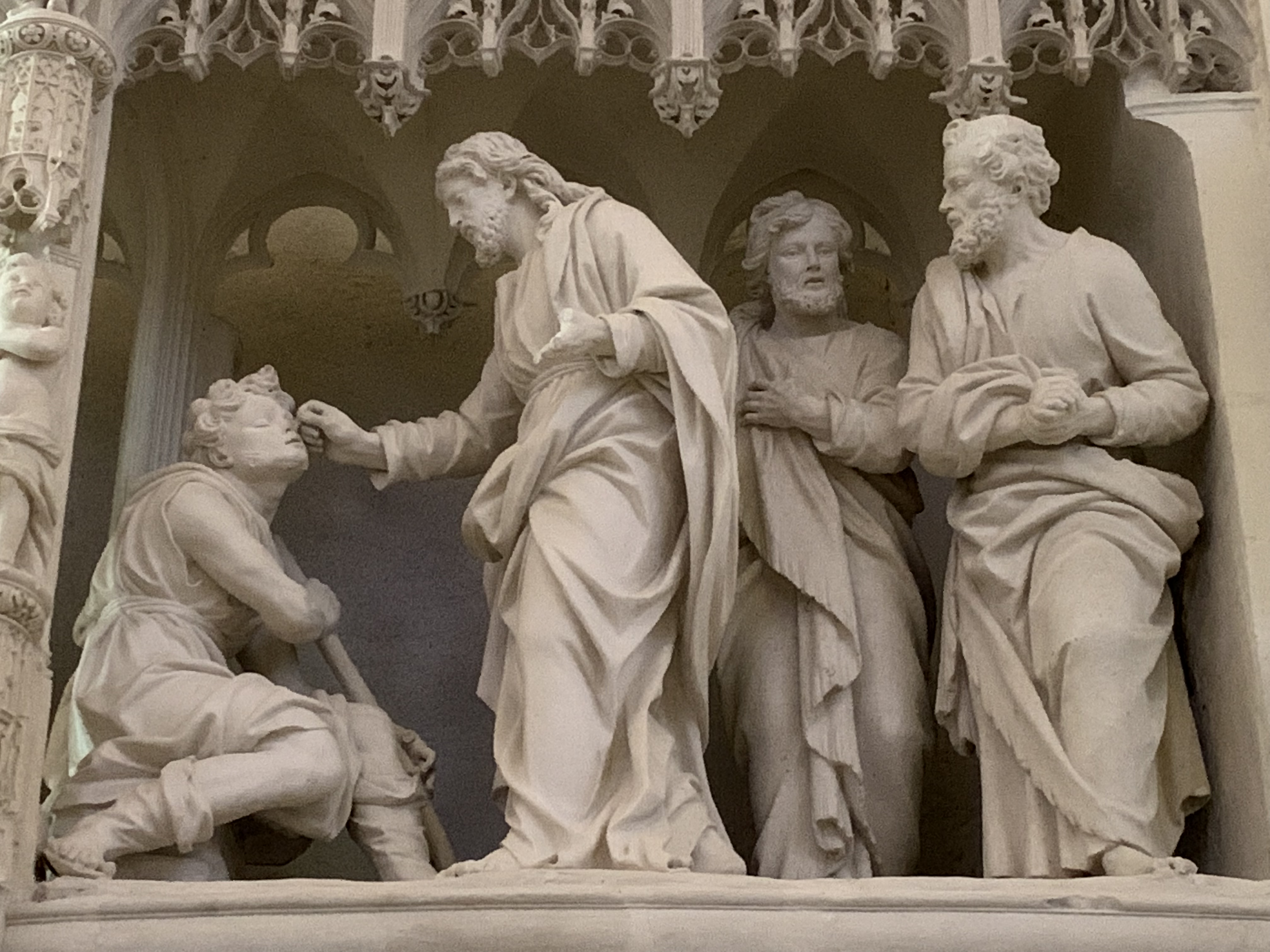
Jesus healing the blind man (John 9), Chartres Cathedral, France

Copyright © 2020 Timothy C. Geoffrion, Wayzata, Minnesota. All rights reserved to the author, but readers may freely download, print, forward, or distribute to others, providing that this copyright notice is included.

5 Comments

Filed under What can we expect from God now?