Tag Archives: war-zone

Hope amid Hopelessness

What we can learn from refugees and those surviving in war zones

Unexpect rays of sunshine over the mountains of Myanmar, along the Thai-Myanmar border

Where does hope come from? …when you’ve lost so much and so many doors seem closed? …when you cannot imagine a bright future? …when opportunities that others have are not available to you? …when there are few signs that your circumstances are going to change for the better?

For some, there are no answers to these questions. No hope whatsoever. But for others, hope not only springs eternal, it’s real and substantial. Such hope enables them to survive unimaginable conditions and provides meaning and purpose for their daily lives.

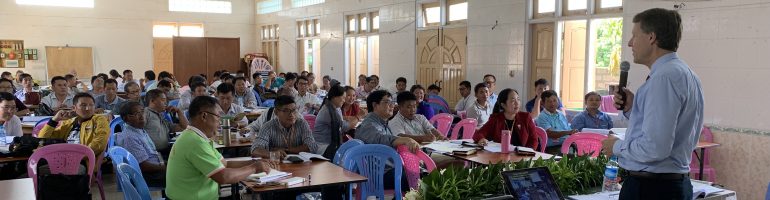
I see it among the Karen refugees I serve along the Thai-Myanmar border, the Burmese immigrants I teach in the USA, and the seminary students studying with me inside of Myanmar and the Congo. It’s a faith-based hope, which not only sustains the victims of injustice and oppression, but also motivates countless numbers of pastors, missionaries, and humanitarian workers I know to do the good work they are doing on behalf of those in need.

This kind of hope is so much more than wishful thinking and dreaming. Such faith in Christ gives them a solid place to stand, despite the severity of their circumstances and the bleakness of the future. Their hope not only enables them to keep from being crushed by their circumstances, but also empowers them to pick up the pieces and keep moving forward as best they can.
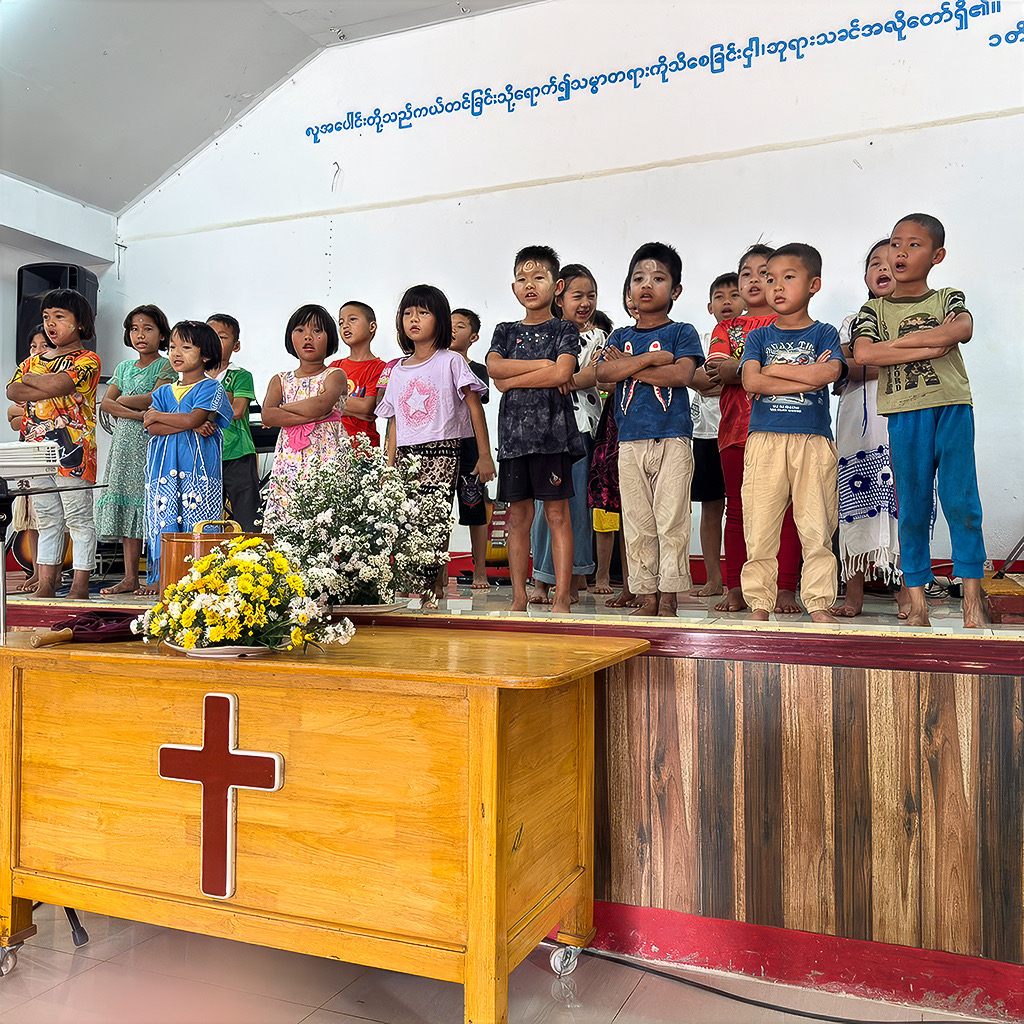
Burmese migrant children reciting Scripture and singing a song of joy (Thai side of the Thai-Myanmar border)

How does this work in practice? In my experience and observation:

  • Hope comes through faith—by believing God is present and at work to accomplish his good purposes within and through us.
  • Hope comes from taking action—by choosing to continue to live, making each day count, demonstrating that we are not powerless or without options, and proving that our life has meaning and purpose by doing what we can, not by bemoaning what we can’t.
  • Above all, this kind of hope comes through love—by receiving God’s love, forgiveness, and tender mercies through a personal, intimate relationship with Christ, and by actively participating in the sacred love flow by demonstrating justice, kindness, compassion, and generosity to whomever we can.

For the Apostle Paul, his faith and relationship with Christ enabled him to cope with all manners of suffering and hardship. No matter what his circumstances—good or bad, easy or hard, delightful or disappointing—he had learned the secret to accepting what he could not change and to be genuinely content no matter what his situation might be. His explanation was simply that he could “do all things through the One who strengthens him” (Philippians 4:13). Then, from this place of inner peace, he could shift his attention away from his difficulties to focus on Christ and the Gospel mission. His whole perspective on life changed for the better. Instead of being consumed with his own losses and limitations, or dwelling on his suffering and fears, he became Christ-centered, and his life filled with meaning and purpose (Phil 1:12-21).
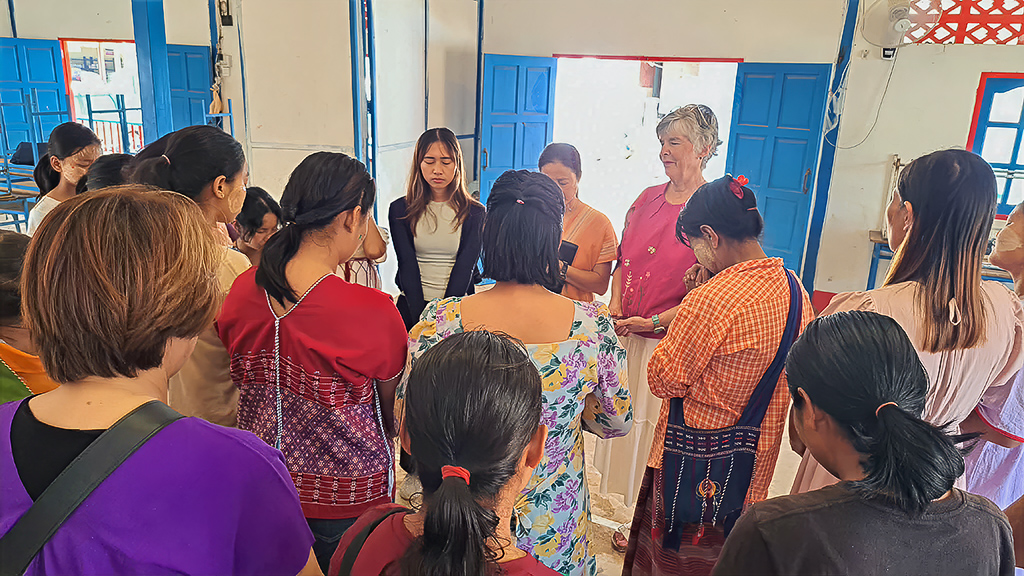
Jill leading migrant women, many of whom have suffered greatly, in prayer after a labyrinth walk

Sometimes, however, my faith isn’t up to the task. I can easily feel overwhelmed by the immense challenges facing refugees and IDPs, the lack of resources and opportunities for my students, the absence of passports and valid visas trapping them in no-man’s land, and the unhealed trauma so many are carrying, often secretly. Yet, as I witness their faith, their choosing to live, their determination to do whatever they can, the love they have for one another and their generosity to those in need around them, my hope is restored once again.

The lessons are clear. We may not always know what to realistically hope for, but we should never think our lives or the lives of others are hopeless. We must hold on to our faith, keep taking action where possible, and practice loving others as a daily priority and way of life. And as we do, we will know a peace that surpasses understanding, joy that warms and delights our hearts, and a hope that no one can take from us.

And so my prayer for you comes from Paul’s blessing on the Roman Christians: “May the God of hope fill you with all joy and peace in believing, so that you may abound in hope by the power of the Holy Spirit.” (Rom. 15:13, NRSV)

With the love of Jesus,

Dr. Tim

Leave a comment

Filed under Hope

Grieving Our Losses

…honestly, yet hopefully

[Four minute read]

Serving victims of oppression, brutality, and destruction in Myanmar, Thailand, and the Democratic Republic of the Congo has forced me to grapple with unimaginable trauma and despair afflicting those living in or fleeing war zones. Their suffering and losses are often unimaginable to someone like me, who grew up in a comfortable, relatively safe, Midwestern town in the United States. Yet, there they are. Right in front of my eyes.

Sometimes, all they have left is their tears. Sometimes, all they can feel is their rage. Their future has been decimated. Their hope shattered. Biblical promises fall flat. God seems cruelly absent.

Just recently, one of my former students in Myanmar, Pastor “Kyaw”, texted me with some tragic news. His village had been bombed. Several were killed or injured. For many, everything they owned went up in flames. More than 200 homes now lie in ruins, including his own. As is true for some three million people throughout Myanmar, most of the people have sought shelter in an internally displaced persons (IDP) camp or have fled the country. Their village has become a ghost town.

How are they going to survive? How are they going to cope psychologically, emotionally, and spiritually? What will be the long term of effect of such trauma and loss?

In talking with Pastor Kyaw, Psalm 137 came to mind. I’m sure the ancient Israelites were asking themselves the same questions during their exile in Babylon (6th Century BC). They had been conquered by an invading army. They were forced from their beloved villages and country. They had lost everything that was “home” to them and were now captives in a foreign land. As far as they could see, they had no hope. No future.

“By the rivers of Babylon—there we sat down and there we wept when we remembered Zion…. O daughter Babylon, you devastator! Happy shall they be who pay you back what you have done to us! Happy shall they be who take your little ones and dash them against the rock!” (Psalm 137: 1, 8-9, NRSV)

According to the famous psychiatrist, Elisabeth Kübler-Ross, those who suffer significant loss typically move through five stages of grief: denial, anger, bargaining, depression, and acceptance (On Death and Dying, 1969). 

  • “Denial” is when you are still in shock or just can’t get your head around what just happened or what bad news the doctor told you is going to happen. 
  • In “Anger,” you rage, sometimes quietly, sometimes loudly. You never dreamed that something like this would happen to you. And if someone betrayed you or let you down—whether it is yourself, someone else, or God—you might be really angry about it, and wind up lashing out with hateful or violent words to hurt whomever you blame for your loss.
  • In the “Bargaining” stage, you might obsess on how you might have prevented the tragedy. “If only I had done [this or that] ….” Or, if you’re grappling with bad news for the future, you may make desperate promises to yourself, to others, or to God. “I promise I will do better….” hoping to somehow prevent the inevitable.
  • In “Depression,” the horrible truth has finally sunk in, but it may feel like too much to bear. Your energy and drive are gone. You may be plagued with guilt, shame, or despair. You may not even want to get out of bed in the morning. 
  • Fortunately, depression need not be the final stage in grief. For most people, at some point, there comes “Acceptance.” Here, you finally accept what you cannot change in the past or something that is going to happen. You may retain an emotional tie to someone or something you have lost, but the bond you feel ceases to be debilitating. Your strength and motivation to live return. 

I don’t know for sure which stage the ancient Israelites were in when Psalm 137 was written. It’s obvious they were in a lot of pain, and they certainly hadn’t reached the acceptance stage. They were still weeping and raging. The psalmist was even dreaming of the most cruel kind vengeance imaginable. His feelings were raw and real, but only one snapshot within his undoubtedly long grief process.

Thus, we should not think this psalm is blessing hatefulness or brutal retribution. Rather, it acknowledges the need for honesty about our darkest and most troubled feelings en route to healing and wholeness. Our instinctive reactions may look really ugly at times, but honesty must precede transformation.

When I feel distraught or full of rage, as painful as it may be, it’s usually best if I let myself feel my feelings. I try not to condemn myself for feeling hateful or vengeful, but I don’t act on these feelings. I recognize that I’m grieving, and such reactions are normal. I need to be honest about how I’m feeling, but I don’t have to stay stuck there. Truly, I don’t want to waste my life being angry all the time.

After Jesus’ horrific killing, followed by his astonishing resurrection, the time came for him to say goodbye to his disciples. One more loss for the disciples. Yet, according to the Gospel of Matthew (28:19-20), Jesus urged his disciples to look forward, not backwards. He told them to focus on their calling, which in their case was to preach, teach, and demonstrate the truth of the Gospel. And he assured them that they would not be alone. “And surely,” Jesus promised, “I am with you always, to the end of the age” (Matt. 28:20b). 

When I come to the depression stage, sometimes, I just need to feel sad. My sadness honors the fact that I cared a lot about whatever was (or will be) lost. Yet, as upsetting or devastating as the situation may be, I don’t want to spend the rest of my life feeling sad. Depression is not my destiny. I may not feel hopeful at the moment, but I can choose to believe that God is present and at work in my life for good. And I can reach out to Jesus to ask for help to escape the darkness and despair.

I don’t know what kind of loss you might be grieving right now, or what stage of grief you might be in. But based on my ministry among victims of war and great loss, my personal experience, and the teaching of the Bible, I can assure you there’s more to your life and future than whatever you’re experiencing at the moment. It won’t always feel this awful. There will be a better day. No matter what you may have lost, you still have an important purpose in life. There’s work for you do—people who need your love and care. Other grieving or struggling wayfarers, who need a word of encouragement or simply a helping hand. …those who do not know the hope you have of an enduring relationship with God through Jesus.

So, grieve your own losses honestly. Be compassionate and patient with yourself as you work through the various stages of grief. Yet also remain hopeful. You are not alone, and Jesus Christ has called you to share in his ministry of love in this broken world full of so much sorrow and pain.

Leave a comment

Filed under Hope